How Can You Eat Enough on GLP-1 Medications When You Feel Full Fast?
One of the biggest challenges on GLP-1 receptor agonists like Ozempic, Wegovy, Mounjaro, or Zepbound is eating enough food. These medications work by making you feel fuller faster and longer. But eating too little can slow your metabolism and leave you without energy.
The good news? You can get enough nutrition with smart strategies.
Why Do GLP-1 Medications Make You Feel Full So Quickly?
GLP-1 receptor agonists work by slowing how fast your stomach empties. They also send signals to your brain that tell you to stop eating. This is helpful for weight loss, but it means you need a different approach to meals.
Your body still needs fuel, protein, and nutrients. You just need to eat them differently.
What Happens If You Don't Eat Enough?
Eating too little on GLP-1 medications can cause problems:
- Energy crashes - You feel tired and weak throughout the day
- Muscle loss - Your body breaks down muscle for energy instead of fat
- Slower metabolism - Eating too little can actually slow your weight loss over time
- Nutrient deficiencies - You miss important vitamins and minerals your body needs
- Hair loss - Low calorie intake can trigger temporary hair shedding
- Gallstones - Rapid weight loss without enough nutrition increases risk
Eating the right amount of food helps your body work better and feel better.
Strategy 1: Eat Smaller Meals More Often
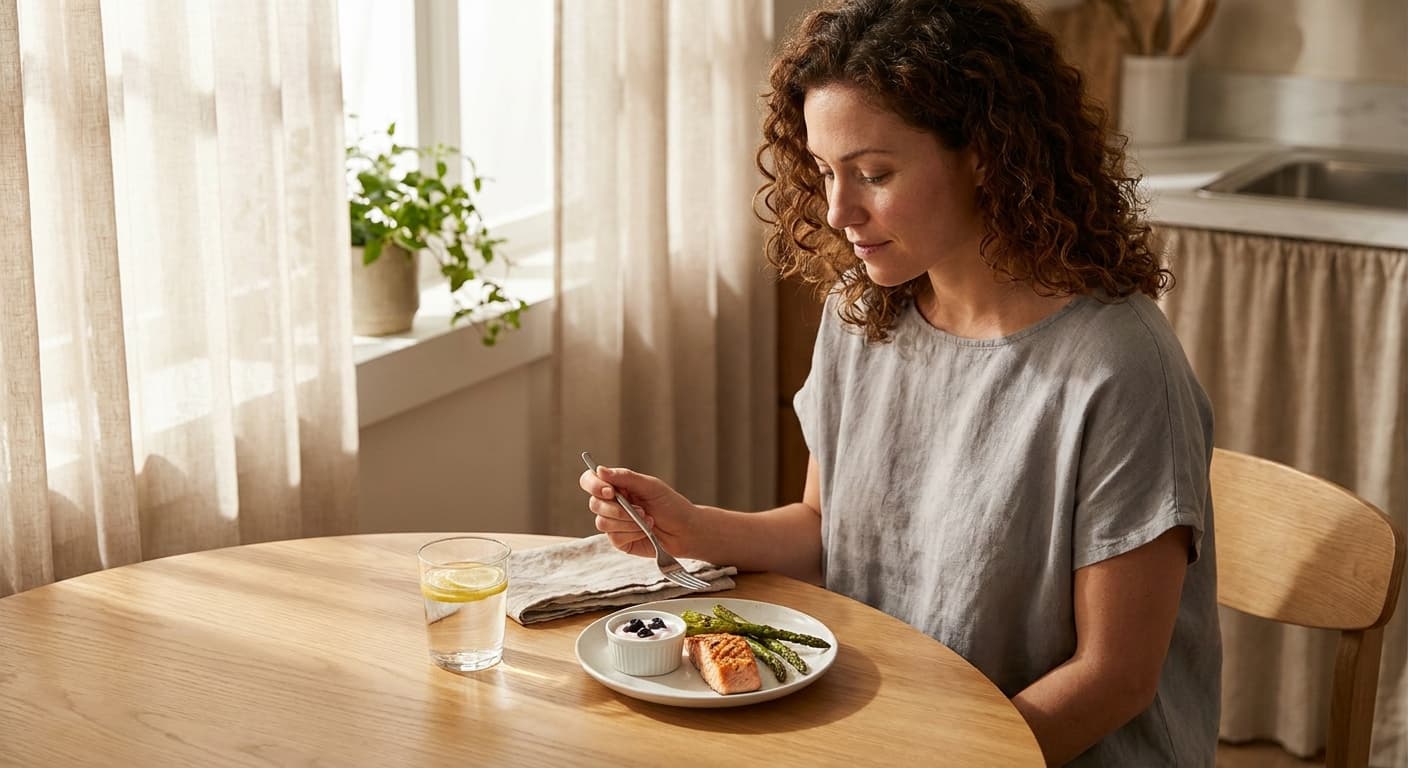
Instead of three big meals, try eating four to six smaller meals throughout the day.
Why this works: Your stomach can only hold a small amount before you feel uncomfortably full. Smaller meals fit in your reduced appetite window.
How to do it:
- Eat a small breakfast (200-300 calories)
- Have a mid-morning snack (100-150 calories)
- Eat a small lunch (300-400 calories)
- Have an afternoon snack (100-150 calories)
- Eat a small dinner (300-400 calories)
- Add a bedtime snack if hungry (100 calories)
This spreads nutrition throughout the day instead of forcing one big meal.
Strategy 2: Prioritize Protein at Every Eating Occasion
Protein is the most important nutrient on GLP-1 medications.
Why protein matters:
- Keeps you feeling satisfied longer
- Protects muscle mass during weight loss
- Takes longer to digest, so you stay fuller
- Supports your immune system and metabolism
Protein targets:
- Aim for 25-30 grams of protein per meal
- Include protein in every snack (at least 5-10 grams)
Easy protein sources:
- Greek yogurt (15-20g per serving)
- Eggs (6g per egg)
- Cottage cheese (14g per half cup)
- Chicken or turkey (25-35g per 3 ounces)
- Fish (25g per 3 ounces)
- Protein shakes or powder (20-30g per serving)
- Beans and lentils (15-18g per cup cooked)
- Cheese (7g per ounce)
- Nuts and nut butters (5-8g per ounce)
Strategy 3: Choose Nutrient-Dense Foods Over Empty Calories
You have limited space in your stomach. Fill it with foods that give your body what it needs.
Nutrient-dense choices:
- Vegetables (especially leafy greens, broccoli, peppers)
- Fruits (berries, apples, oranges)
- Whole grains (brown rice, oats, whole wheat bread)
- Healthy fats (avocado, olive oil, nuts, seeds)
- Lean proteins (chicken, fish, eggs, Greek yogurt)
Foods to limit:
- Sugary drinks and snacks
- Fried foods
- Processed snacks with little nutrition
- High-fat fast food
Every bite counts when you can't eat much.
Strategy 4: Drink Calories Through Smoothies and Shakes
Liquids take up less space in your stomach than solid food.
Benefits of drinking calories:
- Easier to consume more nutrition
- Takes less chewing and effort
- Can include protein, healthy fats, and carbs
- Often feels less heavy than solid meals
Simple smoothie ideas:
- Greek yogurt + berries + spinach + almond milk
- Protein powder + banana + peanut butter + milk
- Cottage cheese + fruit + granola + almond milk
- Protein shake + avocado + cocoa powder + milk
Make smoothies thick and creamy so they feel satisfying. Add protein powder to boost nutrition without adding much volume.
Strategy 5: Use Dose AI's Food Logging to Track What You're Eating
Tracking helps you see if you're actually getting enough nutrition.
How Dose AI's Food & Macro Logging works:
- Take a photo of your meal
- AI analyzes your macros (protein, carbs, fats) and calories
- See exactly what you're eating and if you're meeting your targets
- Adjust meals to hit your nutrition goals
Many people think they're eating enough until they track. The data shows you're actually getting less than you need.
Strategy 6: Eat Slowly and Mindfully
Slow eating gives your brain time to register fullness signals.
How to slow down:
- Put your fork down between bites
- Chew each bite 20-30 times
- Eat without distractions (no phone or TV)
- Drink water between bites
- Set a timer for at least 20 minutes per meal
When you eat slowly, you feel more satisfied with less food. This helps you actually finish enough nutrition.
Strategy 7: Stay Hydrated
Thirst can feel like hunger, and dehydration makes nausea worse.
Hydration tips:
- Drink water throughout the day
- Aim for at least 8-10 glasses daily
- Drink between meals, not during meals (fluids fill your stomach)
- Use Dose AI's Water Logging to track daily hydration
- Sip on herbal tea, broths, or coconut water for variety
Staying hydrated also helps prevent constipation, a common GLP-1 side effect.
Strategy 8: Track Your Symptoms to Find Your Eating Window
Everyone's appetite suppression is different. Some people have a small window when they can eat comfortably.
Use Dose AI's Symptom Tracker to:
- Record when you feel most hungry
- Note your energy levels throughout the day
- Track nausea or fullness
- Find patterns in when you can eat best
- Adjust your meal timing based on data
Most people find they can eat better at certain times of day. Work with your natural rhythm instead of against it.
Strategy 9: Don't Force Yourself to Eat
If you're not hungry, don't push yourself to eat more.
The right approach:
- Eat when you're hungry
- Stop when you're satisfied (not stuffed)
- Trust that smaller meals are okay
- Focus on quality over quantity
- Eat again when hunger returns
Your body will tell you when it needs food. Listen to those signals instead of eating by the clock.
Strategy 10: Work With a Registered Dietitian
A dietitian can create a personalized eating plan for you.
A dietitian can help you:
- Figure out your actual calorie and protein needs
- Plan meals that work with your appetite
- Prevent nutrient deficiencies
- Adjust your eating as your dose changes
- Address any digestive issues
Many insurance plans cover dietitian visits, especially if you have a referral from your doctor.
When Should You Contact Your Healthcare Provider?
Reach out to your doctor if you experience:
- Extreme difficulty eating (can't get down 800 calories daily)
- Severe nausea or vomiting
- Unexplained fatigue or weakness
- Hair loss
- Dizziness or lightheadedness
- Concerns about nutrient deficiencies
- Weight loss faster than 2-3 pounds per week
Your healthcare team can adjust your dose or suggest additional support.
FAQ: Eating Enough on GLP-1 Medications
Q: Is it okay to eat less on GLP-1 medications? A: Eating significantly less than your body needs can cause muscle loss, fatigue, and slow your metabolism. Aim for balanced nutrition in smaller portions rather than severe restriction.
Q: How do I know if I'm eating enough? A: Track your meals using Dose AI's Food & Macro Logging. Aim for at least 1,200-1,500 calories daily (unless your doctor recommends otherwise) and 25-30g protein per meal. If you feel constantly tired or weak, you're likely not eating enough.
Q: Can I use protein shakes to meet my nutrition needs? A: Yes. Protein shakes are an excellent way to get nutrition when solid food feels too heavy. Combine them with whole foods for a balanced approach, and choose shakes with minimal added sugar.
Q: What if I'm never hungry on my GLP-1 medication? A: Some people need to eat on a schedule rather than waiting for hunger signals. Set regular meal times and eat small amounts even if you're not hungry. This ensures your body gets the fuel it needs.
Q: How long does appetite suppression last? A: Appetite suppression continues as long as you're taking the medication. It typically decreases slightly over time as your body adjusts. Your doctor can discuss whether your dose needs adjustment.
Key Takeaways
Eating enough on GLP-1 medications is about eating smarter, not more. Focus on protein, nutrient-dense foods, and smaller frequent meals. Track your nutrition using tools like Dose AI to ensure you're meeting your body's needs. If you struggle to eat enough, talk to your healthcare provider or a dietitian.
Your goal is sustainable weight loss with energy and good health. That requires feeding your body properly, even if portions are smaller.
Medical Disclaimer
This article is for educational purposes only and is not a substitute for professional medical advice. GLP-1 receptor agonists like Ozempic, Wegovy, Mounjaro, tirzepatide, and Zepbound are prescription medications that require medical supervision. Always consult with your healthcare provider before making changes to your diet or medication routine. Individual nutritional needs vary based on age, activity level, health conditions, and medication dosage. If you experience severe symptoms, contact your doctor immediately.
Suggested Internal Links
- How to Manage Nausea and Appetite Loss on GLP-1 Medications
- Best Protein-Packed Meals for GLP-1 Users
- Understanding Appetite Suppression: How GLP-1 Medications Work
- Meal Planning Guide for Ozempic and Wegovy Users
- How to Prevent Muscle Loss While on GLP-1 Medications
Sources
- National Institutes of Health (NIH): GLP-1 Receptor Agonists and Weight Management - https://www.ncbi.nlm.nih.gov/
- American Diabetes Association (ADA): Nutrition Guidelines for Diabetes Management - https://www.diabetes.org/