How Can You Manage Loose Skin After GLP-1 Weight Loss?
Losing weight with GLP-1 medications like Ozempic, Mounjaro, or Wegovy is exciting. But loose skin can feel disappointing after working so hard.
The good news? You have real options to improve skin appearance and feel more confident in your body.
Why Does Loose Skin Happen After Weight Loss?
Your skin stretches to accommodate excess weight over time. When you lose weight quickly, your skin doesn't always shrink back at the same pace.
Several factors affect how much loose skin you experience:
- How much weight you lost - Larger weight losses often result in more loose skin
- How fast you lost it - Rapid weight loss can leave more loose skin behind
- Your age - Younger skin has more elasticity and bounces back better
- How long you carried the extra weight - Skin stretched for many years may have less elasticity
- Your genetics - Some people's skin naturally rebounds better than others
- Sun exposure and smoking - Both damage skin elasticity over time
GLP-1 medications help you lose weight effectively, but they don't change how your skin responds to that weight loss. The skin changes are a normal part of the weight loss process, not a medication side effect.
Can Loose Skin Improve on Its Own?
Yes, but it takes time. Skin can continue to tighten for up to 2 years after weight loss.
Most improvement happens in the first 6 to 12 months. Your skin has collagen and elastin fibers that gradually contract and remodel.
However, the amount of improvement varies widely. If you lost a large amount of weight or lost it very quickly, your skin may not fully tighten on its own. That's when other strategies help.
What Skincare Strategies Help Loose Skin?
Moisturize Consistently
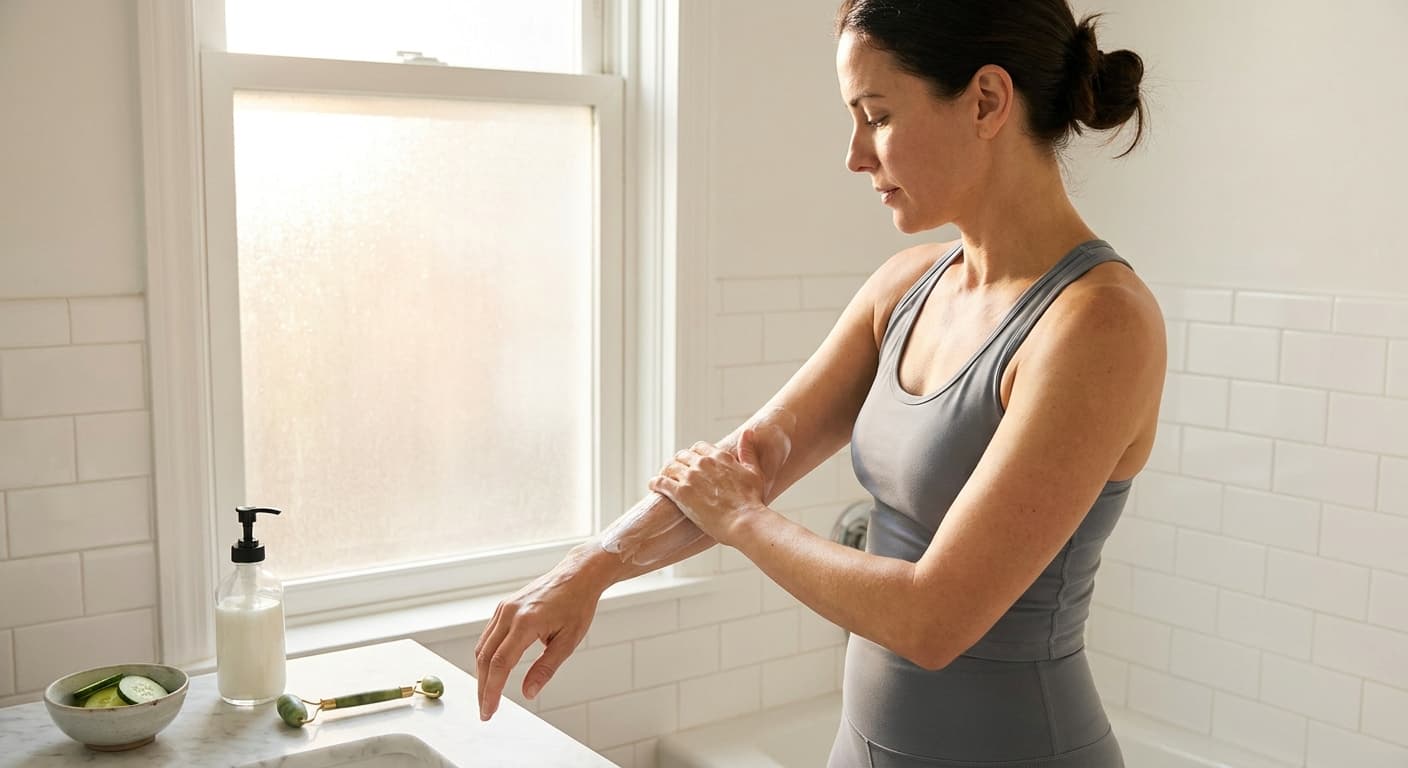
Hydrated skin looks plumper and feels smoother. Use moisturizer twice daily, especially right after showering.
Look for products with:
- Hyaluronic acid - Holds moisture in your skin
- Glycerin - Draws water into the skin
- Ceramides - Strengthen your skin barrier
- Niacinamide - Improves skin texture and elasticity
Apply moisturizer to damp skin for better absorption.
Use Retinoids
Retinoids (vitamin A derivatives) are among the most researched ingredients for skin firmness. They increase collagen production and improve skin texture.
Over-the-counter options include:
- Retinol
- Retinyl palmitate
- Adapalene (Differin)
Prescription options include tretinoin (Retin-A) and retinoids like tazarotene.
Start slowly with retinoids. Use them 2-3 times per week at first, then increase frequency as your skin adjusts. They make skin sun-sensitive, so always wear SPF 30+.
Apply Vitamin C Serum
Vitamin C (ascorbic acid) boosts collagen production and protects skin from sun damage. Use it in the morning under moisturizer and sunscreen.
Protect from Sun Damage
Sun damage breaks down collagen and elastin. Wear SPF 30+ daily, even on cloudy days.
Reapply every 2 hours if you're outside. Wear protective clothing like long sleeves and hats when possible.
Does Nutrition Support Skin Health?
Absolutely. What you eat affects your skin's ability to rebuild collagen and stay elastic.
Protein for Collagen Building
Your skin needs protein to produce collagen. Aim to include protein at each meal.
Good sources include:
- Chicken, fish, and lean beef
- Eggs
- Greek yogurt and cottage cheese
- Beans and legumes
- Tofu and tempeh
Track your meals with Dose AI's Food Logging feature to ensure you're getting enough protein daily.
Collagen-Supporting Nutrients
Certain nutrients help your body make and maintain collagen:
- Vitamin C - Found in citrus, berries, bell peppers, and broccoli
- Zinc - Found in oysters, beef, pumpkin seeds, and chickpeas
- Copper - Found in shellfish, nuts, seeds, and whole grains
- Amino acids - Found in all protein sources
Hydration Matters
Drink plenty of water throughout the day. Hydrated skin looks fuller and more elastic.
Use Dose AI's Water Logging feature to track your daily hydration and ensure you're drinking enough.
Aim for at least 8 glasses daily, or more if you exercise regularly.
What Exercises Help with Loose Skin?
Exercise builds muscle underneath loose skin, which can improve appearance and feel. It also improves overall body composition.
Strength Training
Building muscle fills out areas where skin has loosened. Focus on major muscle groups:
- Chest, back, and shoulders
- Arms and legs
- Core (abs and lower back)
Strength training 3-4 times per week helps build muscle gradually. Start with light weights and focus on proper form.
Cardio Exercise
Cardiovascular exercise improves circulation and skin health. It also helps maintain your weight loss.
Aim for 150 minutes of moderate cardio per week (like brisk walking, jogging, or cycling).
Consistency Matters
Exercise results take time. Stick with your routine for 8-12 weeks before expecting visible changes in skin appearance.
Track your progress with Dose AI's Journey Tracker to stay motivated and see how exercise affects your overall progress.
What Professional Treatments Are Available?
If home strategies don't give you the results you want, professional treatments can help. Talk to a dermatologist about your options.
Non-Invasive Treatments
Radiofrequency (RF) treatments - Heat tightens skin by stimulating collagen production. Results appear gradually over weeks.
Microneedling - Tiny needles create controlled skin injuries that trigger collagen production. Usually requires multiple sessions.
Laser treatments - Different laser types stimulate collagen and improve skin texture. Downtime varies by treatment type.
Ultrasound therapy - Sound waves stimulate collagen deep in the skin. Often called Ultherapy or similar brand names.
These treatments typically cost $500-$3,000 per session and may require multiple sessions for best results.
Surgical Options
For significant loose skin, surgical removal may be considered. Options include:
- Body lift - Removes excess skin from abdomen, sides, and back
- Arm lift (brachioplasty) - Removes loose skin from upper arms
- Thigh lift - Removes loose skin from thighs
- Face and neck lift - Tightens skin on face and neck
Surgery is expensive (often $5,000-$15,000+), carries risks, and requires recovery time. It's usually considered after weight loss has stabilized and you've tried non-surgical options.
Consult with a board-certified plastic surgeon to discuss whether surgery is right for you.
How Can You Prevent Excess Loose Skin?
While you can't completely prevent loose skin after significant weight loss, you can minimize it:
- Lose weight gradually - Slower weight loss gives skin more time to adjust
- Stay hydrated - Drink water consistently throughout your weight loss
- Eat enough protein - Supports collagen production and preserves muscle
- Use sunscreen - Protects collagen from sun damage
- Don't smoke - Smoking damages elastin and collagen
- Manage stress - Chronic stress can affect skin health
- Sleep well - Your body repairs skin during sleep
Track these healthy habits with Dose AI's Symptom Tracker and Water Logging to see how they affect your overall progress and skin health.
When Should You Talk to Your Doctor?
Contact your healthcare provider if:
- Loose skin causes pain or skin breakdown
- You develop rashes or irritation in skin folds
- You're considering surgical treatment
- You want to discuss professional skin treatments
- You're concerned about skin changes during your GLP-1 treatment
Your doctor can recommend dermatologists or plastic surgeons and help you understand your options.
Frequently Asked Questions
How long does it take for loose skin to tighten after weight loss?
Skin continues to tighten for up to 2 years after weight loss, with most improvement in the first 6-12 months. The exact timeline depends on your age, genetics, and how much weight you lost.
Does collagen supplementation help loose skin?
Limited research supports collagen supplements for skin tightening. Eating adequate protein and staying hydrated may be more effective. Talk to your doctor before starting any supplements.
Can loose skin become an infection risk?
Yes, skin folds can trap moisture and bacteria, leading to rashes or infections. Keep these areas clean and dry. Contact a doctor if you notice signs of infection like redness, warmth, or discharge.
Is loose skin permanent?
No, loose skin can improve over time and with treatment. However, significant loose skin may not fully resolve without professional treatment or surgery.
Should you wait to treat loose skin before or after reaching your goal weight?
Wait until your weight has been stable for at least 3-6 months before considering professional treatments. This ensures your skin has time to tighten naturally first.
Medical Disclaimer
This article is for educational purposes only and should not replace professional medical advice. GLP-1 medications like Ozempic, Mounjaro, Wegovy, and Zepbound are prescription medications that require medical supervision.
Always consult with your healthcare provider before starting any new skincare regimen, supplement, or professional treatment. They can assess your individual situation and recommend the best approach for managing loose skin after weight loss.
If you experience skin irritation, infection, or concerning changes, contact your doctor or dermatologist promptly.
Related Dose AI Resources
Explore these other Dose AI blogs for more support on your GLP-1 journey:
- How Do You Manage Common GLP-1 Side Effects?
- What Should You Eat on GLP-1 Medications?
- How Can Exercise Support Your Weight Loss on GLP-1?
- What Lifestyle Changes Help You Succeed with GLP-1?