How Can You Stay Hydrated on Zepbound?
Staying hydrated is one of the most important things you can do while taking Zepbound. This GLP-1 receptor agonist medication can increase your risk of dehydration. When you don't drink enough water, side effects like nausea and constipation get worse.
The good news? Staying hydrated is simple and manageable with the right strategy.
Why Is Hydration So Important on Zepbound?
Zepbound (tirzepatide) is a GLP-1 receptor agonist made by Eli Lilly. It slows how fast food moves through your stomach. This helps you feel full longer, which supports weight loss.
But this same action can cause:
- Nausea and vomiting
- Constipation
- Dizziness
- Fatigue
- Dry mouth
Dehydration makes all of these worse. When you drink enough water, you help your body process the medication better. You also reduce nausea and keep your digestive system working smoothly.
Think of water as a tool that helps Zepbound work its best.
How Much Water Should You Drink Daily?
A common guideline is to drink half your body weight in ounces of water per day. But on Zepbound, you may need more.
Here's a simple starting point:
- Drink at least 8-10 glasses of water daily
- Aim for 64-80 ounces as a baseline
- Add more if you exercise or live in a hot climate
- Listen to your body—thirst is a signal you need water
Talk to your doctor about your specific hydration needs. Some people need more water based on their health history, activity level, and how their body responds to Zepbound.
Best Hydration Strategies for Zepbound Users
Start Your Day With Water
Drink a glass of water before breakfast. This wakes up your digestive system and starts hydration early. It also helps prevent morning nausea.
Sip Throughout the Day
Don't try to drink all your water at once. This can cause bloating and discomfort on Zepbound.
Instead:
- Drink small amounts every 30-60 minutes
- Keep a water bottle with you always
- Set phone reminders if you forget to drink
- Sip between meals, not during meals
Space Out Water and Food
Drinking too much water while eating can make you feel overly full or bloated. Try this timing:
- Drink water 30 minutes before meals
- Wait 30 minutes after meals to drink more water
- This helps digestion and prevents uncomfortable fullness
Flavor Your Water (Wisely)
Plain water gets boring. Try these hydration boosters without added sugar:
- Lemon or lime slices
- Cucumber slices
- Mint leaves
- Herbal tea (hot or iced)
- Sparkling water with a splash of juice
Avoid sugary drinks, energy drinks, and too much caffeine. These can dehydrate you further.
Use a Water Tracking App or Bottle
Visual reminders help. Consider:
- A marked water bottle with time goals
- A hydration app that sends reminders
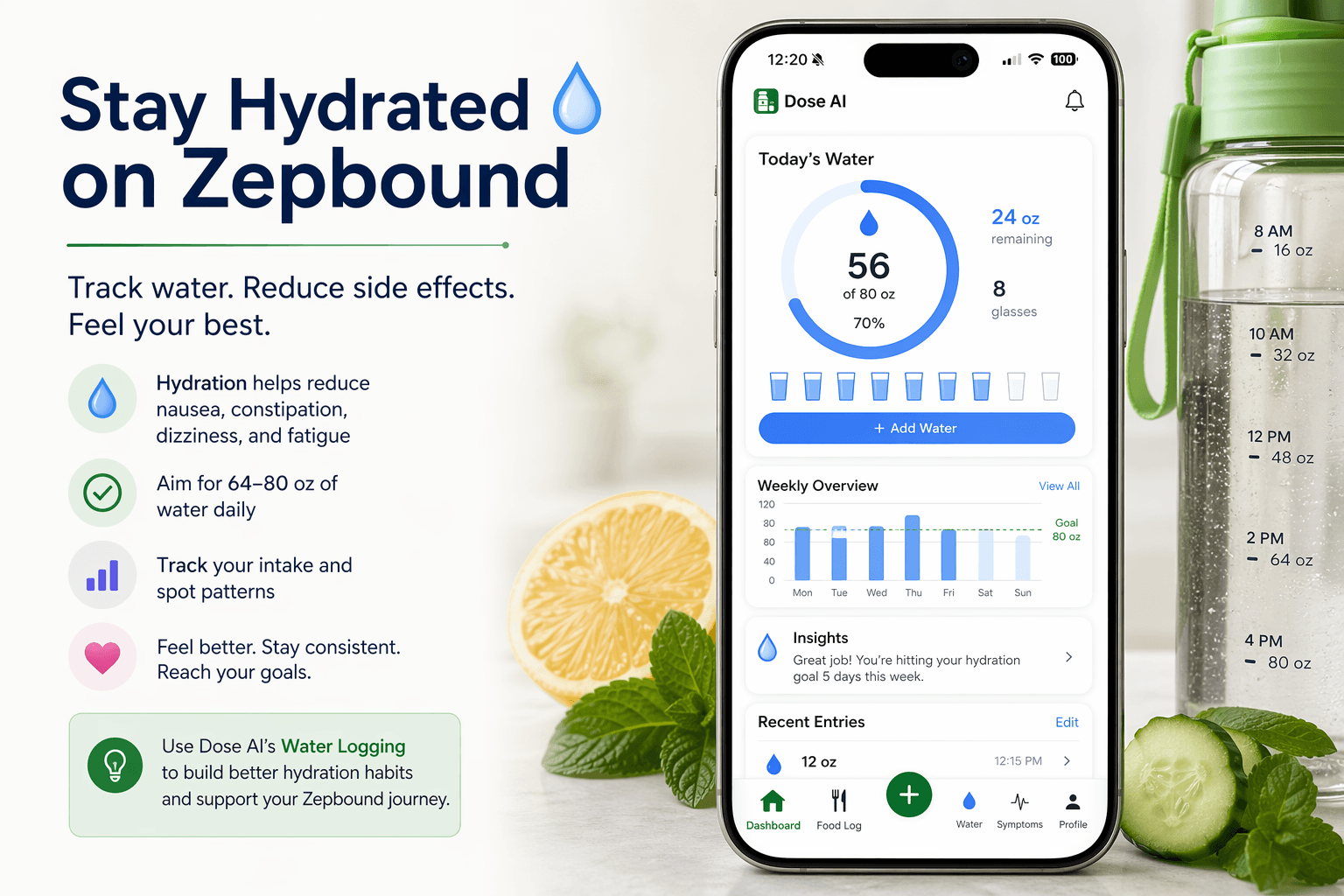
- Dose AI's Water Logging feature to track daily intake and see patterns
Tracking makes it easier to spot if you're falling short.
Signs You're Not Drinking Enough Water
Watch for these dehydration warning signs:
- Dark yellow or amber urine (aim for pale yellow)
- Extreme thirst
- Dizziness or lightheadedness
- Severe headaches
- Dry mouth and lips
- Fatigue that won't improve
- Worsening nausea
If you notice these symptoms, drink water immediately and contact your doctor if they don't improve.
Hydration Tips for Common Zepbound Challenges
If You Have Nausea
Nausea often makes people avoid drinking. But dehydration makes nausea worse. Try:
- Sipping ice water slowly
- Drinking room-temperature water
- Adding ginger tea or lemon water
- Taking tiny sips every few minutes instead of big gulps
If You Have Constipation
Constipation is common on Zepbound. Water helps fix this naturally.
- Drink extra water throughout the day
- Combine hydration with fiber-rich foods
- Move your body gently (walking helps)
- Don't force it—give your body time to adjust
If You Exercise
Exercise increases fluid loss through sweat.
- Drink extra water before, during, and after workouts
- For workouts under 60 minutes, plain water is best
- For longer exercise, ask your doctor about electrolyte drinks
- Rehydrate after you finish exercising
If You Live in a Hot Climate
Heat increases dehydration risk.
- Drink more water than the baseline recommendation
- Avoid being outside during the hottest parts of the day
- Wear light-colored, loose clothing
- Check your urine color regularly
Smart Hydration Habits to Build
Make It a Routine
Pair water drinking with things you already do:
- Drink water with breakfast, lunch, and dinner
- Have water with your morning coffee
- Drink water during your commute
- Keep water by your bed at night
Use the Dose AI Symptom Tracker
Track how hydration affects your symptoms. Log:
- How much water you drank
- Your nausea level
- Energy and digestion
- Headaches or dizziness
Over time, you'll see patterns. You'll discover your personal hydration sweet spot.
Invest in a Good Water Bottle
A bottle you like makes drinking water easier. Look for:
- Insulated bottles that keep water cold
- Bottles with time markers
- Bottles you can carry everywhere
- A size that fits your lifestyle
Plan Ahead
If you know you'll be busy:
- Fill water bottles before you leave home
- Keep water in your car or bag
- Plan hydration breaks during work
- Don't wait until you're thirsty
What About Other Drinks?
Water Is Best
Plain water is your top choice. It hydrates without adding calories or sugar.
Coffee and Tea
- Moderate amounts are okay (up to 2-3 cups daily)
- Too much caffeine can worsen nausea
- Caffeine is a mild diuretic (makes you lose water)
- Count herbal tea as part of your water intake
Electrolyte Drinks
You might need electrolyte drinks if you:
- Exercise intensely
- Sweat a lot
- Experience severe vomiting or diarrhea
- Live in extreme heat
Ask your doctor if electrolyte drinks are right for you.
Avoid These
- Sugary sodas and juices
- Alcohol (dehydrates you and affects blood sugar)
- Energy drinks high in caffeine
- Sweetened beverages
When to Contact Your Doctor
Reach out to your healthcare provider if you experience:
- Severe dehydration symptoms that don't improve
- Dizziness or fainting
- Rapid heartbeat
- Extreme weakness
- Confusion
- Severe constipation lasting more than a few days
- Persistent vomiting
These could signal a serious problem that needs medical attention.
Frequently Asked Questions
Can You Drink Too Much Water on Zepbound?
Yes, drinking too much water at once can cause bloating and discomfort. The key is sipping water throughout the day in small amounts. Most people do well with 64-80 ounces daily, but talk to your doctor about what's right for you. Spreading water intake over several hours is much better than drinking a large amount all at once.
Does Zepbound Make You More Thirsty?
Zepbound can cause dry mouth, which might make you feel thirsty. It can also slow your awareness of thirst signals. This is why setting reminders and tracking water intake is helpful. Don't wait until you feel thirsty to drink water—drink regularly throughout the day even if you don't feel thirsty yet.
How Do You Know If You're Hydrated Enough on Zepbound?
Check your urine color. Pale yellow or nearly clear urine means you're well hydrated. Dark yellow or amber urine means you need more water. You should also feel alert and energized, not dizzy or fatigued. Track your water intake and symptoms using Dose AI's Water Logging and Symptom Tracker to find your ideal hydration level.
Is It Better to Drink Water Before or After Taking Zepbound?
Drink water regularly throughout the day, not just around your injection time. You don't need to time water specifically with your weekly Zepbound injection. However, staying consistently hydrated every single day helps your body process the medication better and reduces side effects.
What Should You Do If You Feel Dehydrated on Zepbound?
Start sipping water slowly right away. Small, frequent sips are better than large gulps. If you also feel nauseous, try ice water or room-temperature water with lemon. If symptoms don't improve within an hour, or if you feel dizzy or faint, contact your doctor. Severe dehydration needs medical attention.
Related Dose AI Resources
- How to Manage Nausea on Zepbound
- Best Foods to Eat on Zepbound
- Understanding Zepbound Side Effects
- Zepbound vs. Wegovy: What's the Difference?
Medical Disclaimer
This article is for educational purposes only and does not replace professional medical advice. Zepbound (tirzepatide) is a prescription medication. Always follow your doctor's instructions for use, dosing, and hydration needs. If you experience severe dehydration, dizziness, fainting, or other concerning symptoms, contact your healthcare provider immediately or seek emergency care. Individual hydration needs vary based on health status, activity level, climate, and other factors. Discuss your specific hydration plan with your doctor or registered dietitian.
Sources
- National Institutes of Health (NIH). "Tirzepatide: Mechanism of Action and Clinical Benefits." NCBI PubMed. Retrieved from https://pubmed.ncbi.nlm.nih.gov/
- FDA. "Zepbound (tirzepatide) Prescribing Information." U.S. Food and Drug Administration. Retrieved from https://www.fda.gov/