How Much Fiber Do You Really Need on Zepbound?
Understanding Fiber Needs While Taking Zepbound
Zepbound is a GLP-1 receptor agonist made by Eli Lilly. It helps with weight loss by reducing hunger. But it can also slow down your digestion. That's why fiber becomes extra important.
Most adults need 25-35 grams of fiber per day. You might need more on Zepbound. The exact amount depends on your current diet and how your body responds.
Why Fiber Matters More on Zepbound
Zepbound slows how fast food moves through your stomach. This can cause constipation, bloating, and gas. Fiber helps keep things moving smoothly.
Fiber does two important jobs:
- Keeps digestion regular - It helps prevent constipation, a common Zepbound side effect
- Feeds healthy gut bacteria - Soluble fiber acts like food for beneficial bacteria in your gut
When you take Zepbound, your digestive system needs extra support. Fiber provides that support naturally.
How Much Fiber Should You Aim For?
Here's a practical target for Zepbound users:
Start with the standard recommendation: 25-35 grams daily. If constipation is a problem, gradually increase to 35-40 grams. Some people benefit from even more.
The key word is "gradually." Adding too much fiber too fast causes bloating and gas. Increase by 5 grams every few days.
Your Fiber Increase Plan
- Week 1-2: Add 5 grams of fiber daily
- Week 3-4: Add another 5 grams (now at 10-15 grams more than baseline)
- Week 5+: Continue increasing slowly until constipation improves
Track your progress using Dose AI's Symptom Tracker. Record daily bowel movements and any bloating. This reveals patterns and helps you find your ideal fiber amount.
Best Fiber Sources for Zepbound Users
Not all fiber is the same. Some sources work better with Zepbound.
Soluble Fiber (Dissolves in Water)
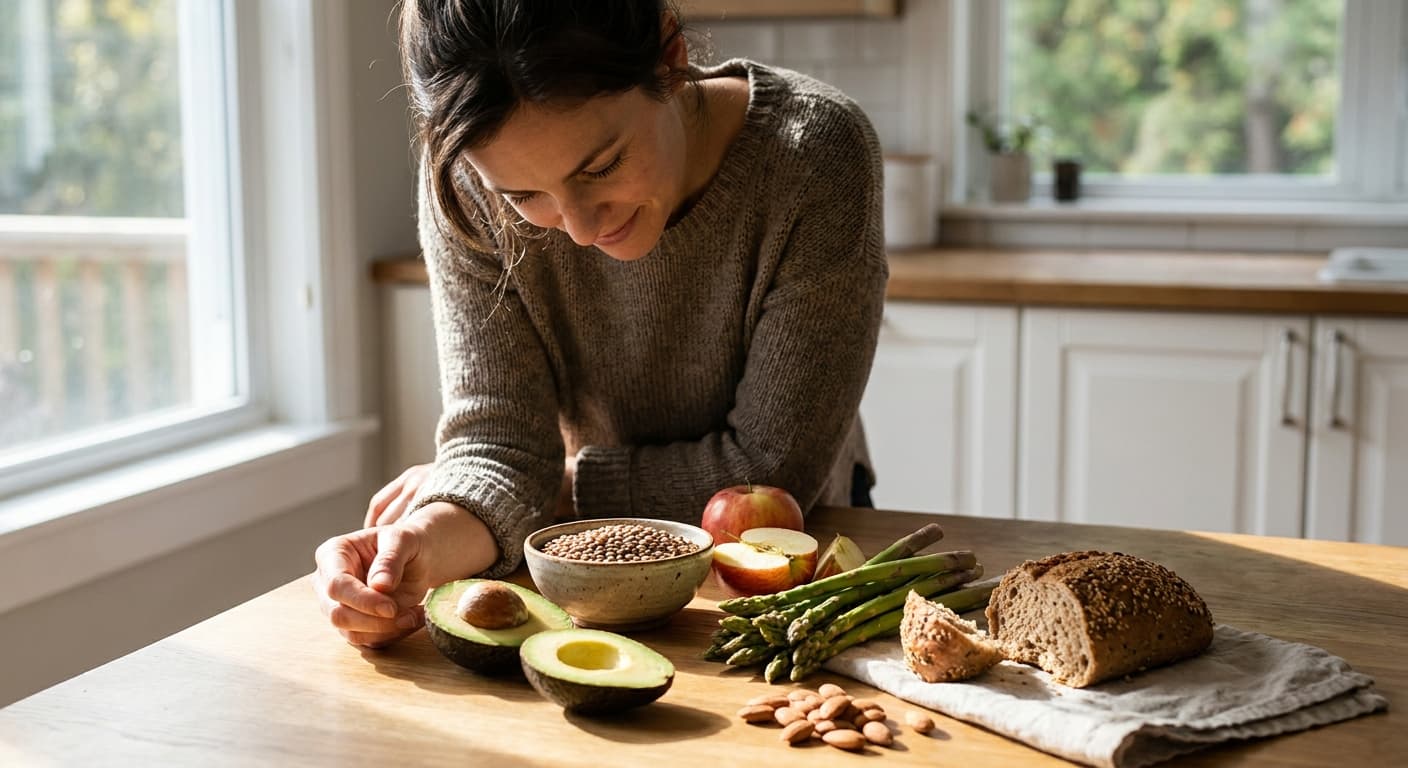
- Oats and oatmeal
- Beans and lentils
- Apples and pears
- Barley
- Chia seeds
Soluble fiber slows digestion gently. It's easier on your stomach when taking Zepbound.
Insoluble Fiber (Doesn't Dissolve)
- Whole wheat bread
- Broccoli and leafy greens
- Almonds and walnuts
- Brown rice
- Berries
Insoluble fiber adds bulk. It keeps things moving through your digestive system.
Best approach: Mix both types. Aim for roughly equal amounts of soluble and insoluble fiber.
Building a High-Fiber Zepbound Meal Plan
Real examples help. Here's what a 35-gram fiber day might look like:
Breakfast (8 grams)
- 1 cup oatmeal with berries
- 1 medium apple
Lunch (10 grams)
- Lentil soup
- Side salad with spinach
Dinner (12 grams)
- Grilled chicken breast
- Roasted broccoli and sweet potato
- 1 small whole wheat roll
Snacks (5 grams)
- Handful of almonds
- String cheese
Use Dose AI's Food & Macro Logging feature. Take a photo of your meals. The AI analyzes fiber content automatically. This removes the guesswork.
Tips for Adding Fiber Without Side Effects
Fiber can cause bloating and gas if you're not careful. Here's how to avoid problems:
Drink plenty of water. Fiber needs water to work properly. Aim for at least 8-10 glasses daily. Use Dose AI's Water Logging to track hydration. Dehydration plus fiber equals constipation.
Eat fiber with meals, not alone. A fiber supplement on an empty stomach causes gas. Mix it into yogurt or oatmeal.
Cook vegetables thoroughly. Raw vegetables are harder to digest on Zepbound. Steaming or roasting breaks them down, making them easier on your system.
Space out fiber sources. Don't eat all your fiber at one meal. Spread it throughout the day.
Choose whole foods first. Whole grains, beans, and vegetables are better than supplements. They contain additional nutrients Zepbound users need.
Should You Take a Fiber Supplement?
Supplements can help. But whole foods are usually better first.
Consider a supplement if:
- You've increased whole food fiber but still have constipation
- You struggle to eat enough vegetables
- Your doctor recommends it
Popular fiber supplement options:
- Psyllium husk (Metamucil)
- Inulin powder
- Ground flaxseed
Always mix supplements with plenty of water. Start with half the recommended dose. Increase slowly.
Talk to your doctor before starting any supplement. Some interact with medications.
Common Fiber Mistakes on Zepbound
Mistake 1: Adding too much too fast. This causes severe bloating and gas. Increase slowly over weeks, not days.
Mistake 2: Not drinking enough water. Fiber without water makes constipation worse. Drink water with every meal.
Mistake 3: Eating only insoluble fiber. Too much causes cramping. Balance it with soluble fiber.
Mistake 4: Relying on supplements alone. Whole foods provide fiber plus vitamins and minerals. Use supplements to fill gaps, not replace food.
Mistake 5: Ignoring your body's signals. Everyone's different. Track your symptoms. Adjust based on what works for you.
Monitoring Your Fiber Intake and Symptoms
Tracking matters. Use Dose AI's Symptom Tracker to record:
- Bowel movement frequency
- Stool consistency
- Bloating level (1-10 scale)
- Gas or cramping
- Overall energy level
Review your log weekly. Look for patterns. If constipation appears 2 days after eating less fiber, you've found your threshold.
Also log your meals using Dose AI's Food & Macro Logging. Combined with symptom tracking, you'll see exactly which foods help or hurt.
When to Talk to Your Doctor
Contact your healthcare provider if:
- Constipation doesn't improve after 2 weeks of increased fiber
- You develop severe cramping or bloating
- You notice blood in your stool
- You're unable to eat enough food to get adequate fiber
- You're taking medications that interact with fiber
Your doctor might adjust your Zepbound dose or recommend a stool softener. Never self-treat without guidance.
Frequently Asked Questions
Can I get too much fiber on Zepbound?
Yes. Excessive fiber (over 50 grams daily) can cause severe bloating and cramping. More isn't always better. Find your individual threshold and stick with it.
Does Zepbound require more fiber than other GLP-1 medications?
All GLP-1 receptor agonists slow digestion. This includes semaglutide (Ozempic, Wegovy) and tirzepatide (Mounjaro). Fiber recommendations are similar across these medications.
How long does it take for increased fiber to help constipation?
Most people see improvement within 3-5 days of increasing fiber and water intake. If constipation persists after 2 weeks, contact your doctor.
Is it okay to use stool softeners with Zepbound?
Yes, stool softeners are generally safe with Zepbound. They work differently than fiber. Ask your doctor which option suits you best.
Can I get enough fiber from supplements alone?
Supplements help, but whole foods are superior. They provide fiber plus vitamins, minerals, and phytonutrients your body needs. Use supplements to supplement, not replace.
Medical Disclaimer
This article is for educational purposes only. It is not medical advice. Always consult your healthcare provider before making changes to your diet or starting new supplements. Individual fiber needs vary based on your health status, medications, and medical history. Your doctor can provide personalized recommendations for your situation.
If you experience severe abdominal pain, persistent constipation, or signs of intestinal blockage, seek immediate medical attention.
Related Dose AI Blog Articles
- How to Prevent Constipation on GLP-1 Medications
- Best Foods to Eat on Zepbound for Weight Loss
- Hydration Tips for GLP-1 Users: Why Water Matters
- Managing Digestive Side Effects on Semaglutide
- Nutrition Guide for Tirzepatide and Mounjaro Users
Sources
- National Institutes of Health (NIH). Dietary Fiber: Essential for a Healthy Diet. https://www.nih.gov/
- American Diabetes Association. Nutrition Recommendations and Interventions for Diabetes. https://diabetes.org/