How Much Protein Should You Eat on GLP-1?
When you start taking GLP-1 receptor agonist medications like Ozempic, Mounjaro, Wegovy, or Zepbound, your appetite changes dramatically. You eat less food overall. But eating less doesn't mean you should eat less protein. In fact, protein becomes even more important when you're on GLP-1 therapy.
This guide explains how much protein you need, why it matters, and how to get enough without feeling too full.
Why Is Protein So Important on GLP-1?
GLP-1 medications work by reducing your hunger and slowing how fast your stomach empties. This helps you eat fewer calories. But there's a catch: when you eat fewer calories, your body can lose muscle along with fat.
Protein protects your muscles. It tells your body to keep muscle while you lose weight. Without enough protein, you might lose 25-30% muscle along with your fat loss. With adequate protein, you can lose mostly fat and keep your muscle.
Other reasons protein matters on GLP-1:
- Keeps you feeling full longer
- Stabilizes blood sugar
- Supports your metabolism
- Helps your body repair and rebuild tissue
- Reduces cravings and hunger signals
What's the Right Amount of Protein?
The amount of protein you need depends on your body weight and activity level. Here are the general guidelines:
For weight loss on GLP-1:
- Aim for 1.2 to 1.6 grams of protein per kilogram of body weight daily
- Or roughly 0.5 to 0.7 grams per pound of body weight
Example: If you weigh 200 pounds, aim for 100-140 grams of protein per day.
If you exercise regularly:
- Increase to 1.6 to 2.2 grams per kilogram (0.7 to 1 gram per pound)
- This helps preserve muscle while you exercise and lose weight
Important note: These amounts are higher than standard recommendations because you're eating fewer total calories. Protein becomes a bigger percentage of your smaller meals.
How Much Protein Can You Actually Eat on GLP-1?
Here's the real challenge: GLP-1 makes you feel very full very quickly. You might struggle to eat enough protein in three meals.
What research shows:
Most people on GLP-1 can comfortably eat 20-30 grams of protein per meal. Some people can manage 40 grams, but it feels uncomfortable. Your stomach capacity shrinks, so large protein portions may cause bloating or nausea.
The solution: Spread protein throughout the day.
Instead of trying to eat 50 grams at dinner, aim for:
- Breakfast: 20-25 grams
- Lunch: 25-30 grams
- Dinner: 25-30 grams
- Snacks: 10-15 grams (if needed)
This approach keeps protein high without overwhelming your smaller appetite.
Best Protein Sources on GLP-1
Choose proteins that are easy to digest and won't cause nausea or side effects.
Best choices:
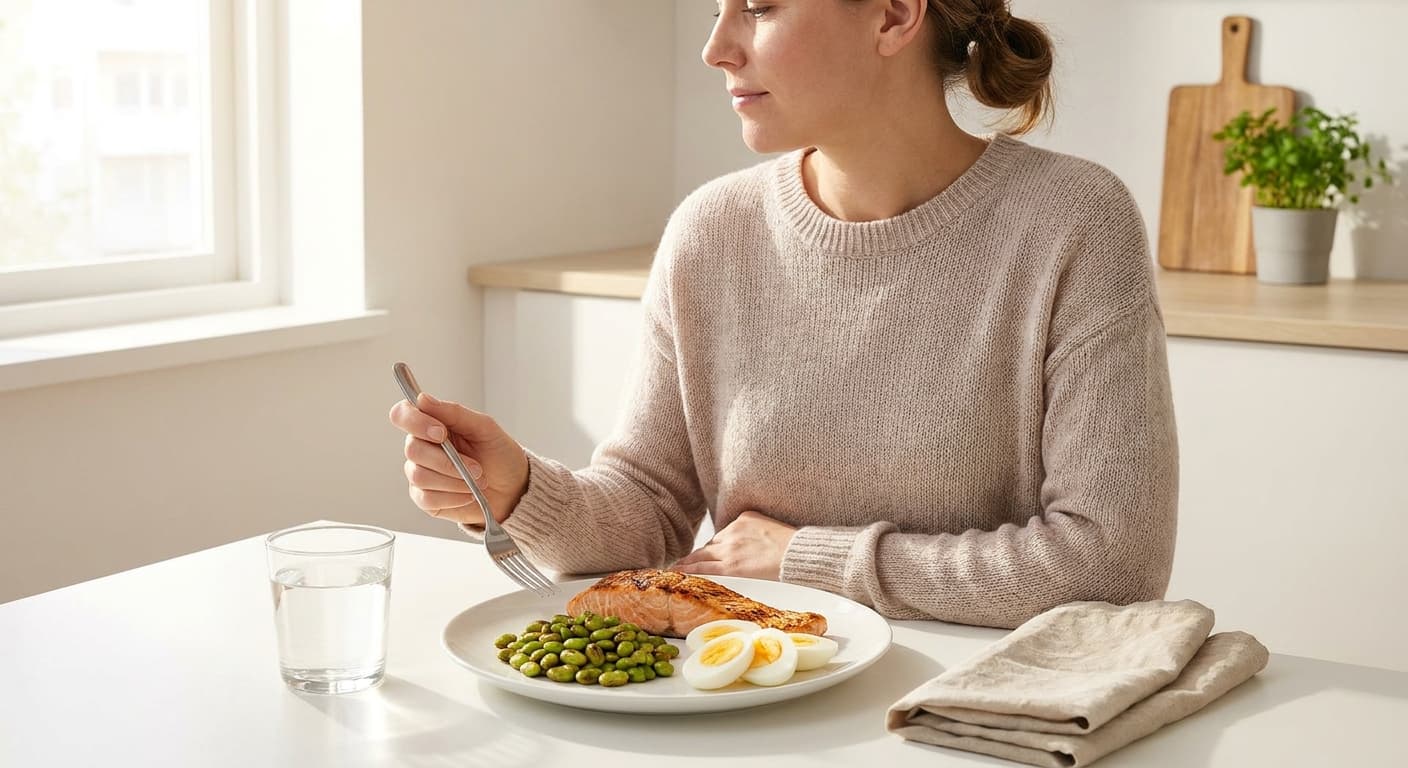
- Eggs (6 grams per egg)
- Greek yogurt (15-20 grams per cup)
- Cottage cheese (14 grams per half cup)
- Chicken breast (26 grams per 3 ounces)
- Fish and salmon (25 grams per 3 ounces)
- Lean ground turkey (22 grams per 3 ounces)
- Tofu (10 grams per 3 ounces)
- Lentils and beans (9 grams per half cup cooked)
- Protein powder (20-30 grams per scoop)
- Low-fat cheese (7 grams per ounce)
Easier to digest proteins (less likely to cause nausea):
- Eggs
- Fish
- Chicken
- Greek yogurt
- Protein smoothies
Harder to digest (may cause bloating or nausea):
- Fatty red meat
- Fried foods
- High-fiber beans (in large amounts)
- Tough, chewy cuts of meat
How to Hit Your Protein Goals on GLP-1
Strategy 1: Protein at Every Meal
Make sure each meal has protein. This is the easiest way to reach your daily goal.
- Breakfast: Scrambled eggs with toast
- Lunch: Grilled chicken with vegetables
- Dinner: Baked salmon with rice
- Snack: Greek yogurt or protein shake
Strategy 2: Use Protein Shakes
Protein shakes are your secret weapon on GLP-1. They're easy to drink, even when full. You can sip slowly over an hour.
- Choose low-sugar options (less than 5 grams sugar)
- Blend with water, unsweetened almond milk, or low-fat milk
- Add fruit or nut butter for nutrients
- Drink slowly to avoid feeling too full
Strategy 3: Track Your Intake
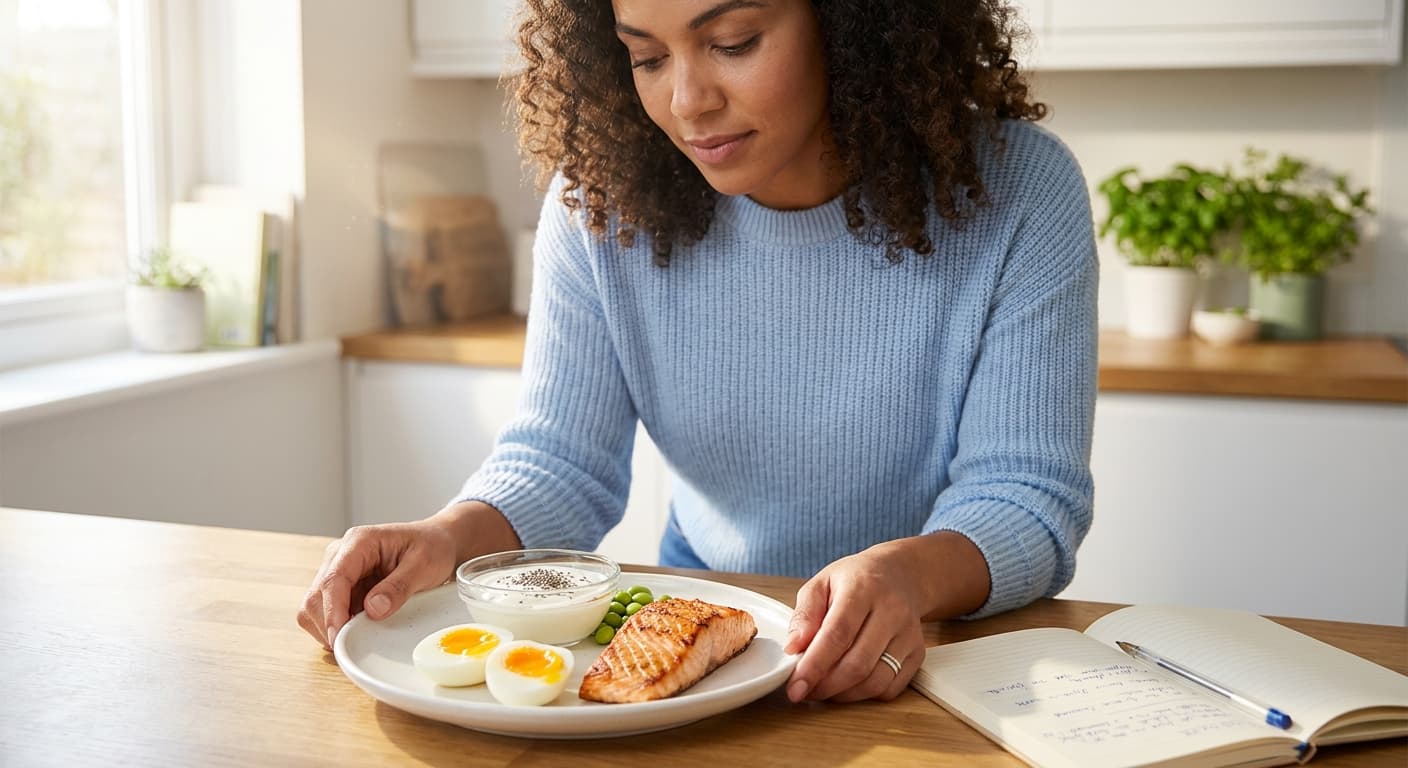
Use the Dose AI app's Food & Macro Logging feature to track protein automatically. Take a photo of your meal, and the AI analyzes your exact protein intake. This removes guesswork and shows you patterns over time.
You'll see exactly how much protein you're eating daily. If you're falling short, the Personalized Food Idea Assistant suggests high-protein meals you can actually tolerate.
Strategy 4: Prioritize Protein First
When you sit down to eat, eat protein first. Your appetite is highest at the start of a meal. Eat your chicken or fish before vegetables. This ensures you get enough protein before feeling too full.
Common Protein Questions on GLP-1
Can I eat too much protein?
Very high protein intake (over 2 grams per pound of body weight) may stress your kidneys over time. Stick to the 0.5-1 gram per pound range. If you have kidney disease, talk to your doctor about your protein needs.
Will protein make me feel more nauseous?
Not usually. Protein actually helps settle your stomach better than carbs or fats. But very large portions might feel uncomfortable. Smaller, frequent doses work better.
What if I can't hit my protein goal?
That's okay. Do your best with what feels comfortable. Even 80-100 grams daily (if that's your target) helps preserve muscle. It doesn't have to be perfect.
Should I take protein supplements?
Protein powder isn't necessary, but it's helpful. It's an easy way to add protein without eating large portions. Choose brands with minimal additives and sugar.
How do I know if I'm losing muscle?
You might notice clothes fitting differently or feeling weaker. The Dose AI Progress Tracker lets you log weight and photos. Muscle loss often shows as loose skin rather than a number on the scale. If you're concerned, ask your doctor about body composition testing.
Track Your Protein and Results
The Dose AI app makes hitting protein goals easier. Log your meals by taking photos. The AI breaks down your macros, including exact protein grams. Over time, you'll see patterns:
- Which meals give you the most protein
- How protein affects your hunger
- Whether you're meeting your daily goal
- How protein correlates with your weight loss progress
You can also use the Symptom Tracker to note how different protein sources make you feel. Some people feel better with fish. Others do great with eggs. The app helps you find your personal best.
FAQ
Q: How much protein do I need if I weigh 150 pounds?
A: Aim for 75-150 grams per day. Start with 100 grams and adjust based on how you feel and your activity level.
Q: Can protein cause side effects on GLP-1?
A: Protein itself doesn't cause side effects. But very large protein portions might feel uncomfortable when your stomach is smaller. Eat smaller amounts more frequently instead.
Q: Is it better to eat protein at certain times of day?
A: No. Spread protein throughout the day whenever you eat. There's no magic time for protein on GLP-1. Consistency matters more than timing.
Q: What if I'm vegetarian or vegan on GLP-1?
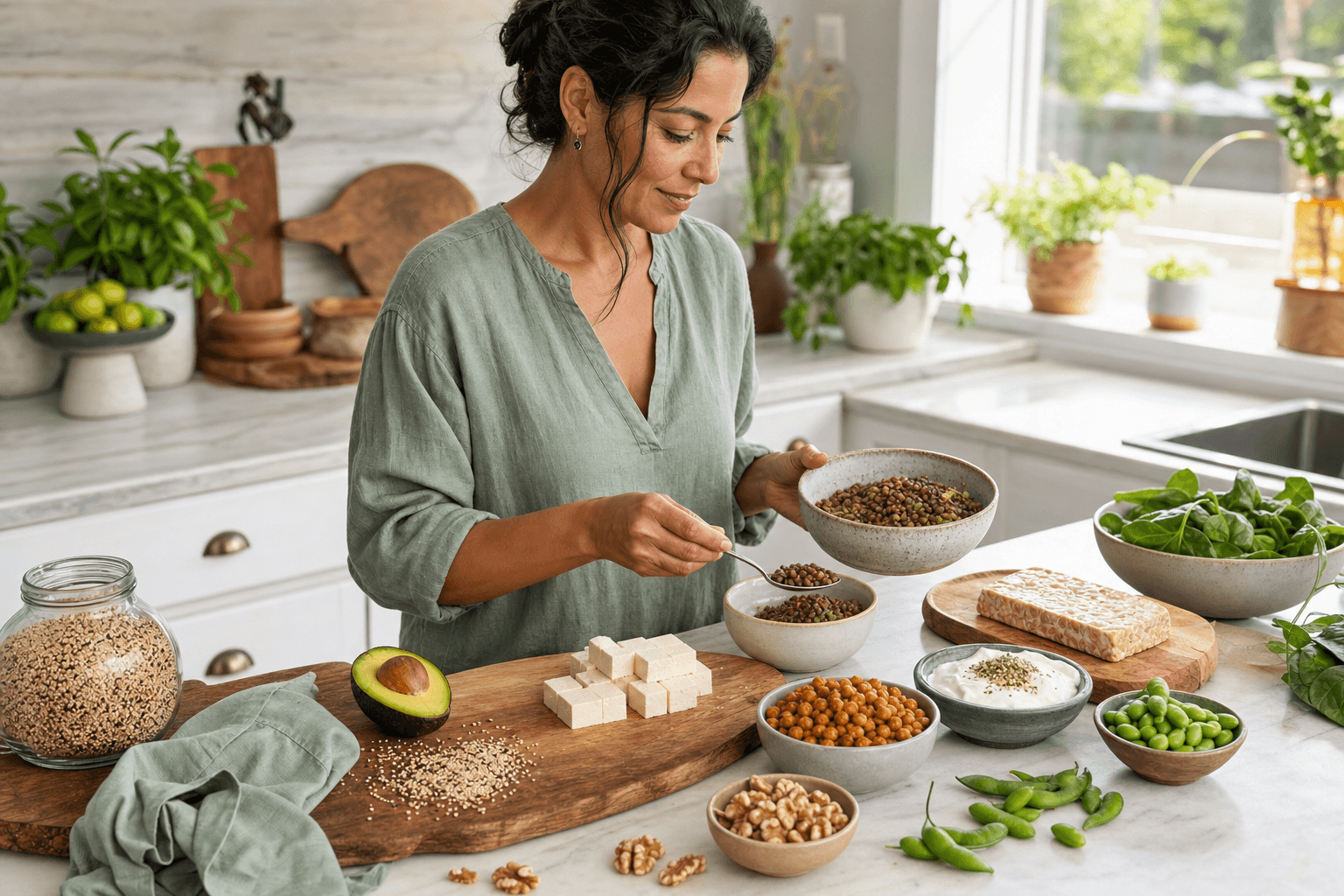
A: You can absolutely get enough protein without meat. Focus on eggs, Greek yogurt, cottage cheese, tofu, tempeh, beans, lentils, nuts, and seeds. Consider a plant-based protein powder if needed.
Q: Will eating more protein make me lose weight faster?
A: Adequate protein supports muscle preservation and may slightly boost metabolism. But weight loss comes from eating fewer calories overall. Protein helps you lose fat, not necessarily lose weight faster.
Medical Disclaimer
This content is for educational purposes only and not medical advice. GLP-1 medications like tirzepatide, semaglutide, and other GLP-1 receptor agonists require medical supervision. Always consult your healthcare provider before changing your diet or starting any new medication. Individual protein needs vary based on age, kidney function, activity level, and other health factors. Your doctor or registered dietitian can recommend a personalized protein plan for your situation.
Related Dose AI Resources
- How to Eat on GLP-1: A Beginner's Guide
- Best Foods to Eat on Ozempic and Mounjaro
- Managing Nausea and Stomach Issues on GLP-1
- The Complete Guide to Nutrition on Weight Loss Medications
Sources:
National Institutes of Health (NIH). "Dietary Protein and Muscle Mass: Translating Science to Application and Health Benefit." NIH National Center for Biotechnology Information, 2019. https://www.ncbi.nlm.nih.gov/pmc/articles/PMC6566799/
American Diabetes Association. "Standards of Care in Diabetes 2024." Diabetes Care, 2024. https://diabetesjournals.org/care