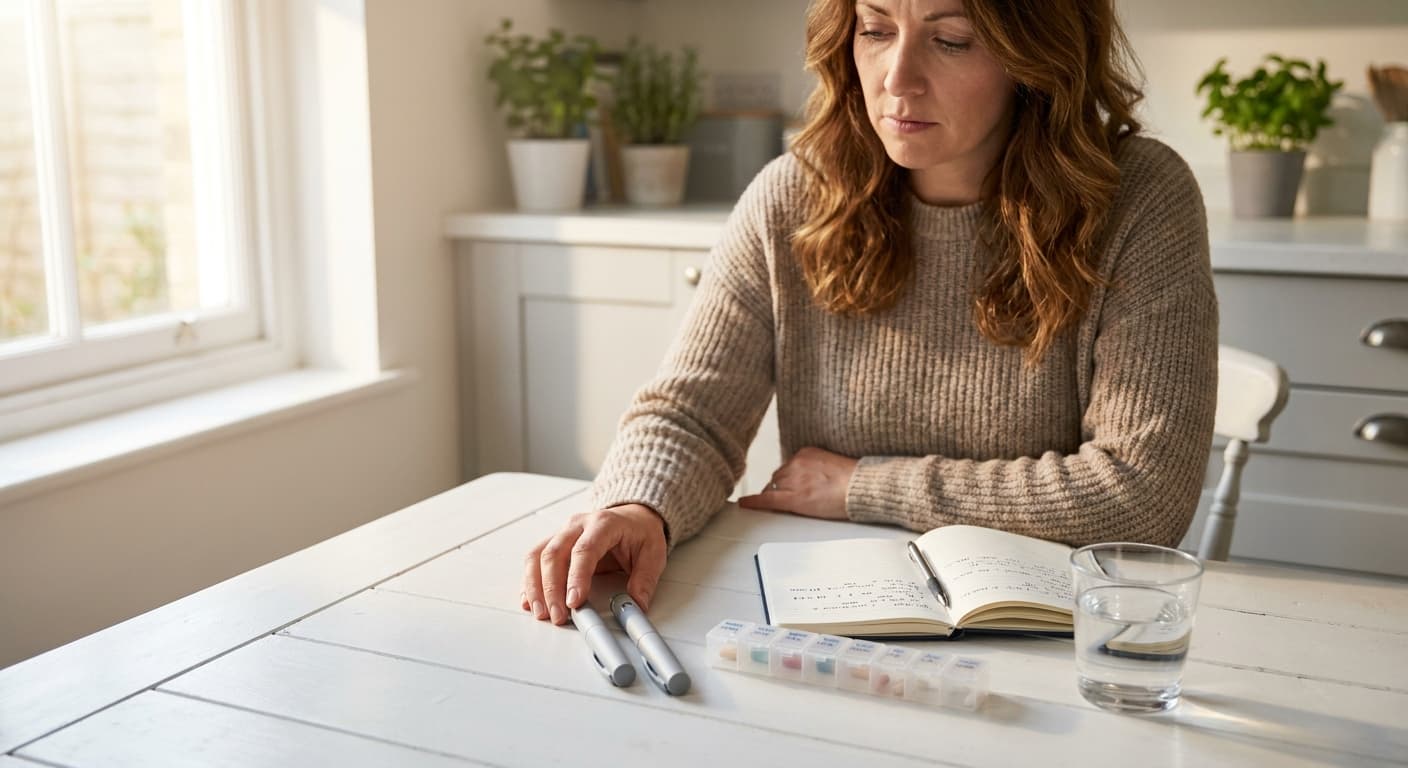
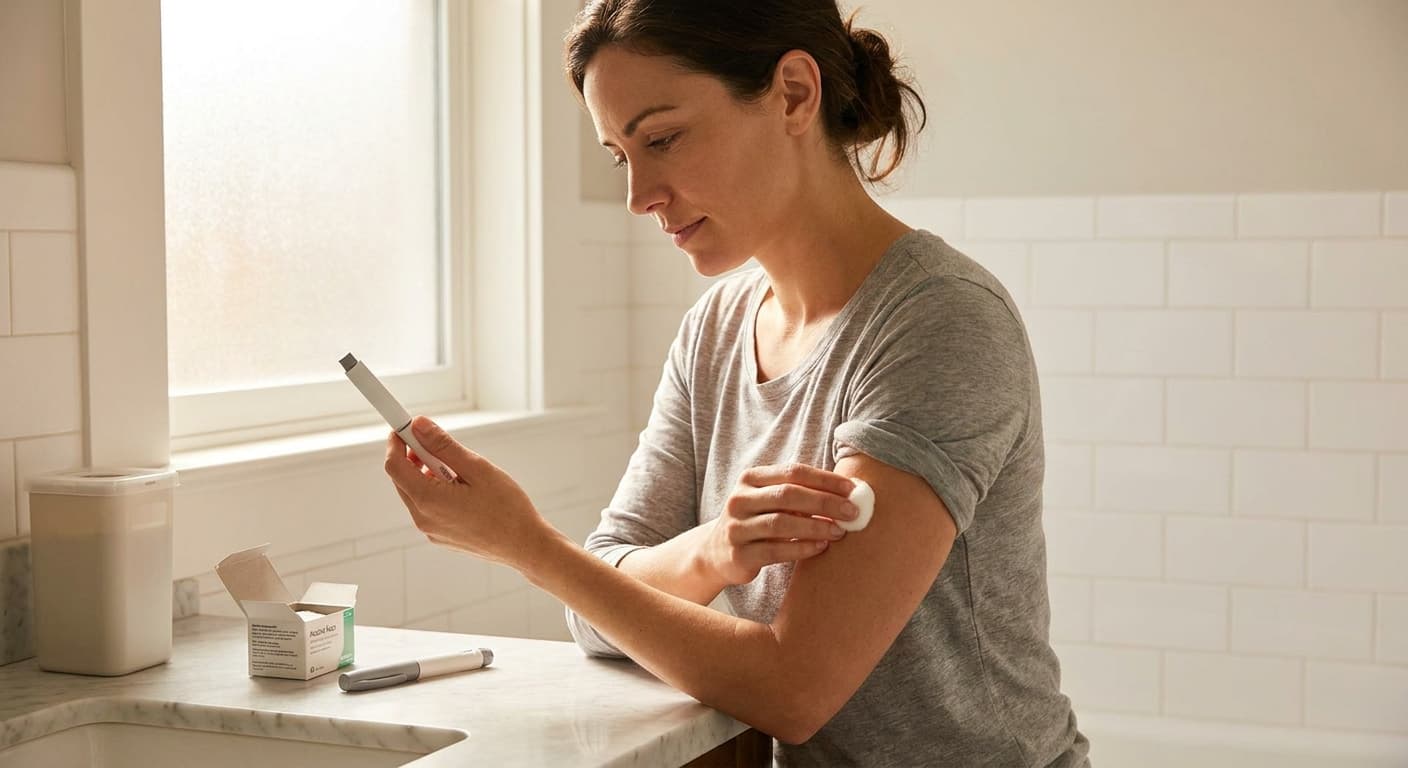
What Should You Do If Your GLP-1 Shot Leaks After Injection?
Seeing medication leak from your injection site can be stressful. You might worry about whether your dose worked. The good news is that you have clear steps to take. Here's exactly what to do if this happens.
What Happens When Your GLP-1 Leaks?
When a GLP-1 medication like Ozempic, Mounjaro, Wegovy, or Zepbound leaks after injection, some medication escapes from the injection site. This happens more often than you might think.
A small amount of leakage is usually not a major concern. But larger leaks mean less medication entered your body. This could affect how well your dose works.
Should You Take Another Shot Right Away?
The short answer: No, contact your doctor first.
Taking another dose without guidance could lead to problems. You might accidentally double-dose, which could cause serious side effects. Your healthcare provider needs to assess how much medication you lost.
Here's what to do instead:
- Stay calm and assess the leak - How much medication came out? Was it a small drip or a large amount?
- Contact your doctor or pharmacist - Describe what happened and how much you think leaked
- Follow their guidance - They'll decide if you need a replacement dose
- Document the incident - Write down the date, time, and what happened
Your doctor might suggest waiting until your next scheduled injection. Or they might tell you to take a replacement dose sooner. It depends on how much medication leaked.
How Much Leakage Matters
Small leaks (a few drops):
- Likely won't affect your weekly dose much
- You may not need a replacement shot
- Monitor how you feel over the coming days
Moderate leaks (visible amount running down your arm):
- Your doctor will probably recommend a replacement dose
- This might be given the same day or within a few days
- Ask your doctor about timing
Large leaks (most of the injection came out):
- You definitely need a replacement dose
- Contact your doctor immediately
- They may advise you to take another shot right away
How to Prevent GLP-1 Leaks
Preventing leaks is easier than dealing with them. Here are proven techniques:
Proper injection technique:
- Clean your injection site with an alcohol swab
- Let the skin dry completely before injecting
- Use a quick, confident motion when inserting the needle
- Keep the needle at a 90-degree angle to your skin
- Inject slowly and steadily
After the injection:
- Keep the needle in your skin for 3-5 seconds after pushing the plunger
- Remove the needle slowly and straight out
- Press gently with a clean cotton ball for 10 seconds
- Don't rub the injection site
Choosing the right spot:
- Rotate injection sites each week
- Avoid areas with bruises, scars, or hard tissue
- Use the abdomen, thigh, or back of the arm
- Space injections at least one inch apart
Using the right supplies:
- Always use a new needle for each injection
- Check that your pen or syringe hasn't been damaged
- Make sure your medication hasn't frozen or been exposed to extreme heat
- Store your medication correctly between doses
Track Your Shots to Catch Problems Early
Using a shot logging tool like Dose AI's Shot Logging feature helps you track when and where you inject. This creates a record of your injections.
Over time, you'll notice patterns. You might see that certain injection sites leak more often. Or you might realize you're using poor technique in a specific location.
Having this data helps you talk to your doctor. You can show them exactly when leaks happen. They can give you better guidance on fixing the problem.
When Should You Contact Your Doctor?
Contact your doctor immediately if:
- A large amount of medication leaked out
- You're unsure how much medication entered your body
- You've had multiple leaks in recent weeks
- You notice signs that your dose didn't work (no appetite suppression, blood sugar changes)
- You develop unusual side effects
You can wait and call during business hours if:
- Only a small amount leaked
- You're confident most of the dose was delivered
- You feel fine and have no concerning symptoms
Don't hesitate to reach out. Your doctor would rather hear about a leak than have you guess about your medication. They're there to help.
What If You Leak Medication Regularly?
If leaks keep happening, something needs to change. Work with your doctor or diabetes educator to figure out why.
Common reasons for repeated leaks:
- Improper injection technique
- Using dull or bent needles
- Injecting too quickly
- Not holding the needle in long enough
- Injecting into scar tissue or bruised areas
- Medication stored improperly (too cold or too warm)
Your doctor might suggest:
- A demonstration of proper technique
- Switching to a different injection device
- Using a different body area for injections
- Checking your storage and handling practices
Some people find that asking a nurse to watch their injection helps. They can spot technique problems you might miss.
Document Everything for Your Records
Keep a simple log of what happens with your injections. Include:
- Date and time of injection
- Location on your body
- Whether any leakage occurred
- How much you estimate leaked
- Any actions you took (called doctor, took replacement dose, etc.)
- How you felt during the following days
This information is valuable if you have repeated issues. It helps your healthcare provider see patterns. It also protects you if there are questions about your medication later.
Dose AI's Symptom Tracker can help you record how you feel after each injection. You can note whether you had a leak. Over time, you'll see if leaks impact your results.
The Bottom Line
A small leak after your GLP-1 injection usually isn't an emergency. But you should still let your doctor know, especially if it's a large leak.
Never take another dose without guidance. Your doctor will help you decide the best next step. They might tell you to wait for your next scheduled injection or to take a replacement dose sooner.
Focus on preventing leaks by using proper technique. Keep your injection sites clean and rotated. Use new needles every time. Store your medication correctly.
If leaks become a pattern, work with your healthcare provider to fix the problem. They can help you identify what's going wrong and how to improve.
FAQ
Q: Will a small leak affect my weight loss? A small leak (a few drops) probably won't impact your results. Your body still received most of the medication. But if you're concerned, mention it to your doctor at your next visit.
Q: Can I inject again the same day if my shot leaked? Don't inject again without talking to your doctor first. They need to know how much leaked before deciding if you need a replacement dose. Taking an extra shot without guidance could cause problems.
Q: How long should the needle stay in my skin? Keep the needle in for 3-5 seconds after injecting. This gives the medication time to enter your tissue and reduces the chance of leakage. Count slowly: "one thousand one, one thousand two," etc.
Q: What if I'm not sure if medication leaked or not? If you're unsure, contact your doctor or pharmacist. Describe what you saw or felt. They can help you figure out whether a replacement dose is needed. It's always better to ask than to worry.
Q: Does leakage mean my medication is defective? Not always. Most leaks are caused by injection technique, not defective medication. But if you think your pen or syringe is damaged, don't use it. Contact your pharmacy for a replacement.
Medical Disclaimer
This article is for informational purposes only and does not constitute medical advice. GLP-1 receptor agonists like tirzepatide (Mounjaro), semaglutide (Ozempic, Wegovy), and other GLP-1 medications are prescription drugs that require healthcare provider oversight.
If you experience medication leakage or have concerns about your GLP-1 injection, contact your healthcare provider, endocrinologist, or pharmacist immediately. They can assess your individual situation and provide personalized guidance.
Never adjust your medication dose or frequency without explicit direction from your healthcare provider. This article does not replace professional medical advice, diagnosis, or treatment.
Related Dose AI Blog Posts
- How to Give Yourself a GLP-1 Injection: Step-by-Step Guide
- GLP-1 Injection Site Rotation: Where to Inject and Why It Matters
- Common GLP-1 Side Effects and How to Manage Them
- Best Practices for Storing Your GLP-1 Medication
Sources
- FDA. (2024). Ozempic (semaglutide) prescribing information. Retrieved from FDA.gov
- National Institutes of Health (NIH). (2023). Proper injection technique for GLP-1 medications. NCBI PubMed Central.