
Why Am I Getting Dry Mouth on Tirzepatide?
Dry mouth is one of the most common side effects of tirzepatide. It's uncomfortable, but it's usually manageable. Understanding why it happens and what helps can make your GLP-1 journey much easier.
What Causes Dry Mouth on Tirzepatide?
Tirzepatide is a GLP-1 receptor agonist medication. It works by slowing how fast your stomach empties and reducing your appetite. These changes affect your saliva production too.
Here's what happens:
- Dehydration: Tirzepatide can reduce how much you eat and drink. Less fluid intake means less moisture in your mouth.
- Appetite suppression: You might forget to drink water when you're not hungry.
- Medication effect: GLP-1 medications can directly affect the nerves that control saliva glands.
- Nausea and reduced eating: If you're eating less, you're also swallowing less, which stimulates saliva production.
Dry mouth typically starts within the first few weeks of tirzepatide treatment. It often improves as your body adjusts to the medication.
What Can Help Dry Mouth Right Now?
Drink More Water
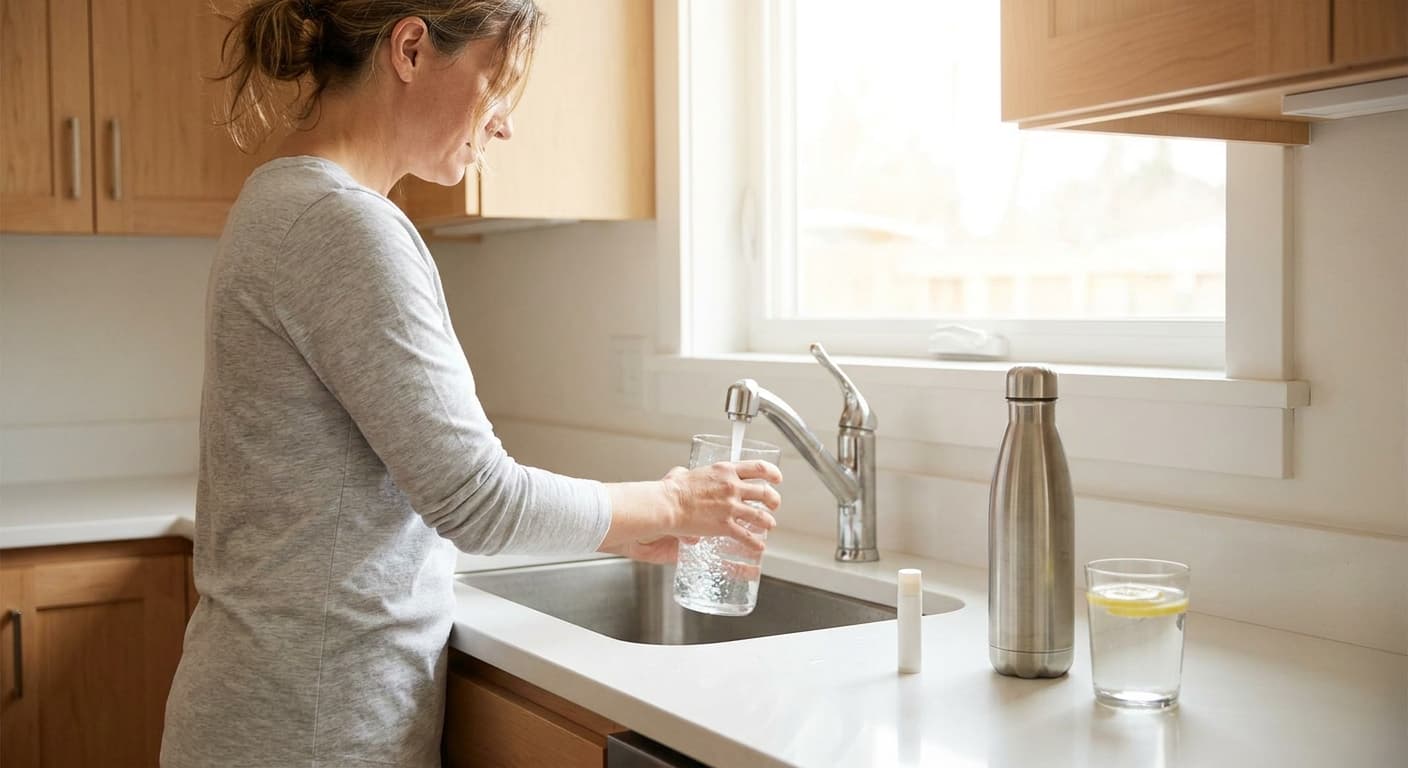
This is the most important step. Aim to drink water consistently throughout the day.
- Sip small amounts frequently instead of drinking large amounts at once.
- Keep a water bottle with you at all times.
- Set phone reminders to drink water every hour.
- Try drinking water before, during, and after meals.
Pro Tip: Use Dose AI's Water Logging feature to track your daily hydration. Seeing your water intake patterns can help you identify when you're falling short.
Use Sugar-Free Lozenges or Gum
Chewing gum or sucking on lozenges stimulates saliva production naturally.
- Choose sugar-free options to protect your teeth.
- Xylitol-based products can actually help prevent cavities.
- Keep them in your pocket, car, and desk.
Try a Humidifier
Adding moisture to the air in your home helps your mouth stay hydrated.
- Use one in your bedroom at night when dry mouth feels worst.
- Add essential oils like lemon or peppermint if you like.
- Clean it regularly to prevent mold growth.
Use Moisturizing Mouth Products
Several products are designed specifically for dry mouth relief.
- Dry mouth spray: Apply directly to your mouth as needed.
- Saliva substitutes: These mimic natural saliva and provide relief.
- Lip balm: Keep your lips hydrated too.
You can find these at most pharmacies without a prescription.
Adjust What You Eat and Drink
Certain foods and drinks can make dry mouth worse.
Avoid:
- Alcohol and caffeine (they're dehydrating)
- Salty or spicy foods (they increase thirst)
- Sugary drinks (they damage teeth and increase thirst)
- Dry foods like crackers or chips
Choose:
- Soups and broths
- Smoothies and protein shakes
- Soft fruits like watermelon or oranges
- Yogurt and pudding
Stay Consistent with Hydration
Track your water intake to make sure you're drinking enough.
- Most people need at least 8-10 glasses of water daily.
- You might need more if you exercise or live in a dry climate.
- Drink water even when you're not thirsty.
Use Dose AI's Water Logging: Record your water intake daily to see patterns. The app can help you understand if dehydration is contributing to your dry mouth.
How Long Does Dry Mouth Last?
For most people, dry mouth improves after 2-4 weeks as your body adjusts to tirzepatide. Some people experience it for several weeks longer.
If dry mouth continues beyond 4-6 weeks, talk to your doctor. They might suggest additional strategies or check for other causes.
When Should You Call Your Doctor?
Dry mouth usually isn't serious, but contact your healthcare provider if:
- Dry mouth lasts more than 6 weeks despite drinking more water.
- You develop mouth sores or cracked lips that won't heal.
- You have difficulty eating or swallowing because of severe dryness.
- You notice signs of infection like white patches in your mouth or swelling.
- Your teeth feel sensitive or you have new cavities (dry mouth increases cavity risk).
- Dry mouth is affecting your quality of life and home remedies aren't helping.
- You're also experiencing other concerning symptoms like extreme thirst or frequent urination.
Your doctor might:
- Recommend prescription saliva substitutes or stimulants.
- Check your overall hydration and electrolyte levels.
- Adjust your tirzepatide dose if dry mouth is severe.
- Rule out other causes like diabetes complications.
Protecting Your Teeth During Dry Mouth
Saliva protects your teeth. Without enough of it, cavities become more likely.
Take these steps:
- Brush your teeth twice daily with fluoride toothpaste.
- Floss once daily.
- Use a fluoride mouth rinse daily.
- Visit your dentist every 6 months instead of once a year.
- Avoid sugary snacks and drinks.
- Chew sugar-free gum after meals.
Tell your dentist you're taking tirzepatide. They can monitor your teeth more closely.
Track Your Symptoms with Dose AI
Understanding your dry mouth patterns helps you manage it better.
Use Dose AI's Symptom Tracker to:
- Record when dry mouth occurs and how severe it is.
- Note what you drank that day and how much water you consumed.
- Track other symptoms that happen at the same time.
- Identify patterns (like dry mouth being worse at certain times).
- Share this information with your doctor at your next appointment.
Over time, you'll see if your remedies are working and which strategies help you most.
Frequently Asked Questions
Q: Is dry mouth on tirzepatide dangerous?
A: Dry mouth itself isn't dangerous, but it can increase your risk of cavities and mouth infections. That's why staying hydrated and practicing good oral hygiene matter. Contact your doctor if you develop signs of infection.
Q: Can I stop taking tirzepatide if dry mouth is too uncomfortable?
A: Don't stop taking tirzepatide on your own. Talk to your doctor first. They can help you manage the side effect or adjust your dose. Many people find that dry mouth improves significantly within a few weeks.
Q: Will dry mouth go away on its own?
A: For most people, yes. Dry mouth typically improves as your body adjusts to tirzepatide, usually within 2-4 weeks. Staying hydrated speeds up improvement. If it persists beyond 6 weeks, contact your doctor.
Q: Does drinking more water really help with tirzepatide dry mouth?
A: Yes, absolutely. Dehydration is a major cause of dry mouth on tirzepatide. Drinking water consistently throughout the day is one of the most effective remedies. Aim for small, frequent sips rather than large amounts at once.
Q: What's the difference between dry mouth and a serious side effect?
A: Dry mouth alone is uncomfortable but not serious. However, contact your doctor if you develop mouth sores, difficulty swallowing, signs of infection, or if dry mouth interferes with eating and quality of life. These may need medical attention.
Related Dose AI Blog Articles
- How to Manage Nausea on Tirzepatide: Practical Tips That Work
- Tirzepatide Side Effects: What to Expect and When to Worry
- Staying Hydrated on GLP-1 Medications: A Complete Guide
- Best Foods to Eat When Taking Mounjaro or Zepbound
Medical Disclaimer
This article is for informational purposes only and is not medical advice. Tirzepatide (Mounjaro, Zepbound) is a medication prescribed by healthcare providers for specific medical conditions. Dry mouth and other side effects vary from person to person.
Always consult with your doctor or healthcare provider before making changes to your medication, starting new treatments, or if you experience concerning symptoms. This content does not replace professional medical advice, diagnosis, or treatment.
If you experience severe side effects or signs of an allergic reaction, seek immediate medical attention or call emergency services.
Sources
- National Institutes of Health (NIH). Tirzepatide for the treatment of type 2 diabetes and obesity. https://pubmed.ncbi.nlm.nih.gov/
- U.S. Food and Drug Administration (FDA). Mounjaro and Zepbound Prescribing Information. https://www.fda.gov/