Why Does My Weight Loss Plateau on Zepbound?
Understanding Weight Loss Plateaus on Zepbound
A weight loss plateau happens when the scale stops moving for weeks or even months. This is completely normal and happens to most people taking Zepbound. Your body isn't broken, and the medication isn't failing. Let me explain what's really happening.
Zepbound (tirzepatide) is an FDA-approved GLP-1 receptor agonist that helps you eat less and feel fuller longer. It works amazingly well at first. But your body adapts over time. This adaptation is called metabolic adjustment, and it's a natural part of weight loss.
Why Does Weight Loss Slow Down on Zepbound?
When you first start Zepbound, you lose weight quickly. Your body uses stored fat for energy. But as you lose weight, your body needs fewer calories to function. This is metabolic adaptation.
Here are the main reasons plateaus happen:
Your body adjusted to the medication. Tirzepatide works by reducing hunger and increasing fullness signals. Over time, your body becomes more accustomed to these signals.
You're eating more than you realize. As appetite suppression improves, some people gradually eat larger portions again. It happens slowly, so you might not notice.
Your calorie needs decreased. A smaller body burns fewer calories than a larger one. You might need to eat less to keep losing weight.
You reached a natural set point. Your body has a weight range it "wants" to maintain. Pushing past this takes more effort.
You're not moving as much. Exercise and daily activity matter. Less movement means fewer calories burned.
Sleep and stress changed. Poor sleep and high stress slow metabolism and increase hunger hormones.
What Should You Do When the Scale Stops Moving?
A plateau doesn't mean you should give up. Here are evidence-based strategies to restart progress:
Check Your Eating Habits
Start tracking what you actually eat. You might be surprised. Use a food logging app or Dose AI's Food & Macro Logging feature, which uses AI to analyze meals by photo and track your macros automatically.
Ask yourself:
- Am I eating larger portions than I did last month?
- Am I snacking more often?
- Am I drinking sugary beverages?
- Am I eating less protein than I should?
Protein is crucial. It keeps you full and preserves muscle during weight loss. Aim for protein at every meal.
Increase Your Movement
You don't need intense exercise. Start with what feels manageable.
Simple ways to move more:
- Take a 10-minute walk after meals
- Do 5 minutes of stretching in the morning
- Park farther away from store entrances
- Use stairs instead of elevators
- Do light strength training 2-3 times weekly
Movement helps preserve muscle, boosts metabolism, and improves mood.
Improve Your Sleep
Poor sleep sabotages weight loss. Sleep deprivation increases hunger hormones and cravings. Aim for 7-9 hours nightly.
Better sleep habits:
- Go to bed at the same time each night
- Keep your bedroom cool and dark
- Put phones away 30 minutes before bed
- Limit caffeine after 2 PM
Manage Your Stress
Chronic stress raises cortisol, a hormone that promotes fat storage. Stress also triggers emotional eating.
Stress management ideas:
- Try deep breathing exercises
- Meditate for 5-10 minutes daily
- Spend time in nature
- Talk to a friend or therapist
- Do activities you enjoy
Track Your Symptoms and Patterns
Use Dose AI's Symptom Tracker to record how you feel daily. Look for patterns. Maybe you eat more on stressful days or sleep poorly after caffeine. Understanding your patterns helps you make better choices.
Stay Hydrated
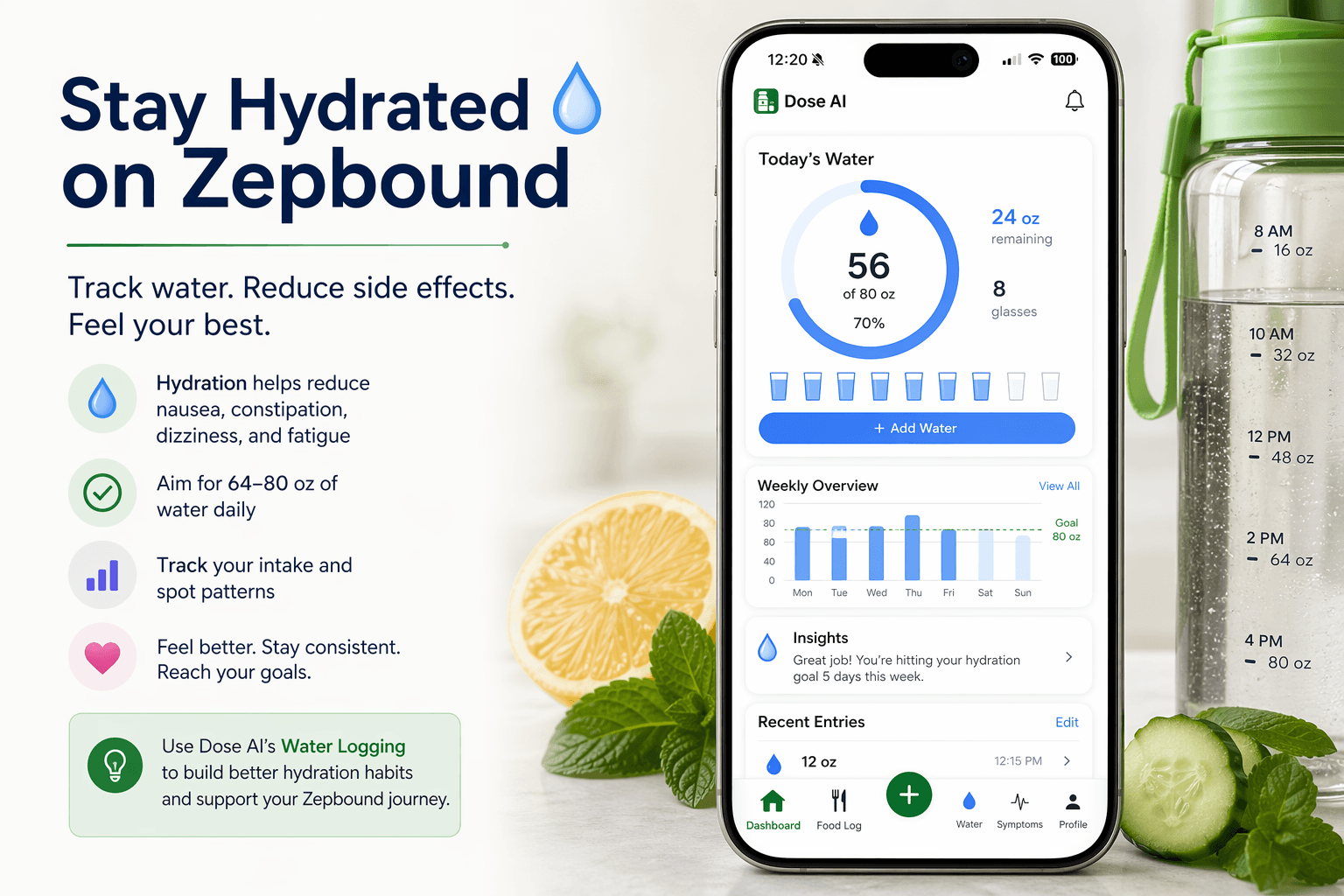
Dehydration can slow metabolism and increase hunger. Drink water throughout the day. Use Dose AI's Water Logging feature to track your hydration and ensure you're drinking enough.
Aim for half your body weight in ounces daily. For example, a 200-pound person should drink 100 ounces.
Review Your Nutrition
Focus on nutrient-dense foods:
- Lean proteins: chicken, fish, turkey, eggs
- Vegetables: broccoli, spinach, bell peppers, carrots
- Healthy fats: olive oil, avocado, nuts
- Whole grains: oats, brown rice, quinoa
Avoid ultra-processed foods. They're calorie-dense and less filling.
Consider Your Dose
If you've been on the same Zepbound dose for several months and your appetite suppression has weakened, talk to your doctor. They might increase your dose. Dose increases should only happen under medical supervision.
Track Your Progress Beyond the Scale
The scale isn't everything. Take measurements and progress photos. Use Dose AI's Progress Tracker to log weight and photos over time. You might be losing fat while gaining muscle, which won't show on the scale.
Other signs of progress:
- Clothes fit better
- You have more energy
- Your mood improved
- You sleep better
- Blood pressure or blood sugar improved
Be Patient
Weight loss isn't linear. Plateaus usually last 2-8 weeks. Then the scale moves again. This is normal. Stay consistent with healthy habits.
When Should You Contact Your Doctor?
Reach out to your healthcare provider if:
- Your plateau lasts longer than 8-12 weeks with no progress
- You regain significant weight
- You experience new or worsening side effects
- You feel your appetite suppression has completely stopped
- You're unsure if a dose adjustment is right for you
Your doctor can review your progress and decide if a dose increase, medication change, or other adjustments make sense.
How Dose AI Can Help During a Plateau
Dose AI is designed to help you track and optimize your GLP-1 journey:
Shot Logging: Record when and where you take your Zepbound injection. Consistency matters.
Food & Macro Logging: Take a photo of your meal, and AI analyzes calories, protein, carbs, and fats. This reveals eating patterns you might miss.
Water Logging: Track hydration to prevent side effects and support metabolism.
Symptom Tracker: Log daily symptoms like hunger, energy, and mood. Identify patterns that affect weight loss.
Progress Tracker: Log weight and photos to see the full picture of your progress beyond just the scale.
Personalized Food Idea Assistant: Get AI-powered meal suggestions that fit your macros and preferences.
These tools help you stay accountable and make data-driven decisions about your health.
Frequently Asked Questions
How long does a weight loss plateau last on Zepbound?
Most plateaus last 2-8 weeks. Some people experience longer plateaus. Staying consistent with healthy habits usually restarts progress. If your plateau lasts longer than 12 weeks with no movement, talk to your doctor.
Does my body get used to Zepbound?
Your body can become more accustomed to tirzepatide's effects over time. This is called tolerance. Your appetite suppression might feel less strong. This doesn't mean the medication stopped working—it means your body adapted. Your doctor can discuss a dose increase if needed.
Should I increase my Zepbound dose during a plateau?
Only your doctor should decide if a dose increase is right for you. Don't adjust your dose on your own. Dose increases should happen gradually under medical supervision. Talk to your healthcare provider about your plateau before making any changes.
Can I lose weight without exercise on Zepbound?
Yes, but movement helps. Exercise preserves muscle, boosts metabolism, and improves mood. You don't need intense workouts—even light activity like walking helps. Combine Zepbound with gentle movement for best results.
What if I'm doing everything right but still not losing weight?
Plateaus happen even when you're doing everything well. This is normal. Give it 2-8 weeks. If nothing changes after 12 weeks, contact your doctor. They can review your habits, check your health, and decide if adjustments are needed.
Medical Disclaimer
This article provides general educational information about Zepbound and weight loss plateaus. It is not medical advice. Always consult your healthcare provider before making changes to your Zepbound regimen, diet, or exercise routine. Your doctor can provide personalized guidance based on your health history and goals. Never adjust your dose without medical supervision.
Related Dose AI Blog Posts
- How to Manage GLP-1 Side Effects: A Complete Guide
- Best Foods to Eat on Zepbound for Sustainable Weight Loss
- Sleep and Weight Loss: Why Rest Matters on GLP-1 Medications
- The Difference Between Zepbound and Ozempic: What You Need to Know
- How to Track Your GLP-1 Progress: Beyond the Scale
Sources
- National Institutes of Health (NIH). "Weight Loss Plateau: Metabolic Adaptation and Strategies to Overcome It." NCBI PubMed, 2023.
- FDA. "Zepbound (tirzepatide) Prescribing Information." U.S. Food and Drug Administration, 2023.