How Should Night-Shift Workers Time GLP-1 Shots and Meals?
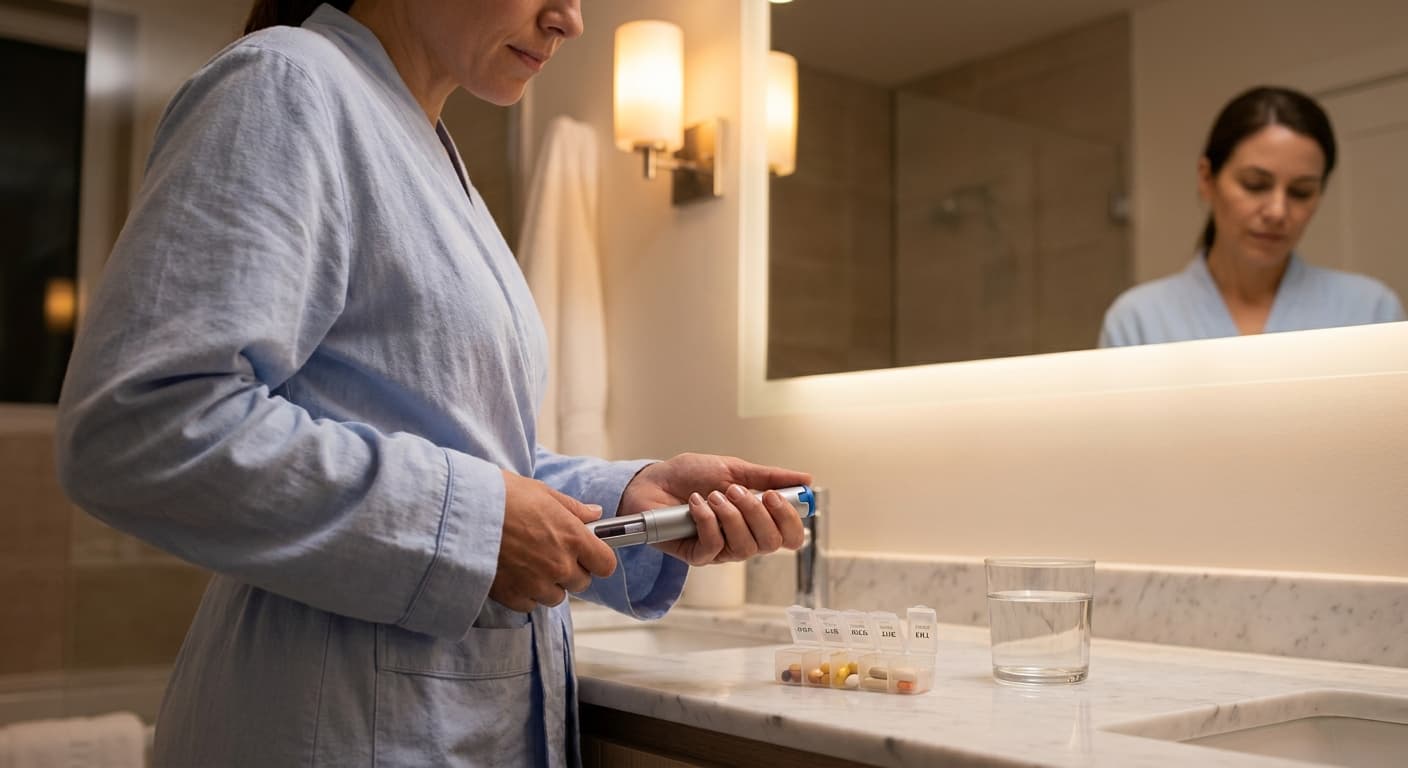
Working nights while taking GLP-1 medications like Ozempic, Mounjaro, or Wegovy adds complexity. Your body's natural rhythm gets disrupted. But with the right strategy, you can make it work.
Understanding GLP-1 Medications and Your Body Clock
GLP-1 receptor agonists work with your body's natural rhythms. They slow digestion and reduce hunger signals. Night-shift work disrupts your circadian rhythm—your internal 24-hour clock.
This disruption affects when you feel hungry. It also impacts how your body processes medication and food. The good news? You can adapt your GLP-1 routine to fit your schedule.
What Happens When You Work Night Shifts?
Your body expects food and sleep at certain times. Night-shift work flips this schedule. This causes several challenges:
- Your digestive system gets confused about meal timing
- Sleep disruption affects medication absorption
- Hunger signals don't follow your work schedule
- Energy levels drop at unexpected times
- Nausea and side effects may worsen with fatigue
Understanding these challenges helps you plan better.
Should You Change Your Shot Day?
Most GLP-1 medications work on a weekly schedule. Ozempic and Wegovy use once-weekly injections. Mounjaro is also once-weekly. Zepbound follows the same pattern.
The short answer: You don't need to change your injection day based on night shifts.
However, timing matters for consistency. Here's the strategy:
Pick a shot day that works with your schedule:
- Choose a day when you have time to rest afterward
- Many night-shift workers choose their last night before days off
- This gives your body time to adjust without work stress
- Consistency matters more than the specific day
Example schedule: If you work Monday-Thursday nights and have Friday-Sunday off, take your shot Friday morning before sleep. Your body rests while the medication starts working.
Timing Your Meals Around Night-Shift Work
GLP-1 medications reduce appetite and slow digestion. This is helpful, but timing meals matters.
Before Your Night Shift
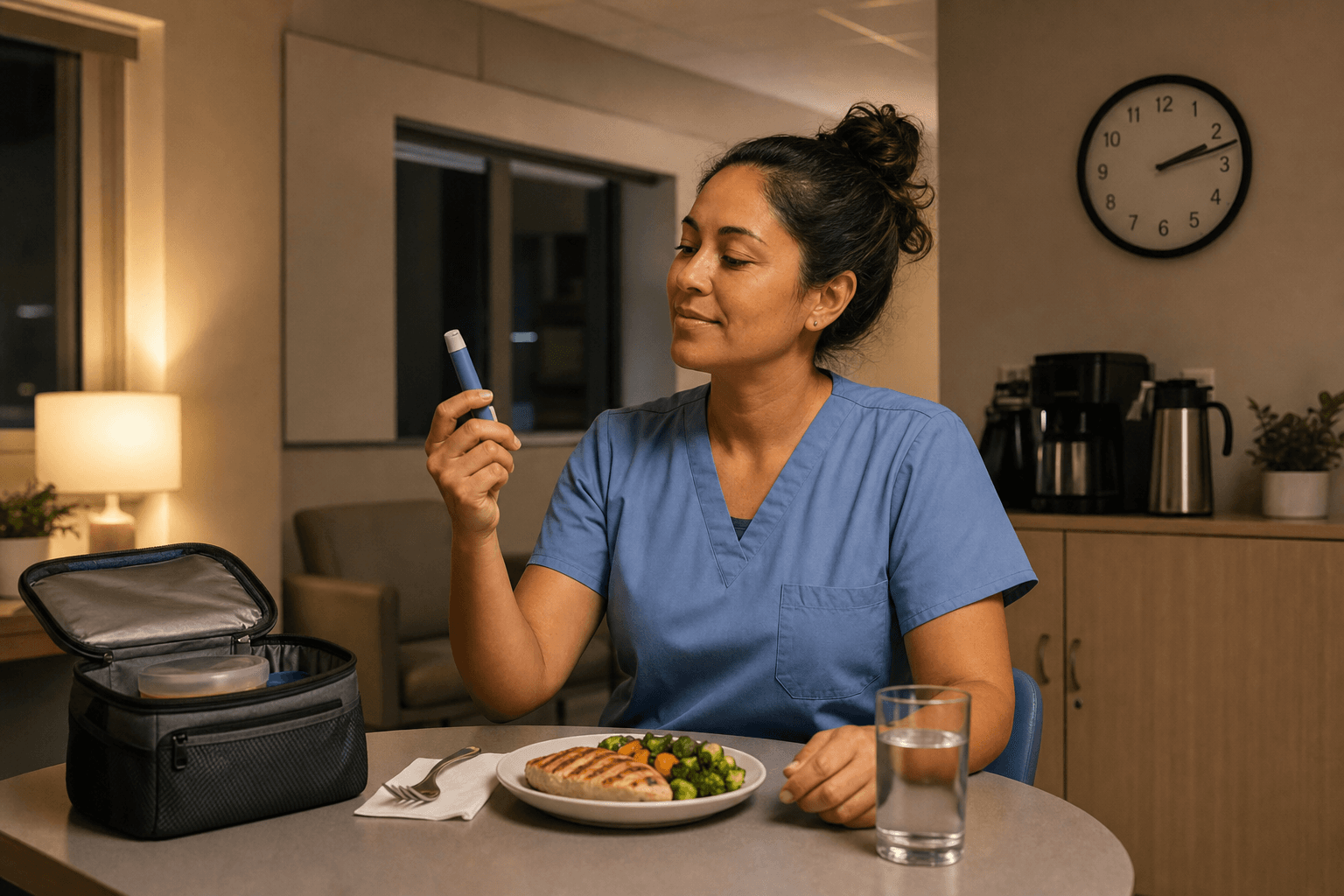
Eat a balanced meal 2-3 hours before work:
- Include protein to stay full longer
- Add healthy fats for sustained energy
- Include complex carbs for steady blood sugar
- Drink plenty of water
Example meal: Grilled chicken, sweet potato, and steamed broccoli. This combination prevents hunger during your shift.
During Your Night Shift
Most GLP-1 users don't feel hungry during work. But you still need fuel.
Eat small, protein-focused snacks:
- Greek yogurt with berries
- Hard-boiled eggs
- String cheese
- Almonds or nuts
- Protein shake
Eat every 3-4 hours if you normally do. Some night-shift workers on GLP-1 only need one meal during an 8-hour shift. Listen to your body.
Stay hydrated. Dehydration makes nausea worse. Drink water throughout your shift. Use Dose AI's Water Logging feature to track hydration and spot patterns with your energy levels.
After Your Night Shift
You're tired. Your body wants sleep, not food. This is normal on GLP-1.
Eat a light meal if hungry:
- Scrambled eggs with toast
- Oatmeal with protein powder
- Greek yogurt and granola
- Cottage cheese and fruit
Then sleep. Don't force yourself to eat if you're not hungry.
Creating Your Personal Night-Shift GLP-1 Schedule
Every person is different. Your schedule depends on:
- How long your night shifts are (8 hours? 12 hours?)
- How many nights you work per week
- Your current dose of GLP-1 medication
- How your body responds to the medication
- Your job's physical demands
Step-by-Step: Build Your Schedule
Step 1: Track your natural patterns
For one week, log your meals, energy, and hunger using Dose AI's Food & Macro Logging and Symptom Tracker. Notice when you naturally feel hungry during night shifts.
Step 2: Identify your best shot day
Choose the day you have the most rest time after injection. This is usually a day off or your last night before days off.
Step 3: Plan meals around work
Map out your typical night shift. Add meal times 2-3 hours apart. Include 1-2 snacks and 1 main meal.
Step 4: Test and adjust
Follow your schedule for 2-3 weeks. Track how you feel using Dose AI's Symptom Tracker. Note energy, nausea, hunger, and sleep quality.
Step 5: Refine based on results
If you're too hungry, add more protein. If nausea is worse, eat earlier. If you're exhausted, you may need more calories.
Handling Common Night-Shift GLP-1 Challenges
Challenge: Nausea During Night Shifts
Fatigue makes nausea worse. GLP-1 medications slow digestion, which can increase nausea when you're tired.
Solutions:
- Eat smaller meals more frequently
- Avoid greasy or heavy foods before work
- Stay hydrated throughout your shift
- Rest between shifts when possible
- Talk to your doctor if nausea is severe
Challenge: Skipped Meals and Low Energy
You're not hungry, but you're exhausted. This is common.
Solutions:
- Eat protein-focused meals even if small
- Don't skip meals entirely
- Set phone reminders to eat
- Keep convenient snacks at work
- Track meals and energy with Dose AI to see connections
Challenge: Sleep Disruption
Night-shift work already disrupts sleep. GLP-1 medications can add to this.
Solutions:
- Keep your sleep space cool and dark
- Avoid screens 30 minutes before bed
- Take your shot when you have time to rest
- Stick to consistent meal times even on days off
- Log sleep patterns in Dose AI's Symptom Tracker
Challenge: Inconsistent Schedules
Some night-shift workers don't work the same nights every week.
Solutions:
- Pick a fixed shot day regardless of shift schedule
- Adjust meal timing to match your actual work hours
- Use Dose AI's Shot Logging to track when you inject
- Keep a flexible meal plan, not rigid rules
- Adjust as your schedule changes
Should You Take Your Shot Before or After Sleep?
Timing your shot relative to sleep matters.
Most people inject their GLP-1 in the morning. But night-shift workers have a different "morning."
Best practice: Take your shot when you wake up, before your sleep period.
Example: If you work 10 PM to 6 AM, take your shot at 6 AM before you sleep. Your body will absorb the medication while resting.
This approach:
- Reduces nausea during work
- Gives your body time to adjust
- Aligns with your personal circadian rhythm
- Makes side effects less noticeable
Using Dose AI to Optimize Your Night-Shift GLP-1 Routine
Dose AI offers tools designed exactly for this situation.
Shot Logging: Record when you take your injection. Over time, you'll see which days work best for your schedule.
Food & Macro Logging: Log meals by photo. The AI analyzes your macros automatically. This helps you spot patterns: Are you eating enough protein? Getting enough calories? How do different meals affect your energy?
Water Logging: Track hydration throughout your shift. Dehydration worsens nausea. Logging helps you stay on top of it.
Symptom Tracker: Record daily nausea, energy, hunger, and sleep quality. After 2-3 weeks, patterns emerge. You'll see which meals, shot timings, and sleep schedules work best.
Progress Tracker: Log weight and photos. Night-shift workers sometimes see slower progress due to irregular schedules. Tracking helps you see the real picture.
Personalized Food Idea Assistant: Get AI meal suggestions tailored to your needs. The assistant learns your preferences and suggests meals that fit your night-shift schedule.
When to Contact Your Doctor
Talk to your healthcare provider if:
- Nausea is severe or doesn't improve after 2-3 weeks
- You're losing weight too quickly
- You can't eat enough to meet your calorie needs
- You're experiencing new side effects
- Your symptoms worsen with your current schedule
- You need to adjust your dose for night-shift work
Your doctor can help fine-tune your approach. They might suggest timing adjustments or dose changes.
Frequently Asked Questions
Can I take my GLP-1 shot at night instead of the morning?
Yes, you can adjust timing to match your sleep schedule. If your "morning" is after a night shift, take your shot then. Consistency matters more than the specific time of day. Always confirm timing with your healthcare provider.
Will working night shifts slow my weight loss on GLP-1?
Possibly. Circadian rhythm disruption can slow metabolism slightly. Irregular eating patterns may affect results. However, many night-shift workers see steady progress. Tracking with Dose AI helps you identify what's working for your body specifically.
Do I need to eat more calories because I work nights?
Not necessarily. GLP-1 medications reduce appetite naturally. Eat when hungry, stop when full. If you're exhausted despite eating, talk to your doctor. You might need a slight calorie increase, but GLP-1 usually prevents overeating.
How long does it take to adjust my GLP-1 routine to night shifts?
Most people adjust within 2-3 weeks. Your body adapts to the new schedule. Use this time to track everything with Dose AI. After 3 weeks, you'll have clear data on what works best.
Can I switch between day and night shifts while on GLP-1?
Yes, but consistency helps. If you rotate shifts, pick a fixed shot day and adjust meal timing to match your actual work hours. Track your symptoms closely during transitions. Your body may need 1-2 weeks to readjust each time you change schedules.
Medical Disclaimer
This article provides general educational information about GLP-1 medications and night-shift work. It is not medical advice. GLP-1 medications (including Ozempic, Mounjaro, Wegovy, and Zepbound) are prescription medications that require supervision by a healthcare provider.
Do not change your medication schedule, dose, or meal timing without consulting your doctor. Individual responses to GLP-1 medications vary. Your healthcare provider can offer personalized guidance based on your medical history, current dose, and specific work schedule.
If you experience severe side effects, signs of dehydration, or significant weight loss, contact your healthcare provider immediately.
Related Dose AI Blog Articles
- How to Manage GLP-1 Side Effects at Work
- Best Foods for Night-Shift Workers on Ozempic
- Does Sleep Affect GLP-1 Weight Loss?
- GLP-1 Medication Timing: Morning vs. Evening
Sources
- National Institutes of Health (NIH). "Circadian Rhythm Disruption and Metabolic Health." https://www.nih.gov
- FDA. "Ozempic (semaglutide) Prescribing Information." https://www.fda.gov