Your GLP-1 Journey,Month by Month
Based on published clinical trial data, here's what the research shows about the pace of weight loss on GLP-1 medications. Individual results vary significantly.
About This Timeline
The data presented here is based on aggregate results from published clinical trials, primarily the STEP trials (semaglutide) and SURMOUNT trials (tirzepatide). These are averages across thousands of participants — not predictions for any individual.
Your personal timeline will depend on many factors including your starting weight, medication type, dosage, nutrition, activity level, and individual biology. Always discuss your progress and expectations with your healthcare provider.
What the Research Shows
Month-by-month overview based on published clinical trial data.
Getting Started
- Dose escalation phase for most medications — starting low and increasing gradually
- Appetite changes may begin as the medication takes effect
- Some GI side effects are common as the body adjusts (nausea, reduced appetite)
- Weight loss typically modest — this is normal and expected
Focus: Establishing your medication routine, tracking your baseline weight, and logging symptoms.
Early Progress
- Most rapid weight loss phase observed in clinical trials
- Appetite suppression typically strongest during this period
- Body continues adapting to medication as dose increases
Focus: Building consistent nutrition habits, meeting daily protein goals, and staying hydrated.
Continued Loss
- Weight loss continues but the rate of loss may begin to slow
- Many users well-adapted to medication by now — side effects often improve
- GI side effects typically subside as the body adjusts
Focus: Maintaining nutrition quality, adding regular exercise, and tracking progress photos.
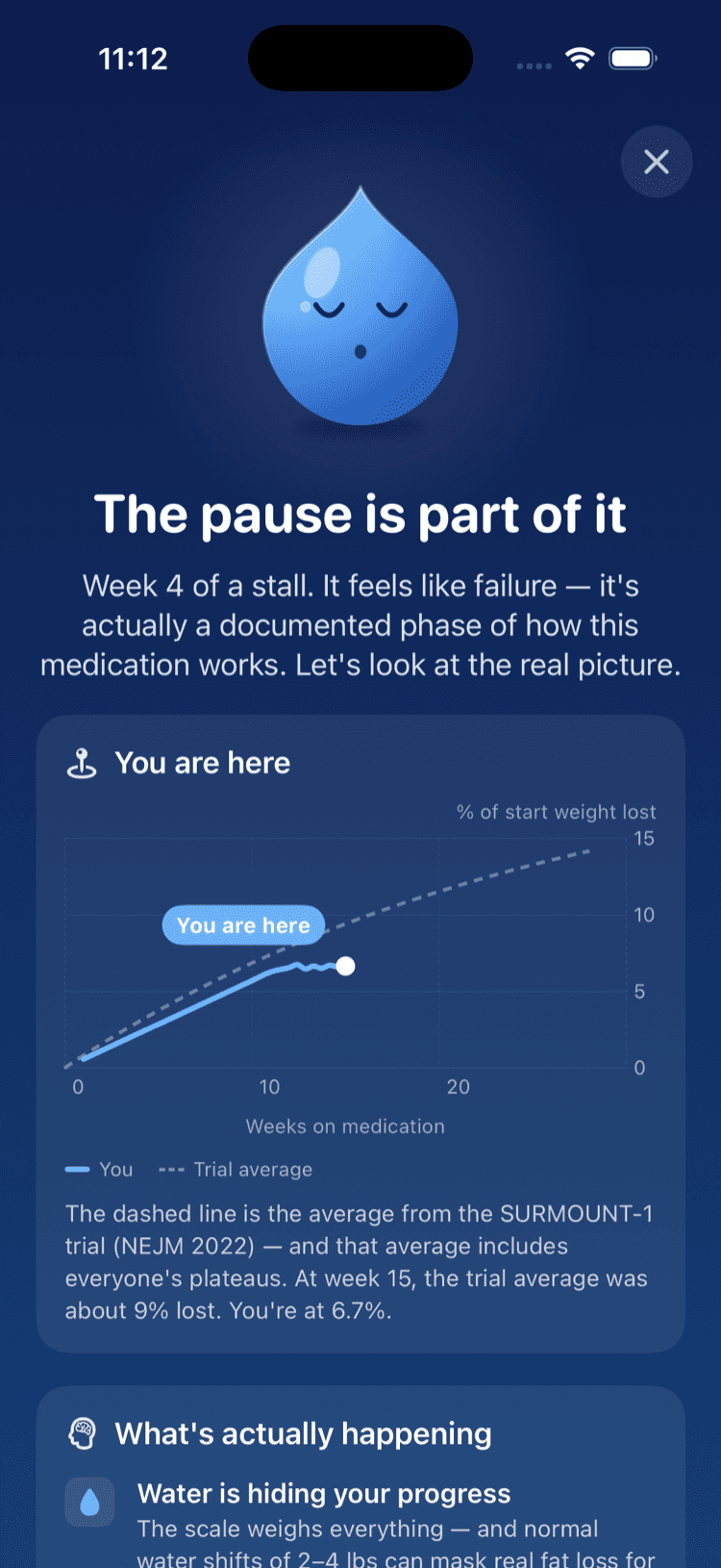
Approaching Plateau
- Rate of weight loss slows for most people as the body adapts
- Many reach plateau zone — this is a normal metabolic response
- Body composition changes continue even when the scale slows
Focus: Strength training to preserve lean muscle, protein optimization, and consistent tracking.
Maintenance Phase
- Most participants at or near maximum weight loss in clinical trials
- Focus shifts from losing weight to maintaining progress
- Ongoing medication combined with lifestyle habits matters most
Focus: Long-term healthy habits, consistent tracking, and regular check-ins with your healthcare provider.
Factors That Affect Your Timeline
Clinical trial averages are useful references, but your timeline depends on several personal factors.
Starting Weight
People with higher starting BMIs tend to lose more total weight in clinical trials, though percentage-based loss follows similar patterns across weight categories.
Medication Type
Clinical trials show different average outcomes for semaglutide vs. tirzepatide. The dual-action GIP/GLP-1 medications (tirzepatide) showed higher average weight loss in head-to-head comparisons.
Nutrition & Exercise
Research shows that combining GLP-1 medications with adequate protein intake and regular exercise — especially resistance training — leads to better outcomes and more lean mass preservation.
Individual Biology
Genetics, metabolic rate, hormonal factors, stress, sleep quality, and other health conditions all influence how your body responds to GLP-1 medications. No two journeys are identical.
Track Your Personal Timeline with Dose AI
Clinical averages are useful context, but what matters most is your progress. Dose AI tracks your weight, medication, nutrition, and symptoms — so you can watch your own timeline unfold and share meaningful data with your healthcare provider.
Start Tracking FreeMedical Disclaimer: This content is for informational purposes only and is not a substitute for professional medical advice, diagnosis, or treatment. Always consult your healthcare provider before making any decisions about your health or medications.
Frequently AskedQuestions
Common questions about the GLP-1 weight loss timeline and what to expect.
Have More Questions?When will I start losing weight on GLP-1?
Most clinical trial participants began losing weight within the first 2-4 weeks of starting GLP-1 medications. However, the first month is typically a dose-escalation period where the focus is on tolerability, not rapid weight loss. Meaningful, noticeable weight loss generally becomes more apparent in months 1-3.
Is it normal to not lose weight the first month?
Yes, this is very common and expected. The first month involves dose titration — starting at a low dose and gradually increasing. Your body is adjusting to the medication, and weight loss during this phase is typically modest (1-3% in clinical trials). This does not mean the medication isn't working.
What if my weight loss is slower than the averages?
Clinical trial averages represent the median experience across thousands of participants. Individual results vary significantly based on starting weight, medication type, diet, exercise, genetics, and many other factors. If you are losing weight at all, the medication is working — just at your body's own pace. Discuss any concerns with your healthcare provider.
When should I expect a plateau?
Based on clinical trial data, most participants experience a slowing of weight loss between months 6-12, with many reaching a plateau around the 12-month mark. This is caused by metabolic adaptation — your body adjusting its energy expenditure to your new, lower weight. Plateaus are a normal part of the process, not a sign that something is wrong.
Can Dose AI show my weight loss timeline?
Yes. Dose AI tracks your weight over time and displays your personal progress with intuitive trend charts, milestone markers, and total weight lost. You can see your own timeline alongside your nutrition, medication, and symptom data — and generate reports to share with your healthcare provider.
Start Your GLP-1 Timelinewith Dose AI
Track your personal weight loss journey from day one. Medication, nutrition, weight, symptoms — all in one free app.
Free download · iOS · Premium features available
Dose AI is a tracking and information tool, not a medical device. Always consult your healthcare provider for medical advice about your GLP-1 medication.