How Can You Meal Prep for Appetite Changes During GLP-1 Weeks?
One of the biggest challenges with GLP-1 medications like Ozempic, Mounjaro, Tirzepatide, and Wegovy is managing appetite swings. Some days you're hungry. Other days, food sounds unappealing. Smart meal prep helps you stay nourished without forcing yourself to eat.
Understanding Your GLP-1 Appetite Cycle
When does appetite change happen?
Most people notice appetite shifts during their injection week. The first few days after your shot, appetite suppression peaks. By day 5-7, hunger may return gradually.
Your appetite pattern is unique to you. Tracking helps you spot your personal rhythm.
Why does this happen?
GLP-1 receptor agonists work by slowing stomach emptying and signaling fullness to your brain. This natural appetite reduction is the medication working as intended.
Meal Prep Strategy 1: Prep Flexible Portions
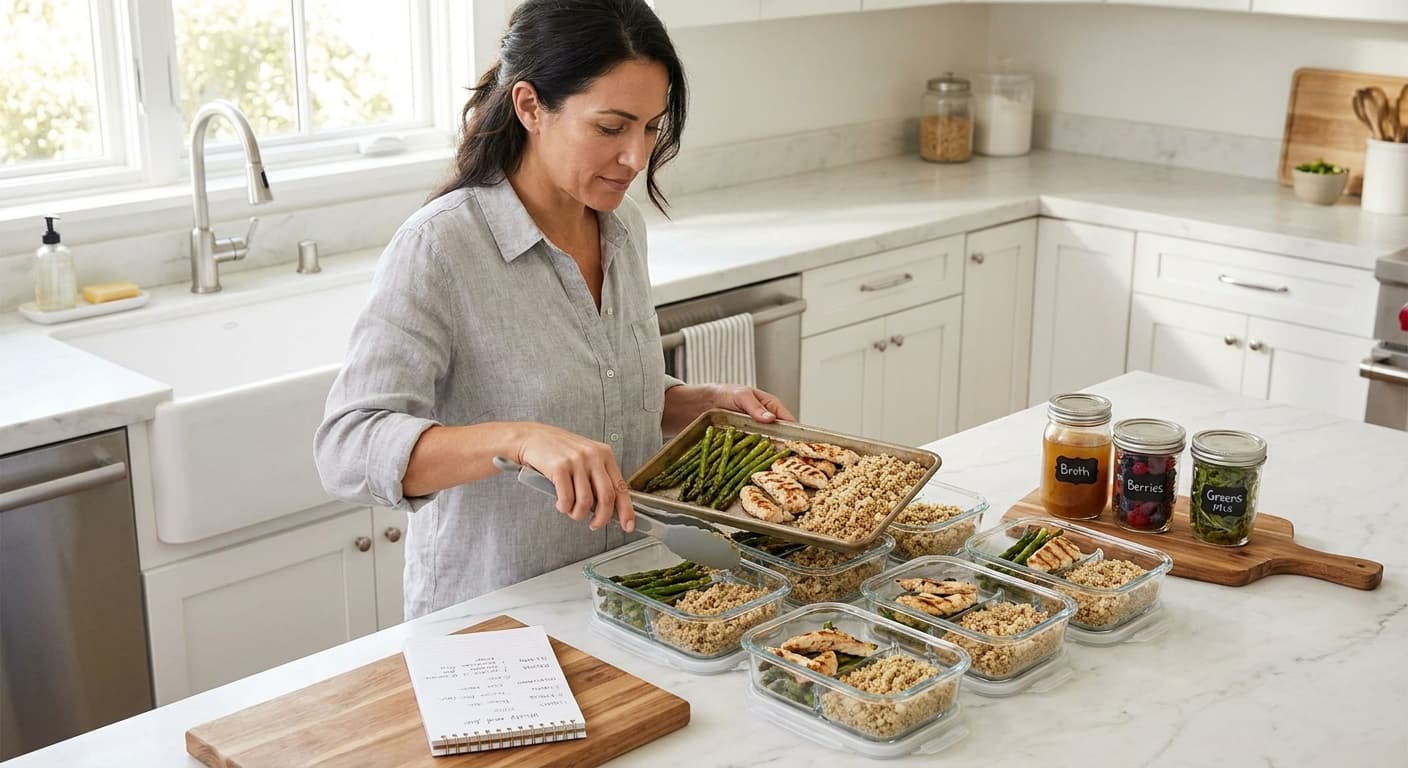
Cook proteins in bulk, portion separately.
Cook a large batch of grilled chicken, ground turkey, or baked salmon on Sunday. Divide into small containers (3-4 oz portions). This way, you can grab exactly what you want, not what a full meal requires.
Why this works: When appetite is low, you eat less. When it returns, you have more available. No waste. No pressure.
Example flexible proteins:
- Grilled chicken breast
- Ground turkey (cooked with seasoning)
- Baked salmon or white fish
- Hard-boiled eggs
- Greek yogurt (plain, no sugar)
Meal Prep Strategy 2: Prepare Nutrient-Dense Broths and Soups
Make bone broth or vegetable broth in large batches.
Broth is soothing, hydrating, and protein-rich. When appetite is suppressed, sipping warm broth feels manageable. It prevents dehydration, which worsens nausea and fatigue.
Easy broth meal prep:
- Simmer chicken bones or vegetable scraps for 8-12 hours
- Strain and freeze in ice cube trays
- Thaw and reheat as needed
- Add cooked vegetables or shredded protein for a quick meal
Broth requires no chewing, no heavy digestion. Perfect for low-appetite days.
Meal Prep Strategy 3: Pre-Cut Vegetables and Healthy Snacks
Prep vegetables that require zero cooking.
Cut bell peppers, cucumbers, carrots, and celery into sticks. Store in water-filled containers. These are low-calorie, high-fiber, and satisfying when you do feel like eating.
Snack prep ideas:
- Cherry tomatoes
- Snap peas
- Cucumber slices
- Bell pepper strips
- Olives
- Almonds (small portions, 1 oz bags)
When appetite is low, these require minimal effort. When appetite returns, they're ready to grab.
Meal Prep Strategy 4: Batch Prep Soft, Easy-to-Digest Meals
Prepare meals that don't feel heavy.
Soft foods digest easier when appetite is suppressed. Nausea and fullness happen less often.
Easy-to-digest meal ideas:
- Scrambled eggs with cheese
- Cottage cheese with berries
- Mashed sweet potato with cinnamon
- Oatmeal with protein powder
- Smoothie bases (frozen fruit, yogurt—blend when hungry)
- Rice and mild ground turkey
- Pasta with olive oil and parmesan
These meals feel comforting without overwhelming your stomach.
Meal Prep Strategy 5: Use the Dose AI Food Logging Feature
Track what you actually eat during appetite swings.
The Dose AI app lets you log meals by photo. The AI analyzes your macros automatically. Over 2-3 weeks, you'll see patterns.
What patterns reveal:
- Which days appetite dips most
- Which foods feel better on low-appetite days
- How much protein you're actually getting
- When hydration drops
Use this data to prep smarter next week. If Tuesday is always low-appetite, prep extra broth and soft foods for Tuesdays.
Meal Prep Strategy 6: Prepare High-Protein, Low-Volume Options
Pack protein into small portions.
When appetite is suppressed, eating large volumes feels impossible. But you still need nutrients. High-protein, small-volume foods solve this.
High-protein, low-volume foods:
- String cheese
- Beef jerky (unseasoned or low-sodium)
- Protein powder (mix into smoothies or yogurt)
- Tuna or salmon cans
- Deli turkey slices
- Nuts and seeds (portion into 1 oz bags)
- Protein bars (choose low-sugar options)
A small 3 oz portion of salmon delivers 25g protein. It feels manageable to eat. Your body gets what it needs.
Meal Prep Strategy 7: Plan Around Your Shot Day
Prep heavier meals before your injection.
Most people have better appetite the day before and day-of injection. Use this window to eat more substantial meals.
Pre-shot meal plan (days 1-2):
- Cook larger portions
- Include more carbs and healthy fats
- Eat more frequently
- Build a "food buffer" in your body
Post-shot meal plan (days 3-7):
- Rely on prepped broth, soft foods, small proteins
- Focus on hydration
- Eat smaller, frequent snacks
- Don't pressure yourself to finish meals
Hydration Matters More Than You Think
Appetite suppression causes dehydration.
When you eat less, you drink less naturally. But dehydration worsens nausea, fatigue, and constipation—the very side effects you're trying to avoid.
Hydration meal prep:
- Freeze herbal tea in ice cube trays (add to water for flavor)
- Prep electrolyte drink batches (low-sugar options)
- Keep a water bottle visible at all times
- Use the Dose AI Water Logging feature to track hydration
Aim for half your body weight in ounces daily. If you weigh 200 pounds, drink 100 ounces of water.
Meal Prep Shopping List for GLP-1 Users
Proteins:
- Chicken breast
- Ground turkey
- Salmon or white fish
- Eggs
- Greek yogurt (plain)
- Cottage cheese
Vegetables:
- Bell peppers
- Broccoli
- Carrots
- Cucumbers
- Snap peas
- Leafy greens (spinach, kale)
Pantry staples:
- Bone broth or vegetable broth
- Olive oil
- Low-sodium seasonings
- Canned tuna or salmon
- Nuts (almonds, walnuts)
- Protein powder
Hydration:
- Herbal tea bags
- Low-sugar electrolyte packets
- Sparkling water (if plain water feels boring)
Common Meal Prep Mistakes to Avoid
Mistake 1: Prepping only one meal type.
If you prep only chicken and rice, but appetite changes, you're stuck eating the same thing when it sounds unappealing. Prep variety.
Mistake 2: Forcing yourself to eat on low-appetite days.
Your body is telling you something. Trust it. Eat less, but eat nutrient-dense foods. Don't skip meals entirely—just make them smaller.
Mistake 3: Ignoring hydration.
Dehydration amplifies nausea and fatigue. It's not optional. Track water like you track food.
Mistake 4: Not tracking your patterns.
Without data, you're guessing. Use the Dose AI Symptom Tracker to log appetite, nausea, and energy daily. After 2 weeks, patterns emerge. Plan next week based on real data.
Mistake 5: Prepping only soft foods.
Soft foods are helpful, but you still need fiber and nutrients. Include raw vegetables, nuts, and whole grains too.
Using Dose AI to Optimize Your Meal Prep
Dose AI tools that help:
-
Food & Macro Logging: Take a photo of your meal. AI calculates protein, carbs, fat, and calories instantly. You'll know if you're hitting protein goals even on low-appetite days.
-
Symptom Tracker: Log appetite level daily (1-10 scale). Over time, you'll see which days are hardest. Plan your prep around this.
-
Progress Tracker: Log weight weekly. Notice how appetite changes affect your progress. This motivates smarter meal prep.
-
Water Logging: Track hydration. You'll see the connection between water intake and nausea/energy.
Use these features to build a personalized meal prep plan, not a generic one.
Sample Weekly Meal Prep Schedule
Sunday (before shot day):
- Cook 2 lbs grilled chicken breast
- Roast 2 lbs salmon
- Hard-boil a dozen eggs
- Chop vegetables (peppers, cucumbers, carrots)
- Make 2 quarts bone broth
- Portion proteins into small containers
Monday-Tuesday (around shot day):
- Appetite higher
- Eat larger portions of prepped proteins
- Include more carbs and healthy fats
- Snack between meals
Wednesday-Friday (post-shot, appetite lower):
- Rely on broth, soft foods, small protein portions
- Eat smaller, frequent meals
- Focus on hydration
- Eat nutrient-dense snacks (nuts, cheese, hard-boiled eggs)
Saturday:
- Reassess the week using Dose AI data
- Plan next week's prep based on patterns
- Enjoy a meal you've been craving (if appetite allows)
When to Contact Your Healthcare Provider
Stop meal prepping and call your doctor if:
- You haven't eaten solid food for more than 3 days
- You're losing more than 2 pounds per week
- You feel dizzy, faint, or extremely fatigued
- You're experiencing severe nausea or vomiting
- You can't keep fluids down
These signs suggest your GLP-1 dose may need adjustment.
Frequently Asked Questions
Q: Should I eat if I'm not hungry on GLP-1?
A: Yes, but eat smaller amounts of nutrient-dense foods. Aim for protein and hydration even when appetite is suppressed. Skipping meals entirely can cause fatigue and muscle loss. Use the Dose AI Food Logging feature to ensure you're getting enough nutrition despite lower appetite.
Q: How much protein do I need on GLP-1?
A: Aim for 25-30g protein per meal, or 80-100g daily. This prevents muscle loss during weight loss. On low-appetite days, this might mean 3-4 small protein snacks instead of 3 full meals. Track with Dose AI to verify you're hitting your goal.
Q: Can I meal prep for a full week or should I prep twice?
A: Prep twice weekly if possible. Foods stay fresher, and you can adjust based on how the first week went. Use your Dose AI Symptom Tracker data from week one to improve week two's prep. If twice-weekly prep isn't realistic, focus on freezer-friendly items like broth, cooked proteins, and pre-portioned meals.
Q: What if nothing sounds good to eat?
A: This is appetite suppression at work. Drink broth, eat soft foods, and hydrate. Log this in Dose AI—it's data. If it lasts more than 3-4 days or you feel weak, contact your doctor. Sometimes a temporary dose adjustment helps.
Q: Is it normal to have no appetite for a week straight?
A: Appetite suppression varies. Some people have mild changes; others have strong suppression. Both are normal. Track your pattern for 3-4 weeks using Dose AI. If appetite never returns and you're struggling to eat, contact your healthcare provider.
Medical Disclaimer
This article is for educational purposes only and does not replace professional medical advice. GLP-1 medications (including Ozempic, Mounjaro, Tirzepatide, Wegovy, and Zepbound) are FDA-approved for weight loss and blood sugar control, but they carry risks and side effects. Always consult your healthcare provider before starting, adjusting, or stopping any medication. Never change your dose without medical guidance.
If you experience severe nausea, vomiting, inability to keep fluids down, signs of pancreatitis (severe abdominal pain), or other concerning symptoms, seek immediate medical attention.
Sources:
- National Institutes of Health (NIH): GLP-1 Receptor Agonists and Appetite Regulation - https://www.ncbi.nlm.nih.gov/
- FDA Approval Information for GLP-1 Medications - https://www.fda.gov/
Related Dose AI Blog Articles
- "What Should You Eat on GLP-1? A Beginner's Nutrition Guide"
- "GLP-1 Side Effects: Nausea, Constipation, and What Helps"
- "How Much Protein Do You Need on Mounjaro or Ozempic?"
- "Best Foods to Eat When Nauseous on GLP-1"
- "Water and Hydration on GLP-1: Why It Matters More Than You Think"