Can GLP-1 Medications Change How Your Body Absorbs Pills?
The Short Answer
Yes, GLP-1 medications can affect how your body absorbs other prescription pills. This happens because these medications slow down your digestive system. When digestion slows, your body may absorb certain medications differently than before.
This is important to know. But it doesn't mean you can't safely take GLP-1 medications with other prescriptions. You just need to work closely with your doctor.
How GLP-1 Medications Affect Your Digestive System
GLP-1 receptor agonists work by slowing gastric emptying. This fancy term means your stomach empties food more slowly into your small intestine.
Why does this happen?
- GLP-1 medications signal your stomach to move more slowly
- This creates a feeling of fullness that lasts longer
- The slower movement helps reduce hunger and cravings
- It also helps control blood sugar levels
This slower digestion is actually helpful for weight loss and blood sugar control. But it can change how your body absorbs other medications.
What Medications Are Most Affected?
Not all prescription pills are affected equally. Some medications depend on fast digestion to work properly.
Medications that may be affected include:
- Birth control pills (oral contraceptives)
- Diabetes medications taken by mouth
- Thyroid medications
- Certain blood pressure medications
- Some antibiotics
- Anti-inflammatory drugs
The key issue: If a medication needs to reach your bloodstream quickly to work, slower digestion might be a problem.
Medications that are usually NOT affected:
- Medications absorbed in your stomach
- Extended-release medications designed for slow absorption
- Injected medications
- Intravenous medications
How Exactly Does Absorption Change?
Think of your digestive system like a mail sorting facility. GLP-1 medications slow down how fast mail moves through the system.
What happens:
- Your stomach empties more slowly
- Food and medications spend more time in your stomach
- Medications reach your small intestine (where most absorption happens) more slowly
- Your body may absorb some medications less completely
- Peak medication levels in your blood may be lower or delayed
This timing matters. Some medications need to reach peak levels quickly to work effectively.
Birth Control and GLP-1 Medications: Special Concern
If you take oral birth control, this deserves special attention. The FDA has issued warnings about this interaction.
The concern:
- GLP-1 medications slow stomach emptying
- Slower digestion can reduce how much birth control your body absorbs
- Lower absorption means less protection against pregnancy
- This is especially true if you're also experiencing nausea or vomiting
What this means:
If you take oral birth control and start a GLP-1 medication, talk to your doctor about backup contraception. You might need to use condoms or other methods while adjusting to your GLP-1 medication.
Other Important Medication Interactions
Thyroid Medications
Thyroid medications need to be absorbed consistently. GLP-1 medications might affect this.
Action steps:
- Tell your doctor you're starting a GLP-1 medication
- You may need thyroid level testing after starting
- Your thyroid medication dose might need adjustment
- Take thyroid medication on an empty stomach, separate from GLP-1 injections
Diabetes Medications
If you take other diabetes medications, GLP-1 medications add another layer of blood sugar control.
Important points:
- Your blood sugar might drop too low (hypoglycemia)
- Your doctor may reduce doses of other diabetes medications
- Monitor your blood sugar more frequently
- Never stop diabetes medications without talking to your doctor
Blood Pressure Medications
Some people experience lower blood pressure when starting GLP-1 medications.
What to watch for:
- Dizziness or lightheadedness
- Fainting
- Unusual tiredness
- These could mean your blood pressure is too low
How to Protect Yourself: Action Steps
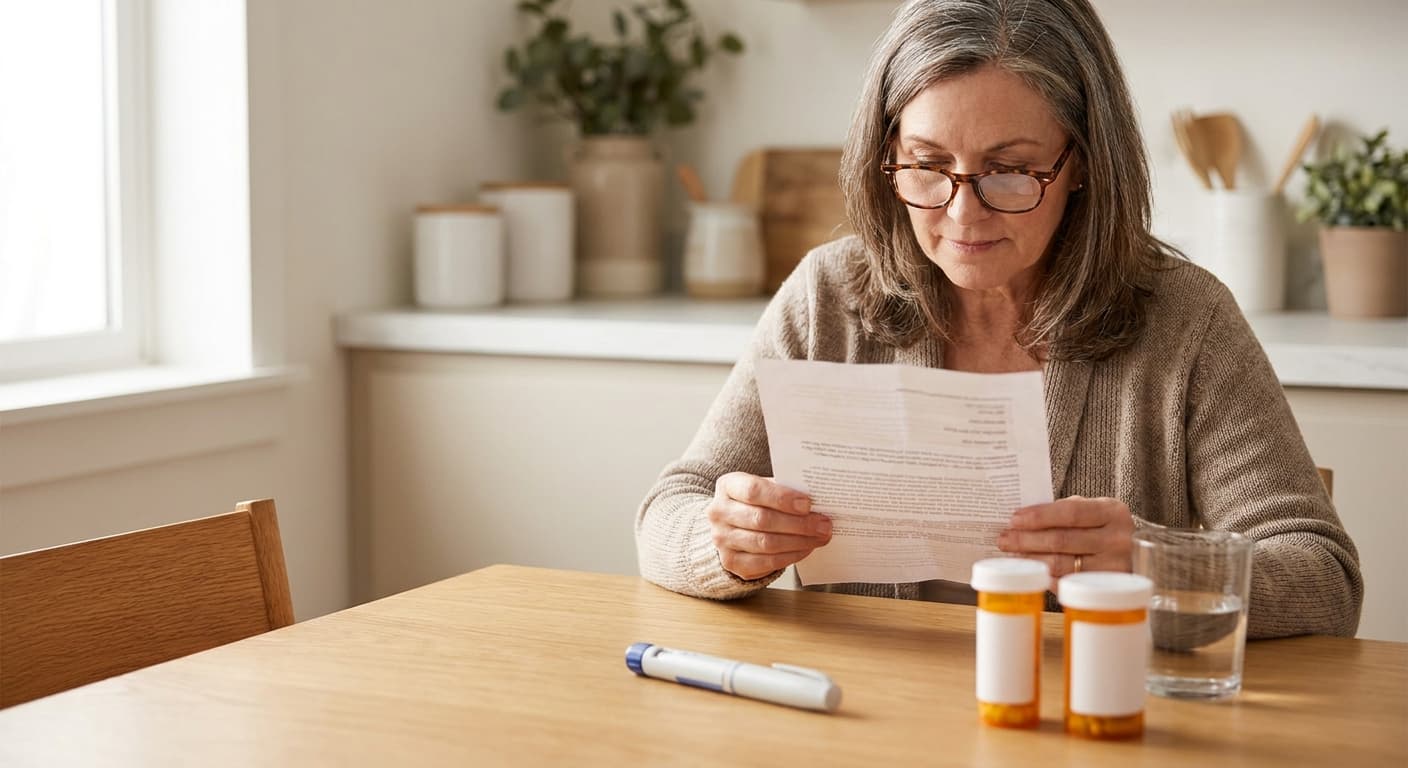
1. Tell Your Doctor About All Medications
Before starting a GLP-1 medication, give your doctor a complete list.
Include:
- All prescription medications
- Over-the-counter drugs
- Supplements and vitamins
- Herbal products
2. Space Out Your Medications
Ask your doctor about timing. Some medications need to be taken at different times.
Example spacing:
- Take thyroid medication on an empty stomach in the morning
- Wait 30 minutes before eating
- Take your GLP-1 injection at a different time (like evening)
- This reduces the chance of interaction
3. Monitor Your Symptoms
Pay attention to how you feel. Changes might signal an absorption problem.
Use a Symptom Tracker to record:
- New side effects
- Worsening of existing symptoms
- Changes in how your other medications feel
- Unusual patterns in symptoms
The Dose AI Symptom Tracker helps you spot patterns over time. Share these notes with your doctor.
4. Track Your Medications
Keep a clear record of when you take each medication and pill.
Track with Dose AI:
- Log your GLP-1 shot timing
- Note when you take other prescriptions
- Record any side effects or changes
- This data helps your doctor make decisions
5. Get Regular Blood Tests
Your doctor may want to check medication levels or effects.
Tests might include:
- Thyroid function tests (if you take thyroid medication)
- Blood sugar levels (if you take diabetes medications)
- Blood pressure checks (if you take blood pressure medication)
- Birth control effectiveness (if you use oral contraceptives)
What You Should NOT Do
- Do not stop any prescription medication without talking to your doctor
- Do not skip doses to "make up" for absorption problems
- Do not assume all medications interact with GLP-1 medications
- Do not ignore new symptoms
Common Questions About GLP-1 and Medications
Q: Does Ozempic affect all birth control pills the same way?
A: Most oral birth control pills are affected similarly because they all depend on stomach absorption. But the degree of interaction varies. Talk to your doctor about your specific pill.
Q: Will I need to stop my GLP-1 medication if I take other prescriptions?
A: Usually no. Most people successfully take GLP-1 medications with other prescriptions. Your doctor just needs to monitor and adjust as needed.
Q: How long after starting a GLP-1 medication should I check my other medication levels?
A: This varies by medication. Ask your doctor when to schedule follow-up tests. For birth control, use backup methods immediately. For thyroid medication, testing might happen in 4-6 weeks.
Q: Can I take my other medications with food to help absorption?
A: Maybe, but ask your doctor first. Some medications specifically need an empty stomach. Others work better with food. Don't change timing without guidance.
Q: What if I have side effects from my other medications after starting GLP-1?
A: Contact your doctor. Side effects might mean the medication isn't being absorbed properly. Your doctor might adjust timing, spacing, or doses.
When to Contact Your Healthcare Provider
Reach out to your doctor or pharmacist if you notice:
- New side effects from other medications
- Your medications seem less effective than before
- You experience unusual symptoms
- You're concerned about any medication interaction
- You want to adjust timing or spacing
The Bottom Line
GLP-1 medications like Ozempic, Mounjaro, Wegovy, and Zepbound can change how your body absorbs other prescription pills. This is manageable with good communication and monitoring.
Work closely with your doctor and pharmacist. Tell them about all your medications. Watch for changes in how you feel. Use tracking tools to spot patterns.
Most people take GLP-1 medications safely alongside other prescriptions. The key is being informed and staying connected with your healthcare team.
Medical Disclaimer
This article is for educational purposes only. It is not medical advice. GLP-1 medications and their interactions with other drugs vary by person. Always talk to your doctor or pharmacist before starting, stopping, or changing any medication. Do not make medication decisions based on this article alone. If you have concerns about how your medications work together, contact your healthcare provider immediately.
Sources and Further Reading
- National Institutes of Health (NIH). "GLP-1 Receptor Agonists and Medication Interactions." Available at ncbi.nlm.nih.gov
- FDA Medication Safety Information on Oral Contraceptives and GLP-1 Medications. Available at fda.gov
- American Diabetes Association. "Medication Interactions in Diabetes Management." Available at diabetes.org
Related Dose AI Blog Posts
- How to Track Your GLP-1 Medication Schedule
- Understanding GLP-1 Side Effects: A Complete Guide
- Can You Take GLP-1 Medications with Diabetes Pills?
- Birth Control and Ozempic: What You Need to Know
- How to Use the Dose AI Symptom Tracker for Better Health