What Should You Do If Your GLP-1 Pen Freezes?
A frozen GLP-1 pen is a serious problem. Freezing can damage the medication inside. You need to know what to do right away.
This guide explains what happens when your pen freezes. It covers how to prevent freezing and what steps to take if it happens.
Why Does Freezing Damage Your GLP-1 Pen?
GLP-1 medications like Ozempic, Wegovy, Mounjaro, and Zepbound contain delicate proteins and compounds. Freezing temperatures can break down these active ingredients.
When medication freezes:
- The chemical structure of the drug can change
- The medication may no longer work properly
- It could become unsafe to inject
- Your treatment effectiveness decreases
The bottom line: Frozen medication cannot be trusted. You should not use it.
What Temperature Should Your Pen Be Stored At?
Storage temperature matters a lot. Here are the official guidelines:
Before First Use (Unused Pens):
- Store in the refrigerator between 36-46°F (2-8°C)
- Keep in the original box
- Do not freeze
After First Use (In-Use Pens):
- Keep at room temperature between 59-86°F (15-30°C)
- Or store in the refrigerator between 36-46°F (2-8°C)
- Do not freeze under any circumstances
Key point: Freezing means temperatures below 32°F (0°C). This is too cold for all GLP-1 medications.
How to Tell If Your Pen Has Frozen
Look for these warning signs:
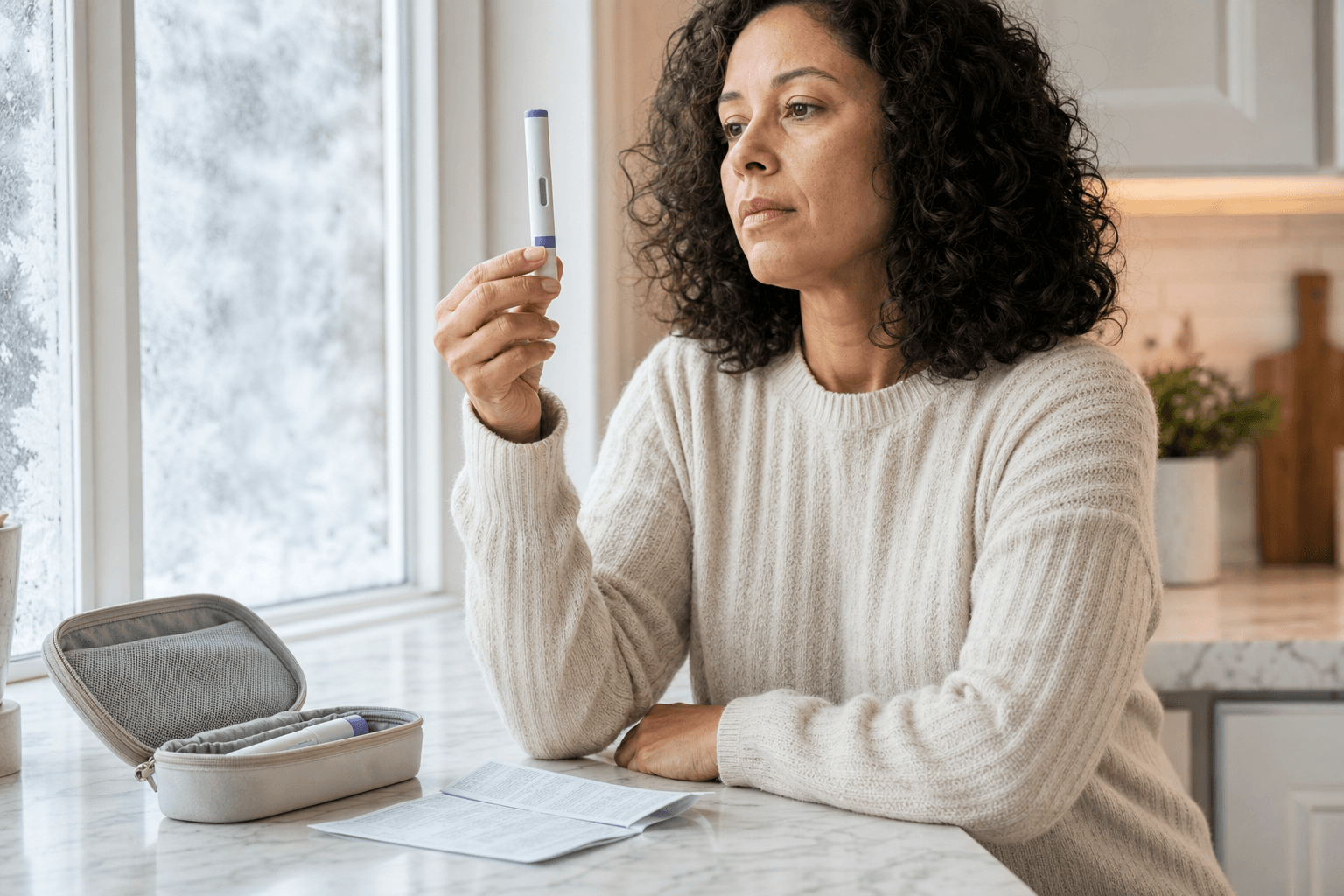
- Frost or ice crystals on the pen or cartridge
- Cloudiness or discoloration in the liquid medication
- Particles or sediment floating in the solution
- The pen feels unusually hard or brittle
- Visible damage to the rubber stopper or cartridge
If you see any of these signs, do not use the pen.
What Should You Do If Your Pen Freezes?
Step 1: Stop Using It Right Away
Do not inject a frozen or partially thawed pen. The medication may not work properly or could be unsafe.
Step 2: Do Not Try to Thaw It Yourself
Never use these methods:
- Microwave
- Hot water
- Direct heat sources
- Leaving it in sunlight
- Heating pads
Rapid temperature changes can damage the medication further.
Step 3: Contact Your Pharmacy
Call your pharmacy immediately. Tell them:
- Your medication name (Ozempic, Wegovy, Mounjaro, or Zepbound)
- That your pen froze
- When you discovered it
Your pharmacist can help you get a replacement quickly.
Step 4: Contact Your Doctor
Let your prescribing doctor know what happened. They may need to:
- Adjust your injection schedule
- Provide guidance on next steps
- Document the issue
Step 5: Check Your Insurance Coverage
Ask your pharmacy about replacement options. Many insurance plans cover replacement pens due to storage damage. Some may require a prior authorization.
How to Prevent Your Pen From Freezing
Prevention is much easier than dealing with a frozen pen. Here are practical steps:
At Home:
- Store unused pens in the refrigerator, not the freezer
- Keep pens in the main fridge area, away from the back wall where it's coldest
- Avoid storing near the freezer compartment
- Use a small cooler with ice packs if your fridge is too cold (check temperature with a thermometer)
While Traveling:
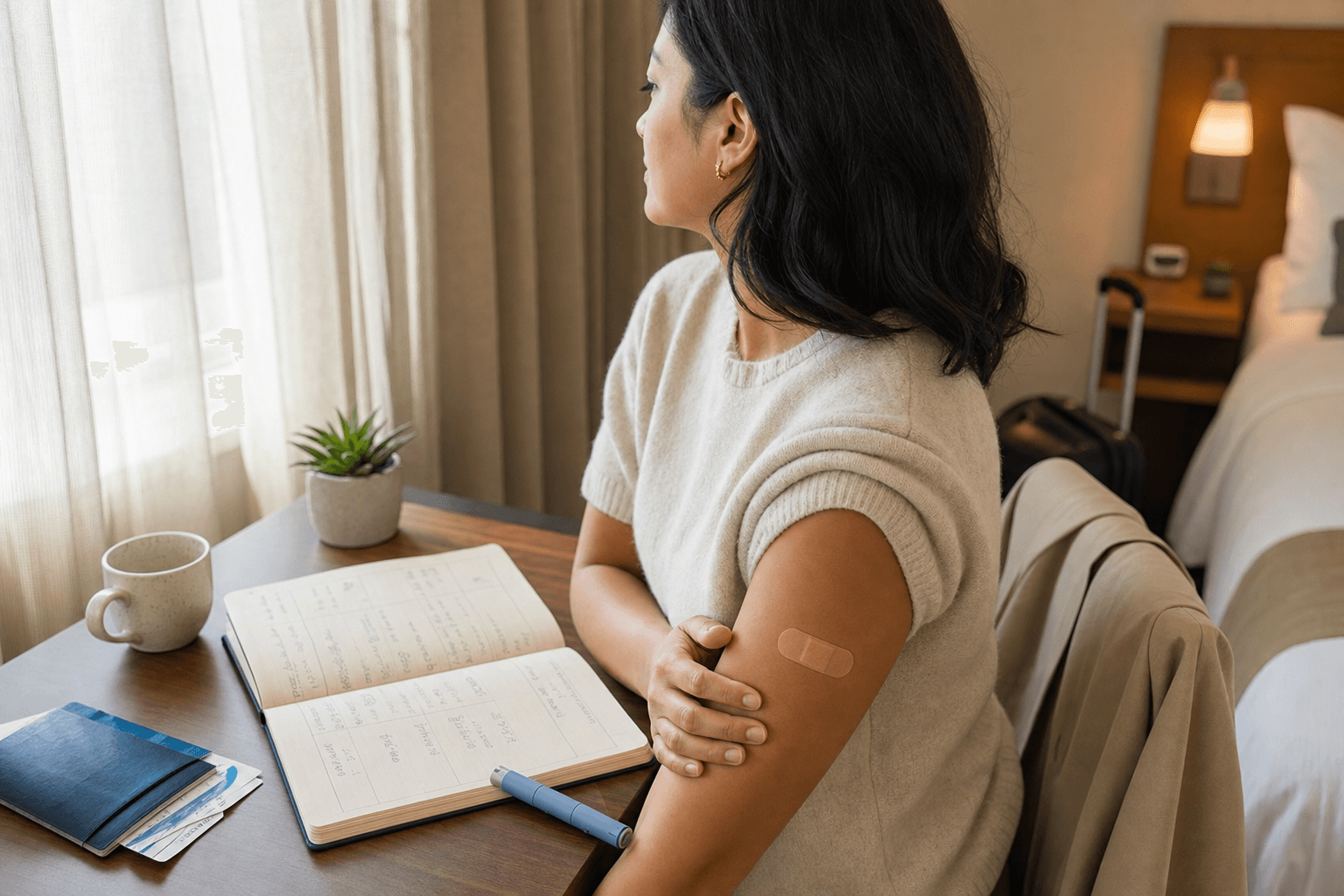
- Use an insulated medication travel case
- Include reusable ice packs (keep them slightly warm, not frozen)
- Store the case in your carry-on, not checked luggage (airplane cargo is very cold)
- Keep pens away from car windows in winter
- Do not leave pens in a cold car overnight
In Winter:
- Protect pens from outdoor cold
- Bring pens inside immediately after getting home
- Never leave them in an unheated car
- Avoid pockets or bags exposed to freezing temperatures
Use Technology:
- Consider using a temperature-monitoring case
- Some travel cases have built-in thermometers
- Check your fridge temperature weekly with a kitchen thermometer
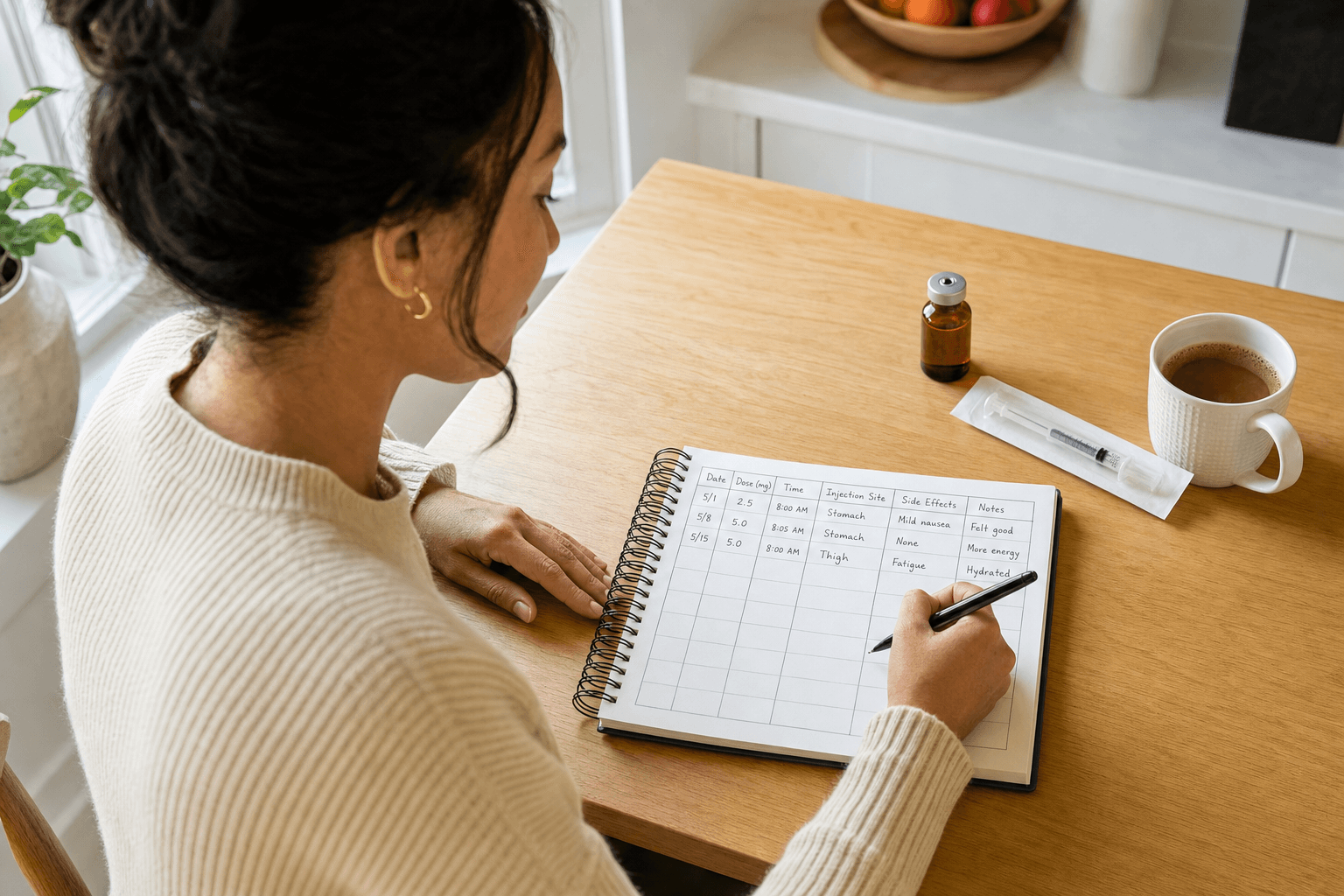
Track Your Storage: Use the Dose AI app to log when and where you store your medication. This helps you notice patterns and prevent problems.
What If You Miss Your Injection Because Your Pen Froze?
Missing a dose happens sometimes. Here's what to do:
If You Discover It Before Your Next Scheduled Injection:
- Contact your doctor or pharmacy immediately
- Ask when to take your next dose
- Do not double up on your next injection
- Get a replacement pen as soon as possible
If It's Close to Your Next Injection Day:
- Skip the frozen dose
- Take your next scheduled injection on time
- Use your replacement pen
If You're Unsure About Timing:
- Call your doctor's office
- Your pharmacist can also help with scheduling
- Do not guess or self-adjust your schedule
Can You Use a Partially Thawed Pen?
No. Do not use a pen that has been frozen, even if it thaws out.
Here's why:
- You cannot see internal damage
- The medication's effectiveness is compromised
- Temperature changes can cause separation of ingredients
- It may look normal but not work properly
Safe approach: When in doubt, throw it out. Your health is too important to risk.
Insurance and Replacement Pens
Getting a replacement pen is usually straightforward.
What happens:
- Your pharmacy submits a claim for a replacement
- Most insurance plans cover damage due to freezing
- You may need to pay a copay (usually the same as your regular copay)
- Some plans require documentation of the damage
If your insurance denies coverage:
- Ask about manufacturer assistance programs
- Check if the drug maker offers free or discounted replacements
- Ask your pharmacy about generic alternatives
- Contact your doctor's office for help appealing the denial
Tip: Keep receipts and photos of frozen pens. This documentation helps with insurance claims.
How to Store Your Pen During Different Seasons
Spring and Summer:
- Keep pens in the main refrigerator area
- Avoid direct sunlight
- Do not leave in hot cars
- Use an insulated case for travel
Fall and Winter:
- Monitor your fridge temperature closely
- Avoid storing near exterior walls (they get colder)
- Use insulated cases when traveling
- Never leave pens in unheated spaces
All Year:
- Check your refrigerator temperature weekly
- Store pens in the middle of the fridge, not near edges
- Keep a small thermometer in your fridge
- Avoid opening the fridge too frequently
Using Dose AI to Track Your Storage
The Dose AI app helps you stay organized:
Shot Logging Feature:
- Log when and where you stored your pen
- Note the temperature of your storage location
- Track any issues or concerns
- Review your storage habits over time
Symptom Tracker:
- If you accidentally used a compromised pen, track symptoms
- Note any unusual reactions
- Share this information with your doctor
Progress Tracker:
- Keep records of your treatment journey
- Document any interruptions due to freezing
- Monitor your overall progress despite setbacks
Frequently Asked Questions
Q: Can I use my Ozempic pen if it was frozen but now looks normal?
A: No. Freezing can cause invisible damage to the medication. Even if it looks fine, the active ingredients may be damaged. Do not use it. Contact your pharmacy for a replacement.
Q: How long does it take to thaw a frozen GLP-1 pen?
A: Do not try to thaw it yourself. Contact your pharmacy for a replacement. Thawing can cause uneven temperature changes that further damage the medication.
Q: Will my insurance cover a replacement if my pen froze?
A: Most insurance plans cover replacements due to storage damage. Call your pharmacy to find out. You may need to pay your normal copay. Ask about manufacturer assistance if insurance denies coverage.
Q: What's the coldest temperature my GLP-1 pen can tolerate?
A: Your pen should never be exposed to freezing temperatures (below 32°F or 0°C). Keep it between 36-46°F (2-8°C) before use or 59-86°F (15-30°C) after opening. Check your medication's specific instructions.
Q: Can I use a freezer bag or cooler with ice packs to store my pen at home?
A: Only if you monitor the temperature carefully. Ice packs can make your storage area too cold. Use a thermometer to check. Keep the temperature between 36-46°F (2-8°C). Consider a medication-specific travel case instead.
Q: What should I do if I accidentally left my pen in a cold car overnight?
A: Check the pen carefully for signs of freezing (frost, cloudiness, particles). If you see any warning signs, do not use it. Contact your pharmacy for a replacement. If it looks normal but you're unsure, call your pharmacist to be safe.
When to Contact Your Healthcare Provider
Reach out to your doctor or pharmacist if:
- Your pen froze and you're unsure what to do
- You missed a dose due to a frozen pen
- You need help adjusting your injection schedule
- You have questions about storage temperature
- You're traveling and worried about freezing
- You want to discuss medication assistance programs
Medical Disclaimer
This article is for educational purposes only. It is not medical advice. Always follow your doctor's instructions for storing and using your GLP-1 medication. If your pen freezes or you have concerns about your medication, contact your healthcare provider or pharmacist immediately. Do not attempt to use frozen or damaged medication. Every person's situation is unique, and your doctor can provide personalized guidance based on your health needs.
References
- FDA Medication Storage Guidelines: https://www.fda.gov/drugs
- National Institutes of Health (NIH) on GLP-1 Receptor Agonists: https://www.ncbi.nlm.nih.gov/
- American Diabetes Association (ADA) Medication Management Resources: https://www.diabetes.org/
Related Dose AI Blog Articles:
- How to Properly Store Your GLP-1 Medication at Home
- Traveling with Ozempic, Wegovy, Mounjaro, and Zepbound: A Complete Guide
- Understanding GLP-1 Medications: What You Need to Know
- Managing GLP-1 Side Effects: A Practical Guide