How Can Vegetarians Get Enough Protein on GLP-1?
Understanding Protein Needs on GLP-1 Medications
Taking a GLP-1 receptor agonist like Ozempic, Mounjaro, or Wegovy changes how much you eat. These medications reduce appetite and help with weight loss. But you still need adequate protein daily.
Protein is essential for several reasons:
- Builds and repairs muscle tissue
- Keeps you feeling full longer
- Supports immune system function
- Helps maintain metabolism during weight loss
- Prevents muscle loss as you lose weight
Most adults need 0.8 grams of protein per kilogram of body weight daily. People on GLP-1 medications often benefit from higher protein intake (1.2-1.6 grams per kilogram) to preserve muscle mass while losing weight.
The vegetarian challenge: Plant-based proteins are often less concentrated than animal proteins. You get more volume of food with fewer calories of protein. This matters when GLP-1 medications already reduce your appetite.
Best Plant-Based Protein Sources for GLP-1 Users
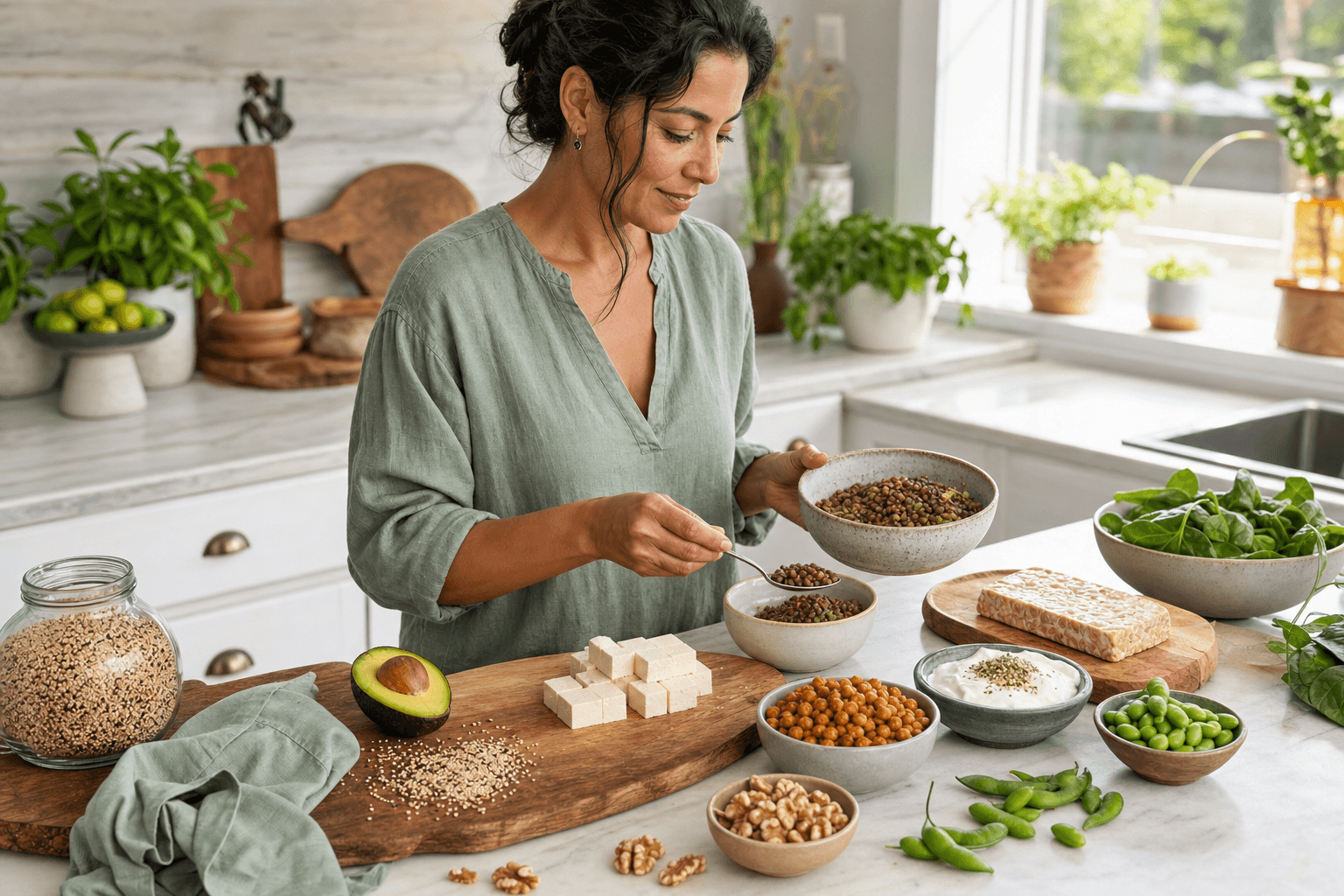
Legumes: High-Protein Powerhouses
Legumes are dried beans, lentils, and peas. They're affordable, shelf-stable, and protein-rich.
Top legume options:
- Lentils: 18 grams of protein per cooked cup. Cook quickly (20-30 minutes). Easy to digest.
- Chickpeas: 15 grams of protein per cooked cup. Versatile in curries, salads, or hummus.
- Black beans: 15 grams of protein per cooked cup. Pair well with grains.
- Pinto beans: 15 grams of protein per cooked cup. Great in soups and stews.
- Split peas: 16 grams of protein per cooked cup. Perfect for hearty soups.
Pro tip: Start with smaller portions if legumes cause bloating. Your digestive system adjusts over time. Soak dried beans overnight and drain the water before cooking to reduce gas-causing compounds.
Soy Products: Complete Proteins
Soy contains all nine essential amino acids. Your body cannot make these amino acids, so you must get them from food.
Best soy options:
- Tofu: 10 grams of protein per 3-ounce serving. Absorbs flavors in stir-fries or curries.
- Tempeh: 19 grams of protein per 3-ounce serving. Firmer texture than tofu. Easier to cook with.
- Edamame: 11 grams of protein per cup. Whole soybeans you can snack on or add to dishes.
- Soy milk: 7-8 grams of protein per cup. Good in smoothies or cereal.
- Soy yogurt: 5-6 grams of protein per serving. Works as a dairy alternative.
Tempeh is especially useful for GLP-1 users because it's more filling than tofu. The fermentation process makes it easier to digest.
Nuts, Seeds, and Nut Butters
These are calorie-dense but protein-rich. Portion control matters on GLP-1 medications.
Best options:
- Peanuts: 7 grams of protein per ounce (about 23 peanuts)
- Almonds: 6 grams of protein per ounce (about 23 almonds)
- Hemp seeds: 10 grams of protein per 3 tablespoons
- Pumpkin seeds: 9 grams of protein per 1/4 cup
- Chia seeds: 5 grams of protein per 2 tablespoons
- Peanut butter: 8 grams of protein per 2 tablespoons
- Almond butter: 7 grams of protein per 2 tablespoons
Portion strategy: Because these are high in calories, measure portions carefully. Use Dose AI's Food & Macro Logging feature to track nuts and seeds by photo. The app analyzes exact macros so you stay on target without guessing.
Whole Grains and Pseudo-Grains
Grains provide protein plus fiber, which helps with satiety and blood sugar stability.
Protein content per cooked cup:
- Quinoa: 8 grams (complete protein)
- Oats: 10 grams
- Whole wheat pasta: 7 grams
- Brown rice: 5 grams
- Millet: 6 grams
- Amaranth: 9 grams
Quinoa and amaranth are complete proteins. This means they contain all nine essential amino acids, just like animal proteins.
Dairy and Eggs (If You Include Them)
Some vegetarians eat dairy and eggs. These are among the highest-quality protein sources.
Protein content:
- Greek yogurt: 15-20 grams per 6-ounce serving
- Cottage cheese: 14 grams per 1/2 cup
- Eggs: 6 grams per large egg
- Cheese: 7 grams per ounce
- Milk: 8 grams per cup
- Protein powder (whey or plant-based): 20-30 grams per scoop
Cottage cheese is particularly useful on GLP-1 medications. It's protein-dense with smaller portion sizes.
Meal Planning Strategies for Vegetarian GLP-1 Users
Combine Incomplete Proteins
Plant proteins often lack one or more essential amino acids. Combining different plant proteins creates a complete amino acid profile.
Classic combinations:
- Beans + rice: The amino acids in beans complement those in grains
- Hummus + whole wheat pita: Chickpeas plus whole grain
- Peanut butter + whole grain bread: Legume plus grain
- Lentil soup + quinoa: Two different plant proteins
You don't need to combine these at the same meal. Eating them throughout the day works just as well.
Distribute Protein Throughout the Day
Instead of getting all your protein at dinner, spread it across meals.
Sample daily approach:
- Breakfast (20-25g): Oatmeal with Greek yogurt and hemp seeds
- Lunch (20-25g): Chickpea salad with quinoa and vegetables
- Snack (10-15g): Almonds or peanut butter on apple slices
- Dinner (20-25g): Tofu stir-fry with brown rice and vegetables
Spreading protein helps maintain steady energy and keeps you full between meals.
Use Protein-Fortified Foods
Many plant-based products now have added protein.
Options to consider:
- Plant-based protein powders (pea, hemp, brown rice, or blended)
- Fortified plant milks (often 8-10 grams per cup)
- High-protein pasta (made from lentils or chickpeas)
- Protein granola and cereal
- Plant-based meat alternatives (highly variable, read labels)
Important note: Check labels carefully. Some plant-based products are highly processed and don't fit well with GLP-1 goals. Choose options with minimal added sugar and ingredients you recognize.
Practical Tips for Vegetarian GLP-1 Users
Start Small and Build Tolerance
GLP-1 medications reduce stomach capacity. Legumes can cause bloating if you're not used to them.
Build tolerance gradually:
- Start with 1/4 to 1/2 cup of legumes per meal
- Increase slowly over 2-3 weeks
- Cook beans thoroughly to aid digestion
- Rinse canned beans to reduce gas-causing compounds
- Drink plenty of water (log it with Dose AI's Water Logging feature)
Adequate hydration helps your digestive system process plant proteins more easily.
Choose Easier-to-Digest Proteins
Some plant proteins are gentler on the stomach while on GLP-1 medications.
Easier options:
- Tofu and tempeh: Already fermented or processed, easier to digest
- Well-cooked lentils: Red lentils are softer than brown
- Soy products: Generally well-tolerated
- Nuts and seeds: Usually no digestive issues
More challenging options:
- Whole beans (start small)
- Raw nuts in large quantities
- High-fiber grains if you're not used to them
Track Your Protein Intake
It's easy to fall short on protein when eating less overall food.
Use Dose AI's Food & Macro Logging feature to:
- Log meals by taking photos
- See exact protein content automatically
- Track trends over time
- Identify which foods work best for you
- Adjust portions based on actual intake
Tracking removes guesswork and helps you meet your protein goals consistently.
Time Your Protein Intake
Taking your GLP-1 shot affects how much you can eat for 1-2 days afterward.
Smart timing:
- On days you feel less hungry, prioritize protein-dense foods
- Choose foods that pack more protein into smaller portions
- Avoid high-volume, low-protein meals when appetite is suppressed
- Use Dose AI's Shot Logging feature to track when you took your medication and adjust eating patterns accordingly
Consider Protein Supplements
If you struggle to get enough protein from whole foods, supplements help.
Options for vegetarians:
- Plant-based powders: Pea, hemp, brown rice, or blended
- Soy protein powder: Complete protein, mixes easily
- Whey or casein: If you eat dairy
- Bars and shakes: Convenient on busy days
Choose supplements with minimal added sugar and ingredients you recognize.
Sample Vegetarian Meal Ideas for GLP-1 Users
Breakfast Ideas
Option 1: Greek yogurt (15g) with granola (3g) and berries (1g) = 19g protein
Option 2: Tofu scramble (10g) with whole wheat toast (3g) and avocado = 13g protein (add nuts for 18g)
Option 3: Oatmeal (10g) with soy milk (7g), chia seeds (5g), and almond butter (7g) = 29g protein
Lunch Ideas
Option 1: Lentil soup (18g) with whole grain bread (3g) and side salad = 21g protein
Option 2: Chickpea salad (15g) with quinoa (8g), vegetables, and tahini dressing (3g) = 26g protein
Option 3: Tempeh stir-fry (19g) with brown rice (5g) and vegetables = 24g protein
Dinner Ideas
Option 1: Black bean and vegetable tacos with 2 corn tortillas (4g), beans (15g), and cheese (7g) = 26g protein
Option 2: Tofu curry (10g) with lentil rice (8g + 5g), vegetables = 23g protein
Option 3: Chickpea pasta (10g) with marinara sauce and spinach (3g) = 13g protein (add nuts or seeds for 20g+)
Snack Ideas
- Almonds (23): 6g protein
- Peanut butter on apple: 8g protein
- Hummus with vegetables: 4g protein
- Edamame: 11g protein per cup
- Cottage cheese: 14g per 1/2 cup
- Protein shake with plant milk: 25-30g protein
How to Use Dose AI to Support Your Vegetarian Goals
Dose AI is designed to help you succeed on GLP-1 medications while following any diet, including vegetarian.
Shot Logging: Track when you took your GLP-1 medication. See patterns in your appetite and adjust protein intake on high-suppression days.
Water Logging: Track daily hydration. This helps your digestive system process plant proteins more easily and reduces side effects like constipation.
Food & Macro Logging: Take photos of your meals. The app analyzes exact protein content automatically. No guessing or manual calculations needed.
Symptom Tracker: Record bloating, digestion issues, or other symptoms. Reveal patterns to identify which plant proteins work best for you.
Personalized Food Idea Assistant: Get AI-generated meal suggestions tailored to your vegetarian preferences and protein goals. The app learns your preferences over time.
Progress Tracker: Log weight and photos to see your results. Stay motivated knowing your vegetarian approach is working.
When to Talk to Your Healthcare Provider
Contact your doctor or registered dietitian if:
- You consistently can't meet your protein goals
- You experience severe bloating or digestive issues with plant proteins
- You're losing weight too quickly (more than 1-2 pounds per week after the first month)
- You feel weak or fatigued
- You have questions about protein timing or specific foods
- You're considering adding supplements
A registered dietitian specializing in both vegetarian nutrition and GLP-1 medications can create a personalized plan for your needs.
Frequently Asked Questions
Q: Can vegetarians get enough protein on GLP-1 medications?
A: Yes, absolutely. Vegetarians can meet protein needs using legumes, soy products, nuts, seeds, whole grains, and dairy or eggs if included. The key is choosing protein-dense foods and spreading protein throughout the day. Track your intake with Dose AI to ensure you're meeting goals.
Q: How much protein do I need daily on GLP-1 medications?
A: Most people benefit from 1.2-1.6 grams of protein per kilogram of body weight daily while on GLP-1 medications. This preserves muscle mass during weight loss. For example, a 150-pound person needs 82-109 grams daily. Your healthcare provider or dietitian can give you a specific target.
Q: Will plant-based proteins cause more side effects on GLP-1 medications?
A: Plant proteins, especially legumes, are higher in fiber. This can increase bloating initially. Start with smaller portions and increase gradually. Cook legumes thoroughly, soak dried beans before cooking, and drink plenty of water. Most people adjust within 2-3 weeks. Use Dose AI's Symptom Tracker to identify which proteins work best for you.
Q: Is soy safe to eat while on GLP-1 medications?
A: Yes, soy is safe and an excellent protein source. It contains all nine essential amino acids, making it a complete protein. Tempeh and tofu are well-tolerated by most people on GLP-1 medications. Soy milk, edamame, and soy yogurt are also good options.
Q: Should I take a protein supplement as a vegetarian on GLP-1 medications?
A: Supplements aren't necessary if you can meet your protein goals with whole foods. However, they're helpful if you struggle to eat enough or need convenience. Choose plant-based powders (pea, hemp, soy) or dairy-based options if you eat dairy. Look for minimal added sugar and simple ingredients.
Internal Links to Related Dose AI Content
- How to Manage GLP-1 Side Effects: Bloating and Digestion
- Best Foods to Eat on Ozempic and Mounjaro
- GLP-1 Meal Planning: A Beginner's Guide
- How to Track Macros on GLP-1 Medications
- Can You Build Muscle While Losing Weight on GLP-1?
Medical Disclaimer
This article is for educational purposes only and should not replace professional medical advice. GLP-1 receptor agonists are prescription medications that require medical supervision. Always consult your healthcare provider or registered dietitian before making significant dietary changes, starting supplements, or adjusting your GLP-1 medication regimen. Individual protein needs vary based on age, weight, activity level, kidney function, and other health factors. Your healthcare provider can help determine your specific nutritional requirements. Never adjust your medication dose without medical guidance.
References
-
National Institutes of Health (NIH). "Protein." MedlinePlus. Accessed 2024. https://medlineplus.gov/protein.html
-
National Center for Biotechnology Information (NCBI). "Plant-Based Proteins and Their Role in Weight Loss and Metabolic Health." PubMed Central. 2023-2024 research summaries on GLP-1 medications and protein requirements.