
How Can You Safely Start Running While Taking a GLP-1 Medication?
Starting a running routine while taking GLP-1 medications like Ozempic, Wegovy, Mounjaro, or Zepbound requires careful planning. These medications can affect your energy, hydration, and digestion. The good news? You can absolutely run safely with the right approach.
This guide walks you through everything you need to know.
What Makes Running Different on GLP-1 Medications?
GLP-1 receptor agonists work by slowing your digestion and reducing hunger. This affects how your body handles exercise.
Key changes you might notice:
- Reduced appetite before and after workouts
- Nausea or stomach discomfort during intense activity
- Faster dehydration (your body loses fluids quicker)
- Lower energy levels, especially early in treatment
- Dizziness or lightheadedness if you skip meals
These side effects are temporary for most people. Your body adjusts over time. But during this adjustment period, you need to be extra cautious with exercise.
Should You Wait Before Starting to Run?
This depends on where you are in your GLP-1 journey.
Best timing to start running:
- Weeks 1-2 of treatment: Stick to light walking only. Your body is adjusting to the medication.
- Weeks 3-4: Try gentle jogging or walk-jog intervals if you feel good.
- After 4-6 weeks: Most people can safely progress to regular running.
Talk to your doctor before starting any new exercise routine. They know your health history and current medications. They can give you personalized guidance.
If you have heart disease, diabetes, or other serious health conditions, get medical clearance first.
Step-by-Step Guide to Starting Running Safely
Step 1: Start With Walking
Before you run, master walking. This builds your fitness foundation without shocking your system.
Walking plan (2-3 weeks):
- Walk 20-30 minutes at a comfortable pace, 3-4 times per week
- You should be able to talk while walking
- Rest days are important—don't walk every day
- Stay hydrated: drink water before, during, and after
Walking also helps your digestion. It reduces nausea and bloating that GLP-1 can cause.
Step 2: Try Walk-Jog Intervals
Once walking feels easy, mix in short jogs.
Week 1 of intervals:
- Warm up with 5 minutes of easy walking
- Jog for 30 seconds, walk for 2 minutes
- Repeat this cycle 6-8 times
- Cool down with 5 minutes of walking
- Do this 2-3 times per week
Week 2 of intervals:
- Jog for 1 minute, walk for 1.5 minutes
- Repeat 6-8 times
- Same warm-up and cool-down
Week 3 of intervals:
- Jog for 2 minutes, walk for 1 minute
- Repeat 5-6 times
- Same warm-up and cool-down
Listen to your body. If you feel dizzy, nauseous, or exhausted, stop and rest. There's no shame in slowing down.
Step 3: Build Continuous Running Time
Once intervals feel manageable, try running longer stretches.
Progression plan:
- Week 1: Run 5-10 minutes continuously, 2-3 times per week
- Week 2: Run 10-15 minutes continuously
- Week 3: Run 15-20 minutes continuously
- Week 4: Run 20-30 minutes continuously
Add only 5-10 minutes per week. This prevents injury and allows your body to adapt.
Critical Safety Tips Before You Run
Eat Something Small Beforehand
GLP-1 kills your appetite, but your muscles need fuel. Eat a light snack 30-60 minutes before running.
Good pre-run snacks:
- Half a banana with almond butter
- A small bowl of oatmeal
- Greek yogurt with berries
- A slice of whole-grain toast with honey
- A protein bar (20-30 grams of carbs)
Avoid large meals. They cause bloating and nausea on GLP-1. Stick to small, easy-to-digest foods.
Hydrate Before, During, and After
Dehydration is serious on GLP-1 medications. It increases nausea, dizziness, and fatigue.
Hydration checklist:
- Drink 16-20 ounces of water 2-3 hours before running
- Drink 6-8 ounces every 15-20 minutes during your run
- Drink 16-24 ounces after running (for every pound lost)
- Drink water throughout the day, even on rest days
Use the Dose AI water logging feature to track your daily hydration. This helps you spot patterns and prevent dehydration-related side effects.
Pick the Right Time of Day
Some people feel better running at specific times.
Consider:
- Morning runs: May feel easier if nausea is worse later in the day
- Afternoon runs: Good if you've eaten lunch and have stable energy
- Avoid running right after taking your weekly injection (if you're on Ozempic, Wegovy, Mounjaro, or Zepbound)
Experiment and find what works for you.
Wear Comfortable Running Clothes
Loose, breathable fabrics matter more on GLP-1 medications.
Why comfort matters:
- Tight clothes can trigger nausea
- Moisture-wicking fabrics keep you cool and dry
- Good running shoes prevent injury and boost confidence
Invest in quality gear. You'll enjoy running more, and that means you'll stick with it.
What to Watch For During Your Run
Stop running and seek help immediately if you experience:
- Chest pain or pressure
- Severe shortness of breath
- Fainting or severe dizziness
- Severe nausea or vomiting
- Unusual heart racing or palpitations
These are emergency signs. Call 911 or go to the nearest emergency room.
Less serious but important warning signs:
- Mild dizziness: Slow down, walk, drink water
- Mild nausea: Stop running, rest, sip water
- Extreme fatigue: You pushed too hard; rest today
- Muscle pain: Check your form; rest if needed
Use the Dose AI symptom tracker to log how you feel during and after runs. Over time, you'll see patterns. You'll learn what your body can handle.
How Exercise and GLP-1 Work Together
Running while on GLP-1 medications creates a powerful combination for health.
What happens:
- GLP-1 reduces hunger and cravings
- Running burns calories and builds muscle
- Together, they improve weight loss and fitness
- Exercise also improves mood and energy (after the first few weeks)
The key is patience. Don't expect to run 5 miles in week one. Build slowly. Your body will adapt.
Nutrition Tips for Runners on GLP-1
Your eating needs change when you run.
Key principles:
- Eat protein with every meal (helps muscle recovery)
- Don't skip meals, even if you're not hungry
- Choose nutrient-dense foods over empty calories
- Track your meals using Dose AI's food logging feature
The Dose AI personalized food idea assistant can suggest meals that work for runners on GLP-1. You can take photos of meals, and the AI analyzes your macros automatically.
Sample post-run meal ideas:
- Grilled chicken with sweet potato and broccoli
- Salmon with quinoa and roasted vegetables
- Turkey sandwich on whole-grain bread with a side salad
- Egg scramble with toast and avocado
Eat within 30-60 minutes after running. This helps your muscles recover.
Track Your Progress Safely
Monitoring your journey keeps you motivated and safe.
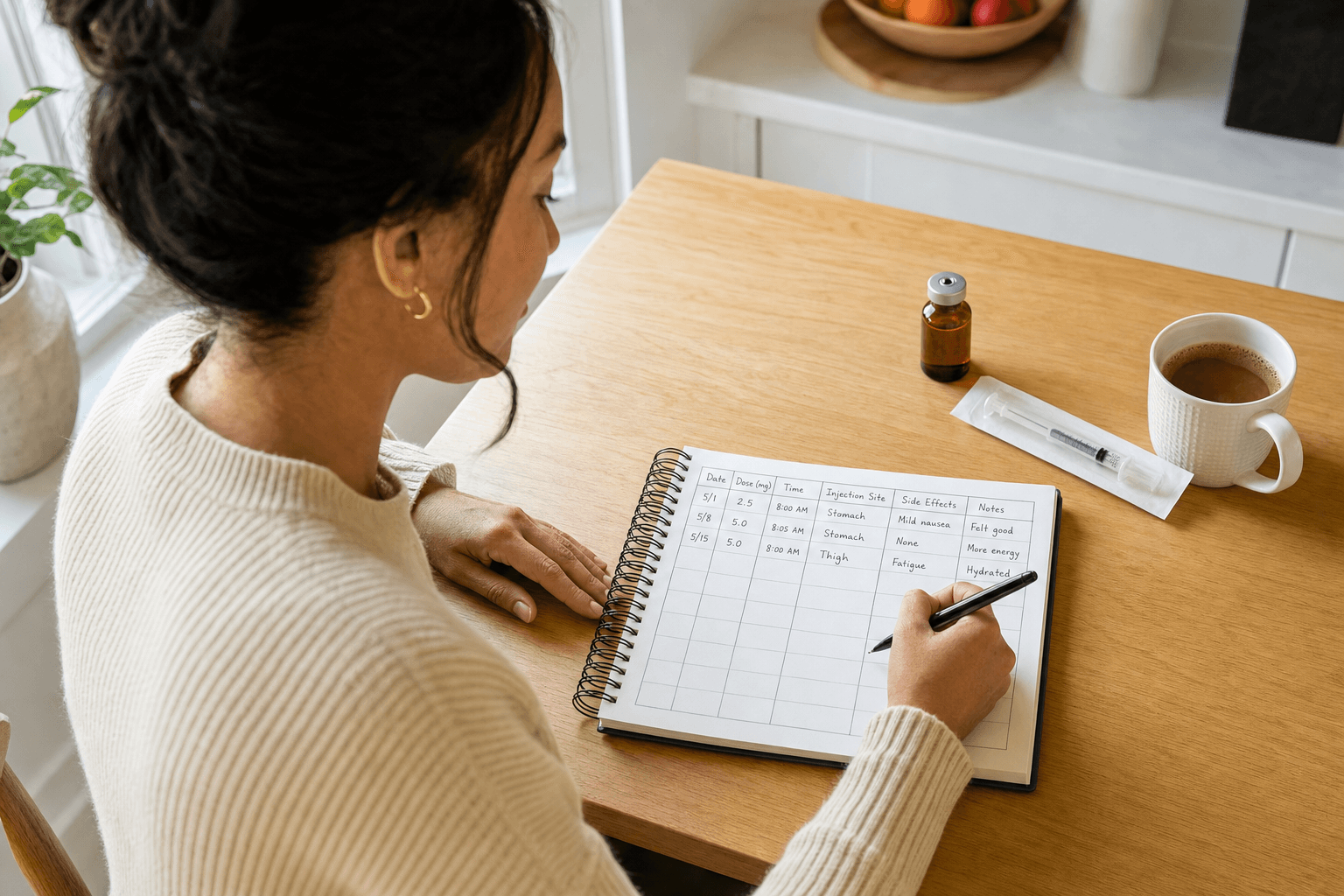
Use Dose AI to log:
- When you run and for how long
- How you felt before, during, and after
- Your water intake throughout the day
- Your meals and macros
- Your daily symptoms and energy levels
- Your weight and progress photos
Over time, these logs reveal what works for your body. You'll see which foods, times of day, and hydration levels help you run best.
When to Talk to Your Doctor
Contact your healthcare provider if you experience:
- Persistent nausea that gets worse with exercise
- Dizziness or fainting during or after running
- Chest pain or heart palpitations
- Unusual fatigue that doesn't improve with rest
- Signs of dehydration (dark urine, extreme thirst, dizziness)
- Concerns about your GLP-1 dose and exercise
Your doctor might adjust your medication timing or dose. They can also rule out other health issues.
Common Questions About Running on GLP-1
Can I run on the day I take my GLP-1 injection?
Most people should avoid intense exercise on injection day. Your body is adjusting to the medication. Light walking is fine. Wait 24 hours before returning to your normal running routine. Ask your doctor for personalized advice.
Will running make my GLP-1 side effects worse?
Not necessarily. Dehydration and skipping meals make side effects worse. Running itself, when done safely, usually improves how you feel over time. Stay hydrated and eat small snacks before running.
How much should I eat before running?
Eat a small snack with 20-30 grams of carbs and some protein. Avoid eating a full meal. Examples: a banana with almond butter, Greek yogurt with berries, or a small bowl of oatmeal.
Is it normal to feel tired when starting to run on GLP-1?
Yes. GLP-1 can reduce energy in the first few weeks. This is temporary. Start slow with walk-jog intervals. Your energy will improve as your body adjusts. If extreme fatigue continues beyond 6 weeks, talk to your doctor.
Can I run a 5K or longer distance on GLP-1?
Yes, but build up gradually. Follow the progression plan in this guide. Don't jump straight to long distances. Most people can safely run 5K (3.1 miles) after 8-12 weeks of training on GLP-1. Longer distances require more time and preparation.
Medical Disclaimer
This article is for educational purposes only and does not replace professional medical advice. GLP-1 receptor agonists (including Ozempic, Wegovy, Mounjaro, and Zepbound) are prescription medications with serious potential side effects. Always consult your healthcare provider before starting any new exercise program, especially if you have heart disease, diabetes, or other chronic conditions.
Never change your GLP-1 dose or exercise routine without medical guidance. If you experience chest pain, severe dizziness, fainting, or other emergency symptoms, call 911 immediately.
Related Dose AI Blog Posts
- How to Manage Nausea While on GLP-1 Medications
- Best Foods to Eat on Ozempic or Wegovy
- GLP-1 Medications and Hydration: What You Need to Know
- Exercise and Weight Loss: Building a Fitness Routine on GLP-1
Sources
- National Institutes of Health (NIH): "GLP-1 Receptor Agonists and Exercise Response" - https://www.ncbi.nlm.nih.gov/
- American Diabetes Association (ADA): "Physical Activity/Exercise and Type 2 Diabetes" - https://www.diabetes.org/
Last Updated: 2025 | Always consult your healthcare provider before starting a new exercise routine.