What Should You Do If You See Blood After a GLP-1 Injection?
Seeing a small amount of blood after your GLP-1 shot can be startling. But in most cases, it's completely normal and nothing to panic about.
This guide explains what causes bleeding after GLP-1 injections. You'll learn when it's safe and when you should contact your doctor.
Why Does Blood Come Out After a GLP-1 Shot?
When you inject a needle into your skin, you're piercing small blood vessels. A tiny amount of bleeding is expected and normal.
Common reasons for bleeding after GLP-1 injections:
- The needle passes through a small blood vessel under the skin
- You injected into an area with more blood flow
- Your skin is very thin in that spot
- You moved the needle around after inserting it
- You withdrew the needle too quickly
Most of the time, this bleeding stops within seconds to a minute. It's not dangerous and doesn't mean you did anything wrong.
When Is Bleeding After an Injection Normal?
Bleeding after a GLP-1 shot is normal if:
- You see only a few drops of blood
- The bleeding stops within 1-2 minutes
- There's no bruising or swelling afterward
- You feel no pain or only mild discomfort
- The injection site looks normal the next day
This type of minor bleeding happens to many GLP-1 users. It doesn't affect how well your medication works.
What Should You Do Right After Seeing Blood?
Follow these simple steps:
- Stay calm — A small amount of blood is not an emergency
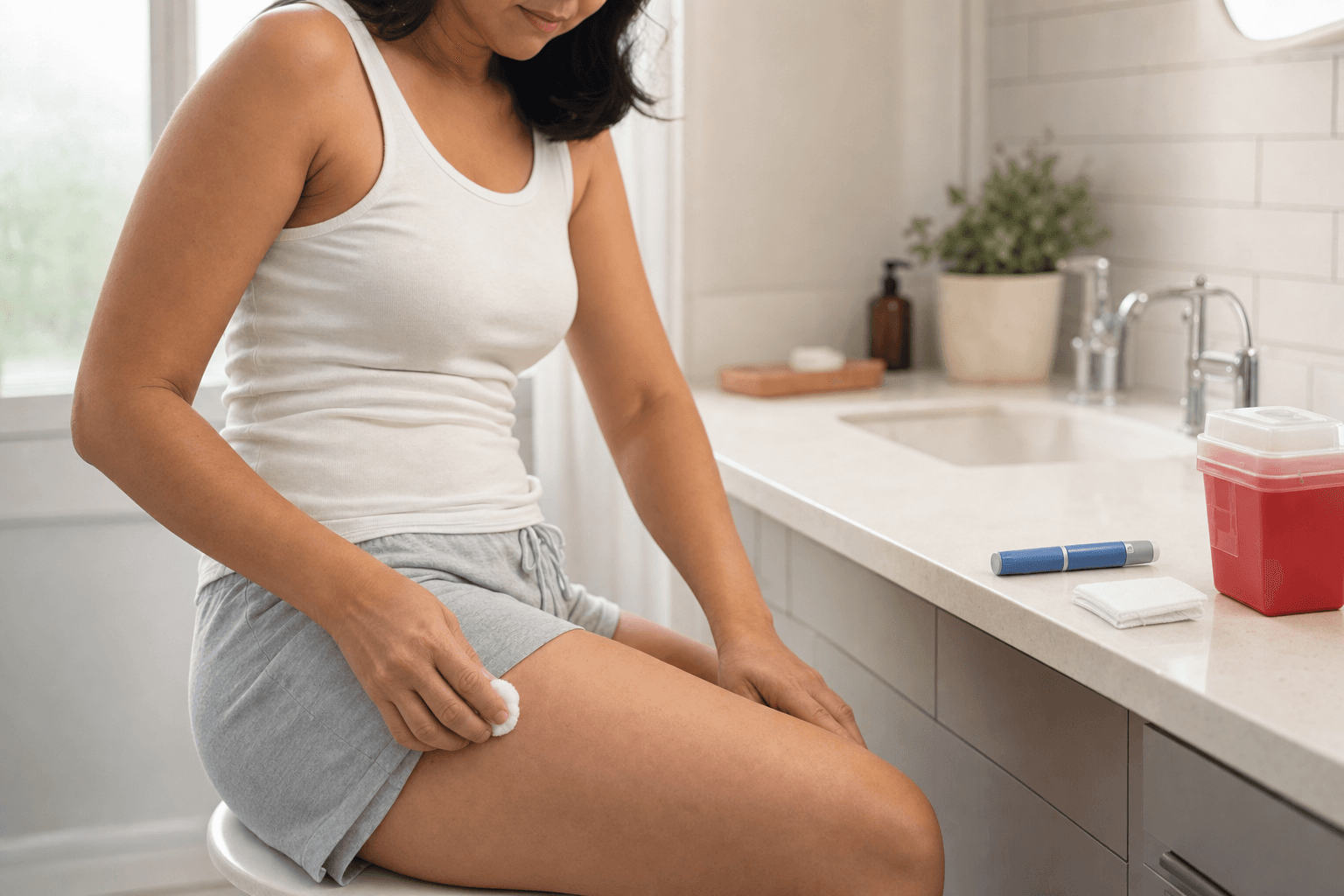
- Apply gentle pressure — Use a clean tissue or cotton ball for 30-60 seconds
- Don't squeeze the area — This can make bleeding worse
- Keep the area clean — Wash your hands before and after
- Watch for signs — Monitor the injection site over the next few hours
After the bleeding stops, your injection site should look normal. You can go about your day as usual.
When Should You Be Concerned?
Contact your doctor if you notice:
- Heavy bleeding that won't stop after 5-10 minutes of pressure
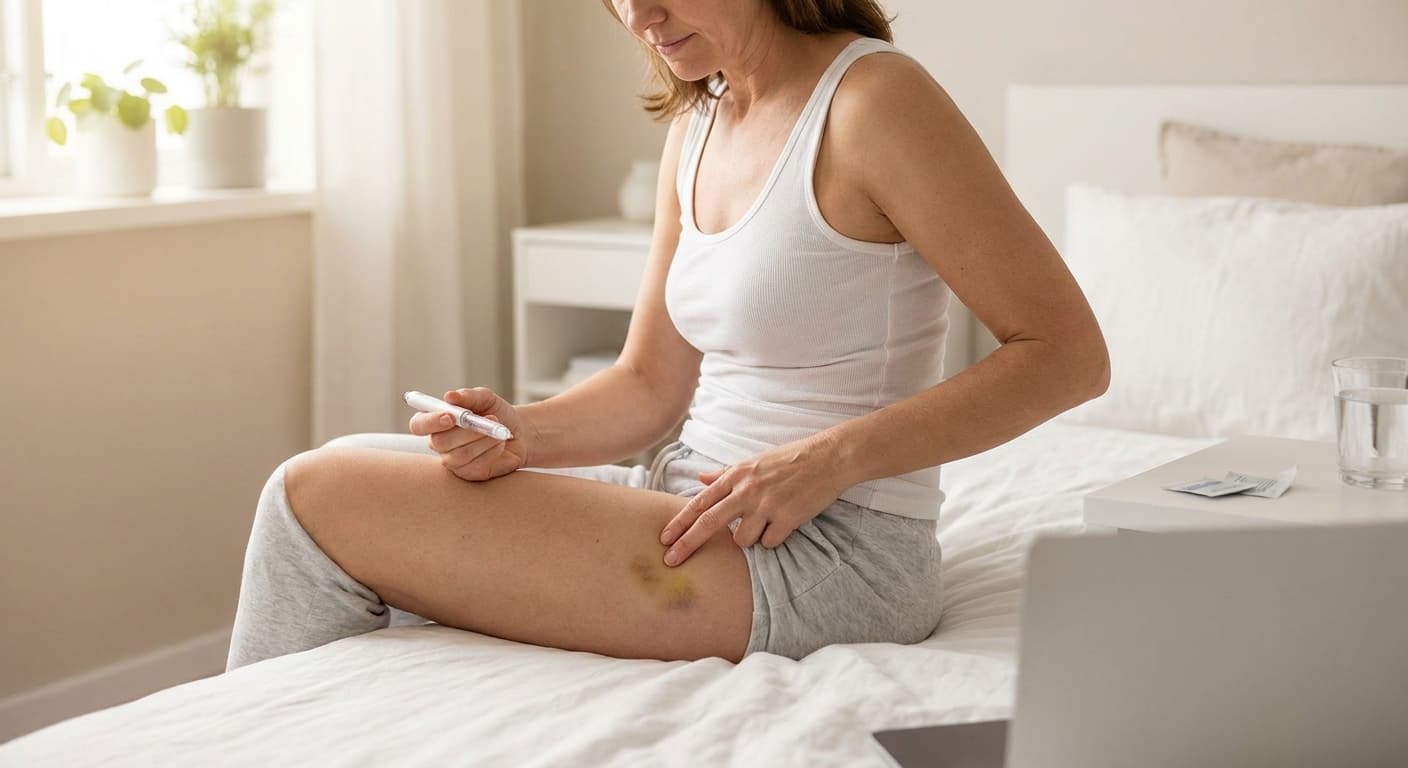
- Large bruises that appear within hours
- Swelling or warmth around the injection site
- Redness or signs of infection (increasing pain, pus, or heat)
- Numbness or tingling in the area
- Bleeding that happens every single time you inject
These signs might mean you hit a blood vessel or nerve. Your doctor can show you better injection techniques.
How to Prevent Bleeding After GLP-1 Injections
Use better injection technique:
- Rotate injection sites — Use different spots each week
- Avoid areas with visible veins or bruises
- Let your skin dry completely after cleaning with alcohol
- Insert the needle quickly at a 90-degree angle
- Keep the needle still while injecting
- Withdraw the needle slowly and straight out
- Don't massage the injection site right after
Choose the right injection sites:
- Belly (abdomen) — Most common and usually safest
- Thigh (front or outer side) — Good alternative
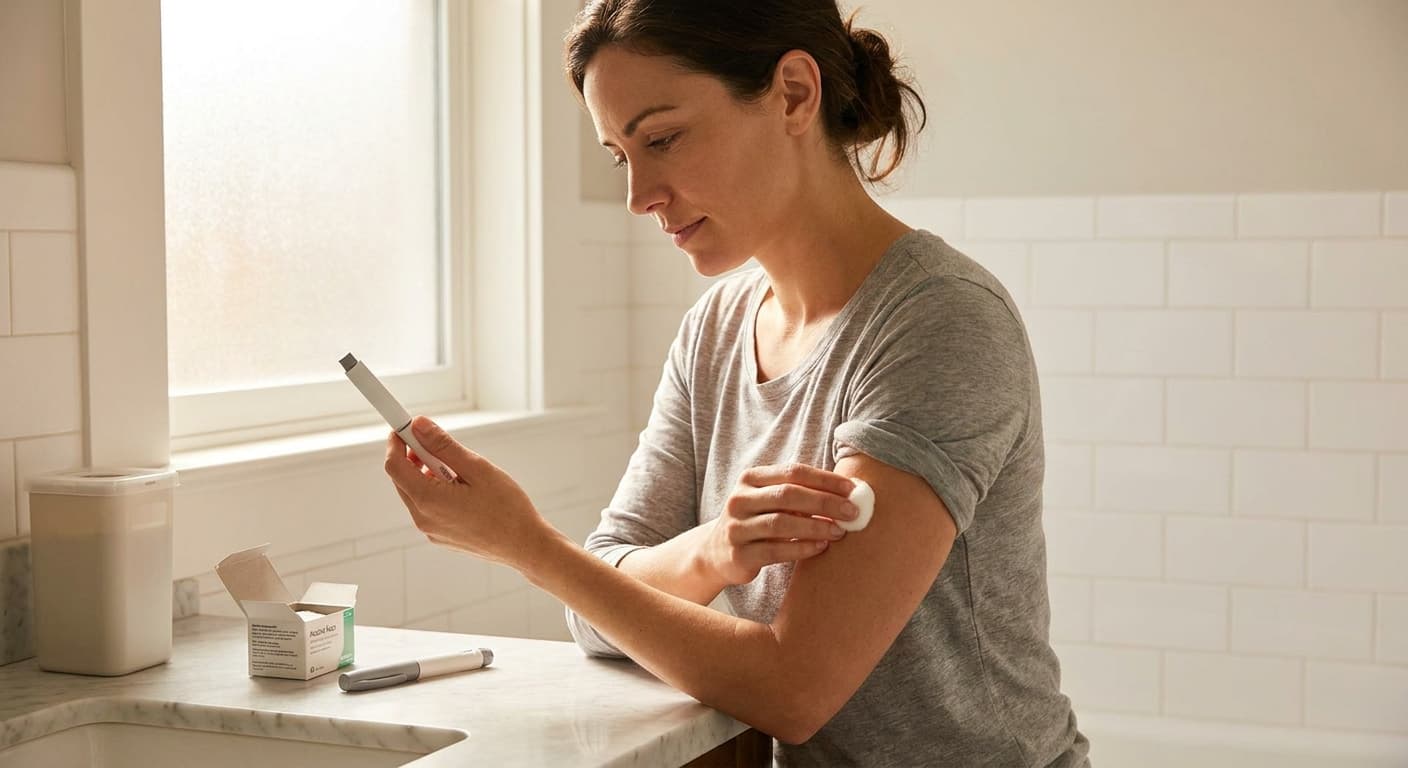
- Upper arm (back of the arm) — Less common but acceptable
Avoid injecting into areas that are already bruised, scarred, or very thin.
Does Bleeding Affect Your GLP-1 Medication?
No. A small amount of bleeding does not affect how well your GLP-1 medication works.
Your body still absorbs the full dose of tirzepatide (Mounjaro), semaglutide (Ozempic, Wegovy), or whichever GLP-1 receptor agonist you're taking.
The medication is injected under the skin. A few drops of blood at the surface doesn't change how it enters your bloodstream.
How to Track Injection Concerns Over Time
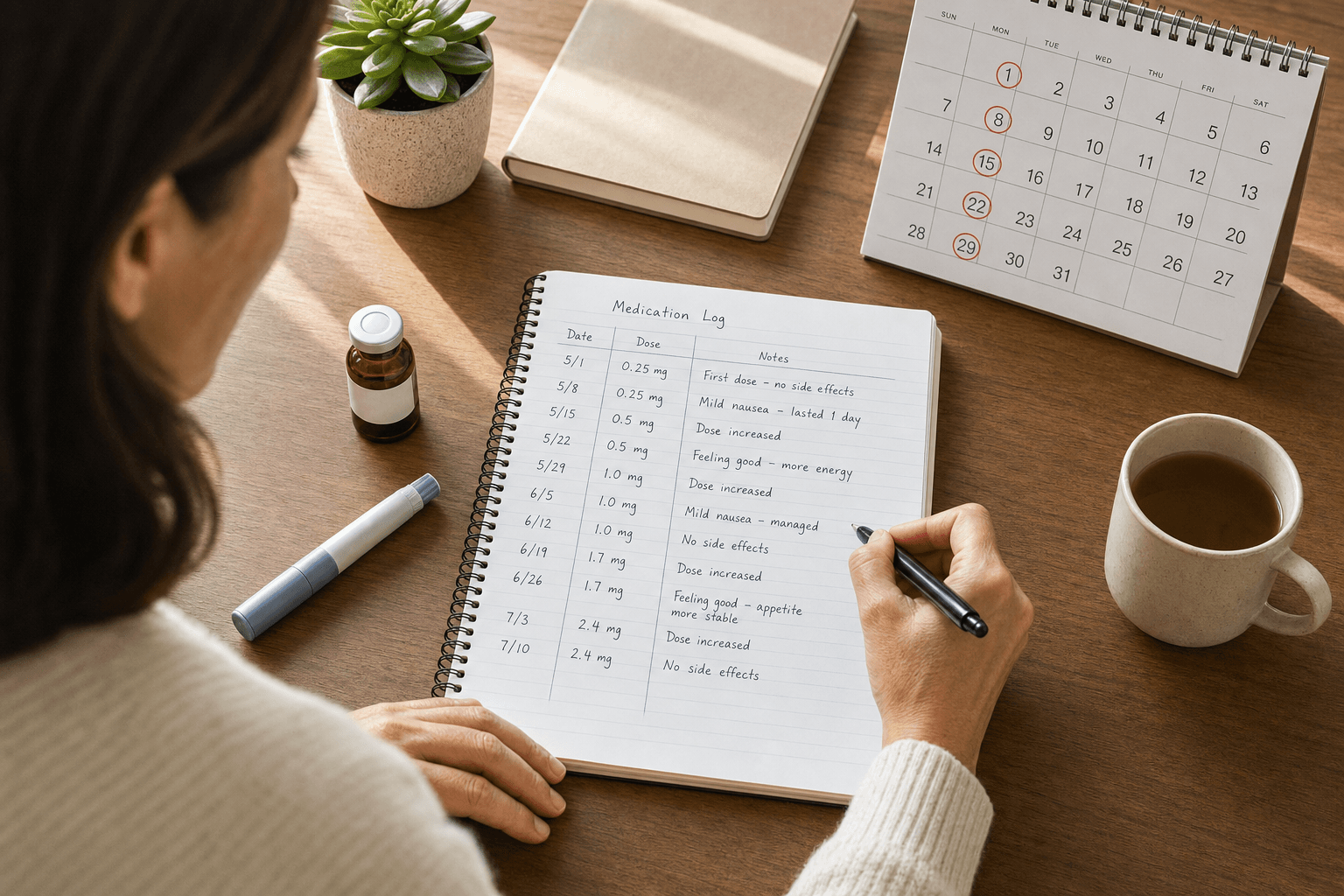
Use the Dose AI app to log your injection experiences. Track:
- Shot Logging — Record when and where you injected
- Symptom Tracker — Note any bleeding or unusual reactions
- Progress Tracker — Watch for patterns in bruising or bleeding
Over time, you'll see if bleeding is random or happening in certain spots. This helps you and your doctor improve your technique.
Common Questions About Bleeding After GLP-1 Shots
Q: Is it normal to bleed every time I inject?
A: Minor bleeding occasionally is normal. But if you bleed every single time, talk to your doctor. You may need to adjust your injection technique or site rotation.
Q: Can I inject in the same spot if I see blood?
A: It's best to wait at least one week before injecting in the same spot again. This gives the area time to heal. Use a different injection site for your next dose.
Q: What if I hit a blood vessel?
A: If you accidentally hit a larger blood vessel, you might see more bleeding or develop a bruise. This is usually harmless but uncomfortable. Apply pressure for 1-2 minutes. If bleeding doesn't stop or the bruise is very large, contact your doctor.
Q: Should I use an ice pack after seeing blood?
A: You can apply a cool compress for 5-10 minutes if you have significant bruising. This can help reduce swelling. But for minor bleeding, ice isn't necessary.
Q: Does blood after an injection mean my dose was wasted?
A: No. The medication is injected into the fatty tissue under your skin. A small amount of surface bleeding doesn't affect absorption or effectiveness.
When to Call Your Doctor
Reach out to your healthcare provider if:
- Bleeding doesn't stop after 10 minutes of pressure
- You develop a large, painful bruise
- The injection site becomes red, warm, or swollen
- You experience signs of infection
- You're afraid to inject because of bleeding concerns
- You have a bleeding disorder or take blood thinners
- Bleeding happens at every injection site
Your doctor can review your injection technique with you. They may suggest using a shorter needle or different injection sites.
Medical Disclaimer
This article is for educational purposes only. It is not medical advice and does not replace guidance from your healthcare provider.
Always follow your doctor's or pharmacist's instructions for injecting GLP-1 medications. If you have concerns about bleeding, bruising, or injection technique, contact your healthcare provider or call a poison control center.
Never stop taking your medication without talking to your doctor first.
If you have a bleeding disorder, take blood thinners, or have other health conditions, inform your doctor before starting GLP-1 therapy.
Sources
- National Institutes of Health (NIH): Subcutaneous Injection Techniques and Complications. https://www.ncbi.nlm.nih.gov/
- FDA: Ozempic (semaglutide) Prescribing Information. https://www.fda.gov/